Why 99% of CS2 Skins Are Cheaper Than in March — And What Still Holds
Take 1,185 CS2 skins that had comparable prices in both March and October 2026. Match identical wear conditions. Drop everything under a dollar at the start. Now count how many are cheaper seven months later.
The answer is 1,170 of them. Thirteen gained more than 1%. The median skin in that set is down 36.7%. Roughly 99% of comparable skins are worth less today than they were in the spring.
Numbers like that invite panic, and panic is the wrong response. So let's take the questions in the order they actually matter.
Why 99% of CS2 Skins Are Cheaper Than in March — And What Still Holds
Hold on — is the whole market actually down?
Yes, and it is broad rather than concentrated. The comparison window runs from a fixed March 2, 2026 baseline to a October 5, 2026 snapshot, and the declines are not clustered in one weapon class. Every major category shows a negative median. The split between winners and losers is roughly 13 items up against 1,170 down.
The two categories that took the hardest hit are the ones whose supply rules were rewritten: knives and gloves. That is not a coincidence, and it is the thread that explains almost everything else on this page.
What broke in the first place?
Two Valve updates did most of the damage, and neither was about skins directly.
The July 2025 Trade Protection update
Valve introduced a window during which traded items could be reverted to their original owner. The goal was fighting account hijacking, and by most accounts it worked. The side effect was that it broke the instant-resale loops a lot of third-party marketplaces were built on. Items received in a trade could no longer be flipped immediately with certainty, so venues had to rebuild their escrow and delivery models. Spreads widened, some segments paused, and prices wobbled while the ecosystem reorganized. Parts of that friction are still visible in the gap between venues today.
The trade-up change, and the knife crash
The bigger shock landed in late October 2025. Valve updated trade-up contracts so that five Covert-grade items could produce a knife or a pair of gloves from an eligible collection — with StatTrak Covert inputs producing StatTrak knives.
Before that, knives and gloves entered circulation almost exclusively as case drops at an extremely low rate. That constraint was the entire foundation of their premium pricing. The update opened a second supply channel overnight, and the market repriced immediately.
The numbers were violent. A Gut Knife | Safari Mesh in Field-Tested was recorded falling from roughly $131.88 to $73.51 in a single day — about -44% in one snapshot. Reporting at the time put the total decline in estimated CS2 cosmetic market capitalization at more than $1.75 billion. Meanwhile Covert-grade skins spiked, because every new trade-up recipe consumed them as inputs. Items that had been cheap red-tier filler suddenly had a demand floor underneath them.
That is the whole lesson in one event: Valve controls supply, and no chart pattern survives a supply change.
So what kept its value?
Look at the small winners list and a pattern appears immediately. The gainers skew toward older, discontinued-collection skins — items where supply genuinely cannot grow. No active case drops them. No collection mints more. Whatever exists is all that will ever exist.
Concrete examples from the same broad window:
- AK-47 | Fire Serpent in Field-Tested traded around $380–420 in early 2023 and now sits roughly $680–740 — about a 75% increase in three years.
- MAC-10 | Malachite from the original Chroma collection reached €21.71 in Factory New, up from around €8 weeks earlier.
- Factory New drops from the Chroma set as a whole moved from roughly €3 toward €20+.
Longer-run figures point the same direction: skins from discontinued cases — the Bravo, Huntsman and original Chroma collections in particular — have been cited at 18–35% annual appreciation since 2023.
The contrast is the defining texture of 2026: abundant recent supply drifts down while scarce legacy supply holds or climbs.
Why do discontinued collections behave differently?
It comes down to one mechanic, and it is worth being precise about it.
Every case that gets opened is permanently destroyed. The case is consumed, the key is consumed, and the skin that drops enters circulation. For a case still in the active drop pool, that destruction is constantly offset by new copies arriving through weekly drops, so sealed supply does not necessarily shrink.
For a discontinued case, there is no offsetting inflow at all. Zero new supply ever enters again. The count only goes down. If demand stays flat or grows while supply falls, price has nowhere to go but up — and that dynamic has played out repeatedly across CS:GO and CS2 history.
The same logic is why the mass-supply end of the market cannot behave this way. Consumer Grade skins drop at roughly 79.92% and Industrial Grade at roughly 15.98%, per the standard case odds. Those tiers are being minted continuously by an open case pool. There is no mechanism to create scarcity unless a specific skin becomes a meme or gets adopted by a top professional — and neither is something you can plan around.
For reference, the full rarity ladder and its approximate drop rates: Mil-Spec around 3.20%, Restricted around 0.64%, Classified around 0.32%, Covert around 0.16%, and the Extraordinary knife-and-glove pool around 0.0256%. Note what that last number means — a gold-tier knife is rare per unbox, but knives keep dropping forever from open cases. Rarity per unbox is not the same thing as finite supply.
The one genuinely frozen tier
There is exactly one weapon skin whose supply is permanently frozen by classification: the M4A4 | Howl, reclassified as Contraband in 2014 after a copyright dispute forced Valve to pull its original artwork. Every copy that existed on the day it stopped dropping is all there will ever be, and the pool only shrinks as accounts go inactive and items get locked into collections. Field-Tested copies trade in the thousands of dollars.
Is this a buying opportunity, or a falling knife?
Both, depending entirely on which half of the market you are standing in.
The structural argument for scarcity is real: nothing can print more of a retired collection, restock a discontinued case, or create a second Howl. In a game with a healthy player base, that is genuine, if slow, upward pressure.
The counterargument is equally real. Valve can change drop pools, reintroduce cases, or alter supply in ways nobody can predict. October 2025 proved that a few lines of patch notes can reprice an entire category in a weekend. Every holding thesis quietly assumes future supply stays as constrained as it is today, and that assumption is a bet, not a fact.
There is also a liquidity dimension people forget. The seven-day trade hold means patient buyers get better entries while impatient sellers take steeper discounts — which is why the market now behaves like two separate tiers rather than one continuous market.
So the honest framing is this: buy structure, not momentum. Discontinued cases, low-float examples, rare patterns and retired-collection knives and gloves have mechanical reasons to hold value. Active-case Mil-Spec and Industrial Grade skins have mechanical reasons not to. Fresh-release hype has a mechanical reason to correct downward once the supply influx lands.
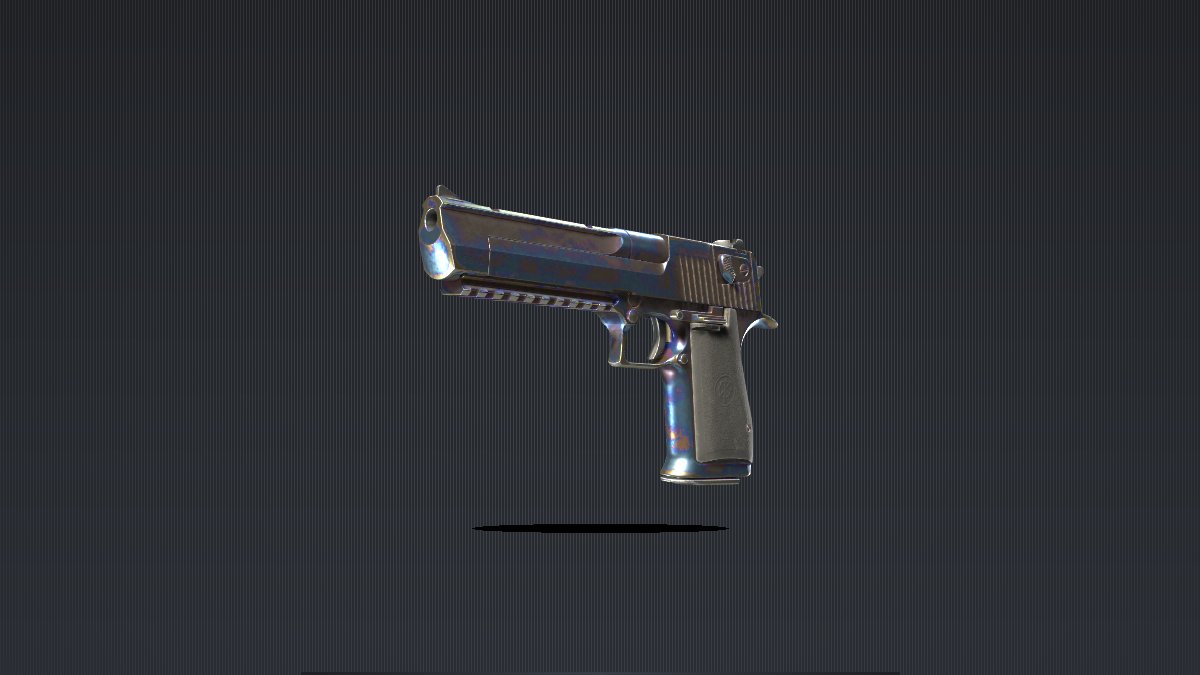
The pattern dimension is worth one more note, because it is where "structural" gets genuinely interesting. Finishes whose value depends on a specific pattern index or float range — rather than just rarity tier — have a second scarcity axis on top of supply. Two copies of the same skin in the same wear can differ in price by multiples, and that gap does not close when the market cools.
Where do I go to check a real price?
Use two numbers instead of one, every single time.
Listing price tells you what a seller is asking. Sales history tells you what buyers actually paid. When those two diverge badly, the listing price is decorative. The same logic applies across venues: because third-party marketplaces settle in real money while the Steam Community Market runs on wallet balance, third-party prices sit structurally lower — and comparing venues is half of trading well.
Then check supply mechanics before anything else. Ask whether the collection is still dropping, whether the case is still in the active pool, and whether the specific item's value depends on a pattern or float that most copies do not have.
If you want to put that to work, start somewhere with a real two-sided book. The SkinVS marketplace lists skins with live pricing you can compare against what you have seen elsewhere, and opening something with real supply mechanics — the Frost Vault case, for instance — is a far better use of a few dollars than chasing a sticker that supposedly doubled on zero trades. Check the supply, check the float, and let the structure do the arguing.