I Watched $1000 Disappear From My CS2 Inventory — And It Taught Me Everything About This Market
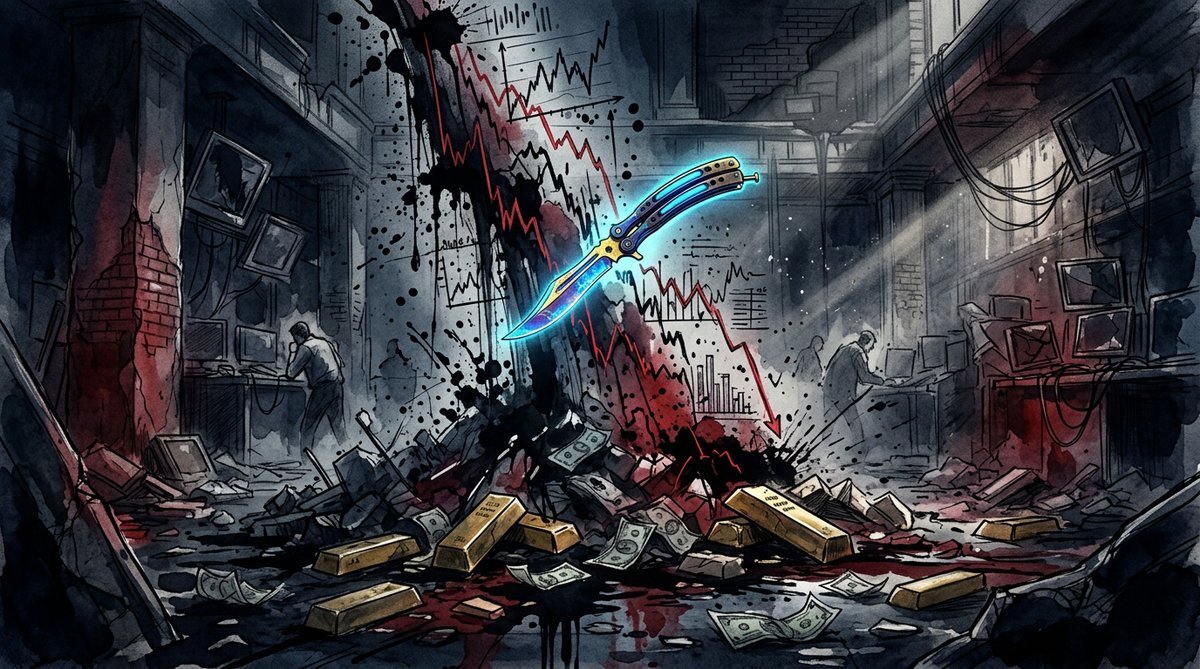
I Watched $1,000 Disappear From My CS2 Inventory — And It Taught Me Everything About This Market
It was a Thursday morning in late May 2026. I opened my CS2 inventory and something was wrong. My Karambit that had been worth $1,200 the week before was showing $980. My AWP Asiimov had dropped from $140 to $105. Even my budget M4A1-S had shed $12 — the kind of slow bleed that adds up to real money when you're holding 30 skins.
I was watching the CS2 skin market crash in real time. And I wasn't alone.
The Numbers Are Brutal
The CS2 skin economy — valued at over $6 billion at its peak — has lost approximately 50% of its market capitalization through the first half of 2026. Depending on which metrics you track, that's somewhere between $2 billion and $3 billion in value erased from players' inventories. Bloomberg reported that $1.75 billion fell out of the market in a single 24-hour window last October, and the recovery never really came.
Community tracking backs this up. The market hit its all-time high in late 2025, driven by speculation around Valve's Armory update and the introduction of knife trade-up contracts. When that update actually arrived in October 2025, it flooded the market with rare items — knives and gloves that had previously been supply-constrained suddenly became accessible through trade-up recipes. Prices cratered, and they've been sliding ever since. By June 2026, the total market capitalization sits roughly at $3 billion — a staggering decline from the $6 billion peak.
By May 2026, community forums were flooded with panicked posts. "Is the market dead?" "Should I sell everything?" "When do we hit bottom?" The sentiment was the worst it's been since the CS2 launch in 2023.
What Broke the Market — And Why It's Still Broken
The October 2025 knife trade-up update was the spark, but it wasn't the fire. Valve's decision to allow players to trade up five Covert-quality weapon skins for a knife or gloves fundamentally rewired the rarity hierarchy that had underpinned CS2 skin values for a decade.
Before October 2025, knives were scarce. You got them from case openings (roughly 0.26% chance per case), and supply grew slowly. That scarcity was the foundation of knife prices — a basic gut knife might sell for $80-$120, while a Butterfly Knife Fade could command $1,500 to $2,000. When trade-ups created a second path to knife ownership, the supply equation broke. Suddenly, five Covert skins — which traders had been stockpiling — could be converted into a knife. Prices adjusted downward, and they haven't found a new floor yet.
But the knife update alone doesn't explain a 50% market decline. Three additional factors are at play:
First, Valve's Weekly Care Package system — introduced in early 2026 — puts more skins into circulation every week. Five active weapon skin collections feed the drop pool as of June 2026, and while individual drop rates are low, the aggregate effect across 30.8 million monthly players is substantial. More supply means downward pressure on prices, especially for the mid-tier skins ($5-$50 range) that make up the bulk of most players' inventories.
Second, case prices are correcting after years of speculation. Rare discontinued cases (like the Gallery Case, discontinued in 2026) had been treated as investments, with traders holding hundreds of units waiting for price appreciation. As the broader market softened, those speculative positions unwound — case holders sold to cut losses, flooding the market and driving case prices down 20-40% from their peaks.
Third, and this is the one nobody likes to talk about — the hype cycle ran its course. The 2023-2025 bull run was fueled partly by genuine demand and partly by FOMO. Every YouTube video about "$100 to $10,000 CS2 investing" brought new money into the market. When prices stopped going up, that new money got nervous. Nervous money sells. Selling creates more selling.
Where the Smart Money Is Looking Now
If you're holding a portfolio of CS2 skins, the chart looks grim. But if you're looking to buy, this is the most interesting market we've seen in years. Here's what matters:
High-tier knives — Butterfly Knives, Karambits, M9 Bayonets — in desirable finishes (Fade, Doppler, Marble Fade) have held value better than anything else. A Butterfly Knife Fade Factory New that was worth $1,800 at the peak might be trading at $1,350-$1,500 today — a 17-25% decline, compared to 40-60% for mid-tier skins. Quality always finds a bid, even in a bear market.
Stickers — especially Major tournament stickers from 2024-2026 — have been a bright spot. The Cologne 2026 Major Shop's new 7-day price history feature (added June 11, 2026) is bringing more visibility and liquidity to the sticker market. Sticker investing is still niche compared to weapon skins, which means less competition and more opportunity for sharp buyers.
Discontinued cases are a double-edged sword. Gallery Case prices dropped hard when the case was discontinued, but history suggests that truly rare cases — those with unique skins and no re-release — appreciate over a 2-3 year time horizon. The question is whether you have the patience (and storage space) to hold through the volatility.
What I Did With My Portfolio — And What I'd Do Differently
I didn't panic-sell. That was the right call. The people who sold their knives at $980 in late May watched those same knives bounce to $1,050 within two weeks — not a full recovery, but a reminder that bear-market capitulation is the fastest way to lock in losses.
What I did do was shift my allocation. I sold my mid-tier skins — the $10-$40 range where the supply pressure is most intense — and consolidated into fewer, higher-quality items. Two $200 skins weather a downturn better than ten $40 skins, because the buyer pool for premium items is stickier. Collectors and actual players want a Butterfly Knife Fade; they don't care as much about an MP7 with a mid-tier pattern.
What I'd do differently: I would have started buying stickers earlier. The Cologne 2026 price transparency update has created a small but real advantage for sticker investors who act now — the data is new, the patterns aren't fully priced in, and the window for early positioning is open. Tournament stickers have historically delivered 200-400% returns within 12 months of a Major ending, and this year's data-rich buying environment makes spotting undervalued stickers easier than ever before. A $50 investment spread across ten promising team stickers could realistically double in value by Christmas.
The CS2 skin market isn't dead. It's going through the same cycle every speculative market goes through: euphoria, correction, consolidation, recovery. We're in the consolidation phase. The players who understand what's happening — and who can separate genuine value from panic selling — are the ones who come out ahead when the next up-cycle begins.
Whether you're buying, holding, or watching from the sidelines, one thing is clear: the $6 billion CS2 skin economy isn't going anywhere. It's just getting smarter. Browse the latest market prices and compare current values against historical peaks at the skinvs marketplace. The numbers don't lie — but they do tell a story if you know how to read them.