CS2 Market Cap Hits $7.27B — What's Driving the 2026 Recovery?
CS2 Market Cap Hits $7.27B — What's Driving the 2026 Recovery?
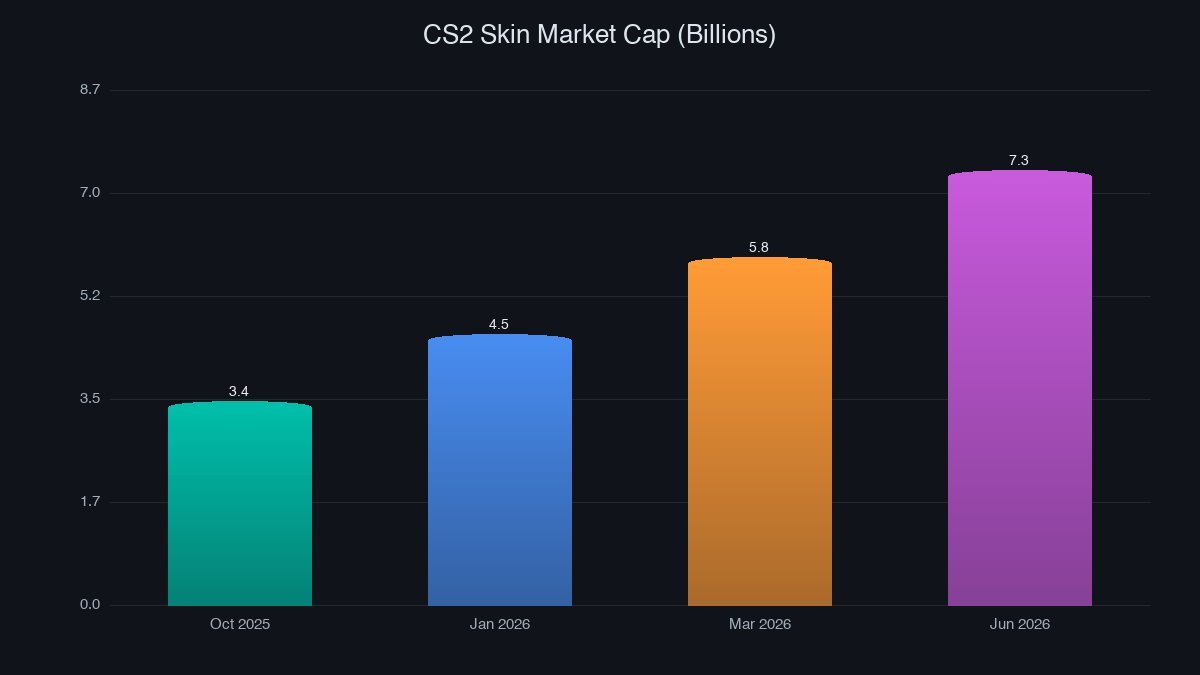
On June 24, 2026, something happened that would have seemed impossible just eight months ago: the CS2 skin economy crossed $7.27 billion in total market capitalization. For anyone who watched the market hemorrhage over half its value during the October 2025 trade-up crash, this number demands an explanation. How did we go from $3.37 billion at the bottom to $7.27 billion today — and more importantly, is this recovery sustainable?
The Numbers Don't Lie
The raw data tells a remarkable story. At its peak in early 2025, the CS2 skin economy was valued at over $14 billion. The October 2025 trade-up system changes triggered a catastrophic selloff that erased roughly 50% of that value, sending market cap tumbling to approximately $3.37 billion — levels not seen since the CS:GO era.
But the recovery has been steady and broad-based. By January 2026, the market had clawed back to roughly $4.5 billion. March saw acceleration to $5.8 billion. And as of late June, CSMarketCap reports $7.27 billion with a 7-day growth rate of +0.33%. That's a 115% recovery from the bottom — and we're still climbing.
The Steam Community Market tells a parallel story. Daily turnover has stabilized at approximately $5.2 million, according to SkinPulse data from Q1 2026. That's real money changing hands every day — not speculation, not hype, but actual transactions between players and collectors.
Which Segments Are Leading the Recovery?
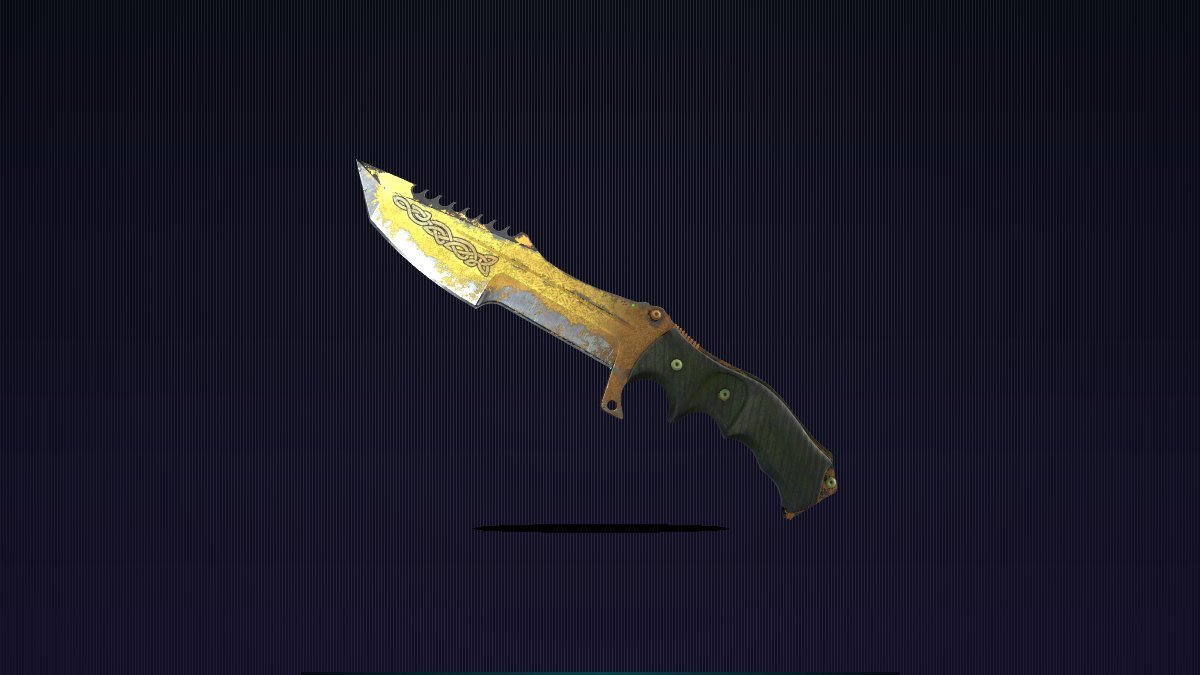
Not every category is recovering at the same pace. The knife segment has been the standout performer — knife prices are up approximately 245% from their October 2025 lows. This makes intuitive sense: knives have always been the anchor asset of the CS2 economy. They're rare, highly visible in-game, and serve as the de facto store of value for serious collectors.
Covert rifles — the AK-47s, M4A1-Ss, and AWP skins that define high-tier loadouts — have also recovered strongly, though with more volatility. The gap between top-tier Factory New skins and their Field-Tested counterparts has widened, suggesting that collectors are increasingly discriminating about condition. A Factory New AWP with a desirable pattern can command a 2-3x premium over the same skin in Minimal Wear — a spread that was much narrower during the panic-selling phase.
Stickers and capsules have had a more uneven recovery. Major sticker capsules — particularly those tied to tournament cycles like IEM Cologne 2026 — have shown strong momentum, but older, less memorable capsules remain depressed. The market has become more selective: it rewards genuine collector appeal and punishes generic supply.
What Changed After October 2025?
The crash wasn't random. It was triggered by Valve's trade-up contract changes, which fundamentally altered the economics of converting lower-tier skins into higher-rarity items. For years, trade-ups had been the invisible engine driving demand for Restricted and Classified skins — every covert item in the game was being produced, in part, by grinding up cheaper skins. When Valve changed the formula, that engine stalled.
But the recovery suggests something important: the market has rebuilt itself on healthier foundations. Rather than relying on trade-up arbitrage, the current market is driven more by genuine end-user demand — players who want skins to use, not just to flip. The Weekly Care Package system, introduced in 2025 and refined with the June 2026 update, has also helped by giving every Prime player a steady stream of new drops, keeping participation high.
The IEM Cologne 2026 effect can't be overlooked either. Major tournaments have always been catalysts for skin market activity, and Cologne — one of the most prestigious events on the CS2 calendar — has driven renewed interest in tournament-linked skins and stickers. The visibility of high-tier skins during broadcast matches functions as free advertising for the entire ecosystem. Consider what happens when a pro player clutches a round with an AWP | Dragon Lore on stream: thousands of viewers see that skin in action, and within hours, Steam Market listings for that item see measurable upticks in both views and purchases.
Meanwhile, the broader Steam platform metrics tell a story of structural health. CS2 consistently ranks among the top three most-played games on Steam with daily concurrent player counts exceeding 1.2 million. That's a massive base of potential skin buyers and sellers — far larger than any other game economy. And with the Weekly Care Package system ensuring that every active Prime player receives regular drops, the pipeline of new items entering the market is both predictable and well-distributed. No single player or group can corner supply, which keeps the market liquid and resistant to manipulation.
Where We Go From Here
The $7.27 billion figure is encouraging, but it's still only about half of the all-time high. That means there's significant room to grow — or significant room to fall. The key variable, as always, is Valve. No one outside Bellevue knows what the next update will bring, and a single poorly-received change could reverse months of recovery.
What we do know is that the fundamentals look stronger than they did during the speculative mania phase of early 2025. Daily active players remain high, the Steam Market processes millions of dollars in transactions daily, and the ecosystem has matured — with tracking tools, portfolio managers, and analytics platforms giving traders better information than ever before. The panic sellers are gone. What remains are committed collectors, patient investors, and millions of players who just want their loadout to look good.
If you're thinking about entering the market at these levels, the data suggests a measured approach. The knife segment has already run significantly; rifles and gloves may offer better relative value. And remember: in a market that has survived a 50% crash and climbed halfway back, the best strategy is usually the simplest — buy what you genuinely like, because you might be holding it longer than you planned. If you want to explore the current market, you can open the Fan Favorite case to see what today's most popular skins look like in action, or browse the full market listings to compare prices across conditions and patterns.