A Danish Charity Just Opened a Thrift Shop for Your Unused CS2 Skins
A Danish Charity Just Opened a Thrift Shop for Your Unused CS2 Skins
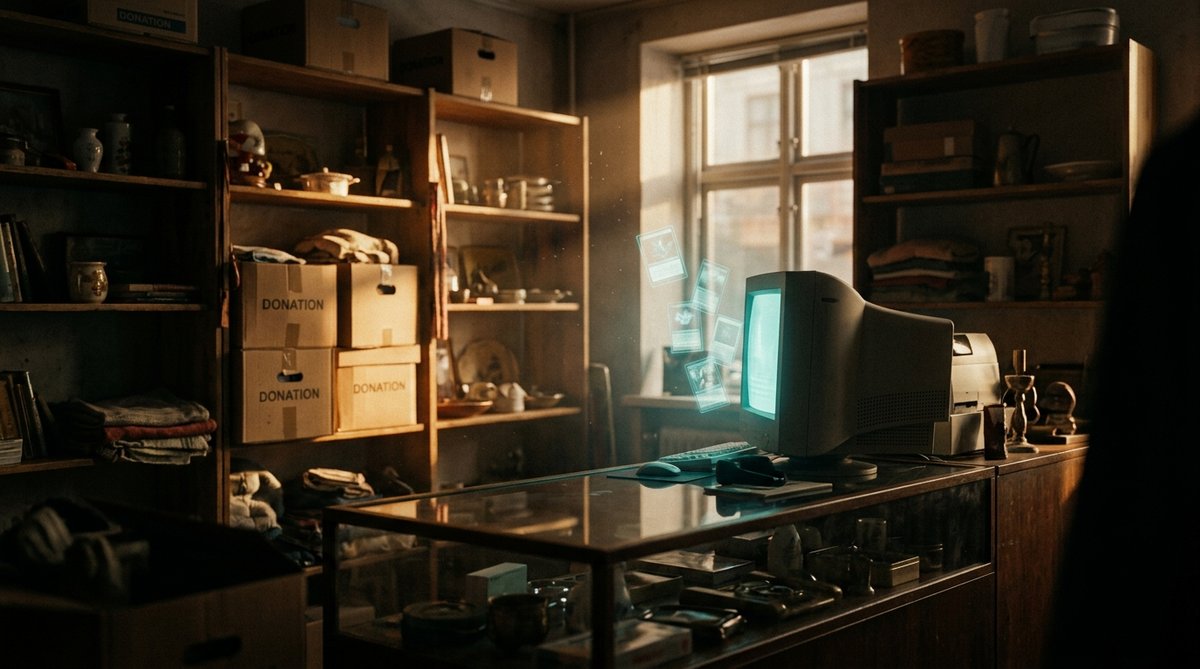
Kirkens Korshær has run second-hand shops in Denmark for more than 50 years. There are roughly 230 of them, full of donated coats, lamps and coffee cups that someone else no longer wanted. This week the organisation opened number 231 — and there is nothing in it you can touch.
Secondhand Skins is a digital thrift store for Counter-Strike 2 items. You donate skins you are not using, the charity resells them, and the money goes to its work with vulnerable children and young people in Denmark. It is a charity shop with a Steam trade link instead of a cash register.
A Thrift Shop With Nothing On the Shelves
The idea is almost aggressively simple, which is probably why it landed. Thrift stores work because unused things still have value, and someone else is willing to pay for them. A CS2 inventory is the same economics in a different format: most players accumulate items over years, use a handful of them, and leave the rest sitting in a menu they rarely open.
Kirkens Korshær is a Danish social relief organisation in the same family as Goodwill or the Salvation Army, funded by its shops and donations rather than by game companies. Bringing that model into a digital economy means the organisation is not buying anything, not holding inventory risk in the usual sense, and not competing with the game's own marketplace. It simply takes what players are finished with.
Morten Østergaard Sørensen, the organisation's head of communications, framed it as recycling rather than fundraising: give the items a second life, and at the same time support children and young people in vulnerable positions in Denmark. The stated goal is also to meet a group the charity rarely reaches — gamers, specifically men aged roughly 24 to 44, a demographic that has little natural contact with a second-hand shop that sells furniture.
How the Handover Actually Works
The process has four steps and no sign-up form:
- Open the campaign page and follow its official Steam trade link.
- Select the CS2 items you want to hand over.
- Send the trade offer to Kirkens Korshær.
- The organisation accepts, then resells the items; proceeds fund its social work.
Two restrictions matter. First, only Counter-Strike 2 items can be donated — no Steam accounts, no full games, no items from other titles. Second, donations are voluntary and final: once an item has been sent, it cannot be returned. The charity's own wording is that donors must have the right to transfer whatever they hand over, which is a polite way of saying do not donate something you are holding on someone else's behalf.
It is also worth being explicit that Secondhand Skins is an independent project. It has no affiliation with, partnership with, or endorsement from Valve or Steam. This is a charity using the trade system the way any other player would.
Why Anyone Would Give Away a Knife
Here is the honest answer: most people will not, and the project does not depend on them doing so. The organisers have said they expect the value to come from bulk — lots of small, ordinary donations that individually are worth almost nothing. A Factory New Butterfly Knife is not the target. A pile of forgotten Field-Tested rifles and stickers nobody is going to list is the target.
That is a real category of item, and it is bigger than most players assume. Anyone who has opened cases for a few years has a drawer of duplicates: the same Mil-Spec skin four times over, stickers from a tournament they cannot remember watching, cases they never opened. Individually those items are worth less than the effort of listing them. Collectively, across tens of thousands of players, they add up to actual money for a charity that does not have much of it.
The obvious counter-argument is that this is a weird way to fundraise — asking gamers for digital goods when you could just ask for cash. Sørensen's answer is that the mechanism is the point. It removes the friction, and it lets people contribute something they already own rather than something they have to go and buy.
The Question They Knew Was Coming
Because CS2 items come out of cases, and because cases are loot boxes, someone was always going to ask whether a children's charity should be anywhere near this economy. The organisation saw it coming and addressed it directly: the campaign is aimed at adults.
That is reflected in how it was bought and who it was shown to. The social media targeting was set at people over 24, and the influencers involved were chosen for older audiences. Sørensen's line on the loot box comparison was blunt — these are not loot boxes, and the campaign is not selling anything. Whether you find that persuasive is a separate matter, but the transparency is better than most game-adjacent fundraising campaigns manage.
There are also the practical realities of the format. Items arriving via trade carry a hold period before they can move again, which slows the charity's resale pipeline. Bulk donations take time to sort, and the resale side requires someone to price items that fluctuate with every update. This is not a campaign that runs itself after launch.
Eighteen Skins and a Long Game
The Danish broadcaster DR, which covered the launch, reported that 18 skins had been donated at the time of publication. That is not a wave of generosity — it is the first day of a shop that plans to be open for years.
For context on what CS2 items can be worth, DR referenced a skin featured in its own 2021 reporting that had a price tag north of 126,686 kroner (roughly $19,000). The existence of outliers like that is exactly why the charity says it is not counting on them. The plan is volume, patience, and a steady trickle of items that would otherwise sit forgotten in an inventory forever.
If you want to see what your own unused items are actually worth before deciding whether to donate them, listing them is the honest comparison. Live prices for thousands of CS2 skins, knives, stickers and cases sit on our skin marketplace, where you can check a price in seconds. If it turns out the drawer of duplicates is worth more than you thought, that is useful information either way.
What the Gamers Get Out of It
The obvious payoff is charitable, but there is a second one that the launch coverage largely skipped: the campaign quietly makes the case that in-game items are real property with real resale value. A skin nobody can hold is being accepted, priced and turned into funding for social work in a country on the other side of the world from the servers it lives on.
That is a stronger argument for the skin economy than any price chart. The most valuable items in an inventory are the ones somebody else wants badly enough to pay for — and occasionally, they are the ones somebody else needs. If you are clearing out your own inventory this month, whether that means opening a Fan Favorite case, trading up a stack of red skins, or simply handing the leftovers to a shop with 230 branches and no shelves, the underlying lesson is the same one thrift stores have been proving since long before Counter-Strike existed: value does not disappear just because you stopped using something.