Season 5 Armory: Why Valve's Content Blitz Is Reshaping CS2 Skin Economics
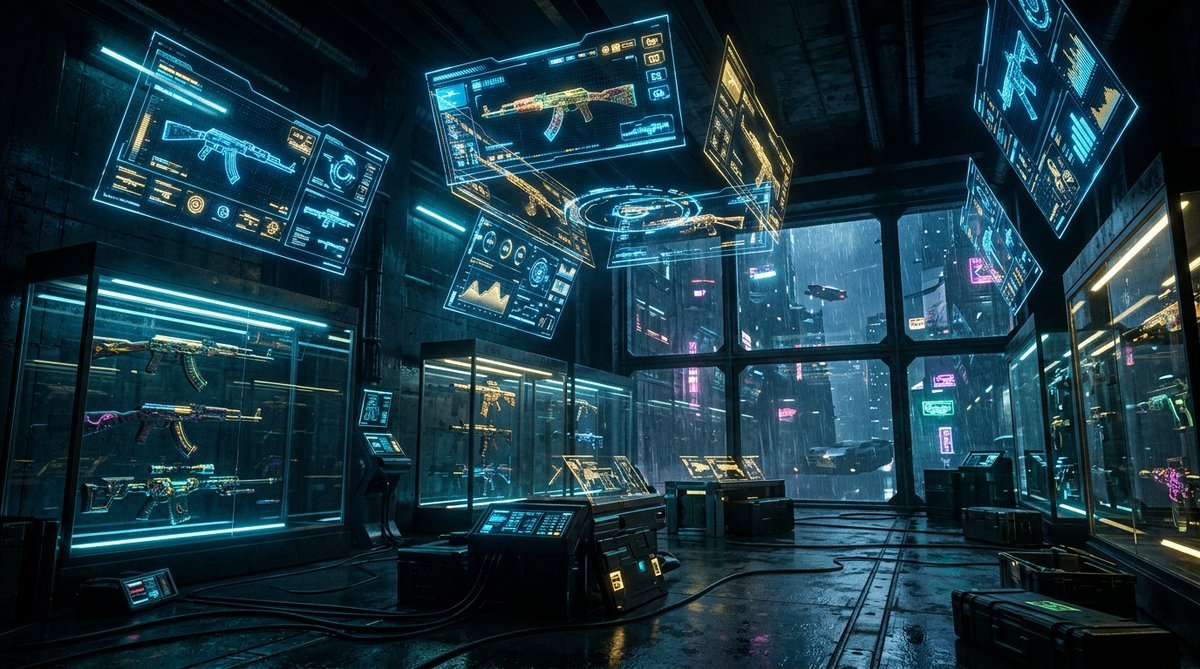
Season 5 and the Armory: Valve Is Flooding CS2 with Content — Here's Why That Changes Everything
On July 8, Valve shipped the Season 5 update alongside a refreshed Armory, and it was one of the quietest game-changing patches in CS2's history. Cache entered the active duty map pool, four community maps got the axe, and the Armory received two new weapon collections and two new sticker collections — all from community creators via the Call to Arms program. On the surface, it's just another content drop. But look closer, and it signals a fundamental shift in how Valve is treating the CS2 economy.
Let me be clear about my position: this is good for players and bad for anyone treating CS2 skins like a passive investment vehicle. Here's why.
The Bull Case: More Content = More Players = More Demand
The numbers support an optimistic view. CS2 currently has 30.5 million monthly active players — the highest sustained player count in Counter-Strike history. Season 5 brings a refreshed Premier mode with a reset ladder, Cache replacing Overpass in active duty, and the Armory receiving four entirely new collections in a single patch.
The Spy Tech and Arabesque weapon collections add 30+ new weapon skins between them, ranging from consumer grade to covert rarity. The Fruits & Vegetables and Auto Racing sticker collections bring dozens of new sticker designs. For players, this means more ways to customize loadouts. For the market, it means a broader base of items generating trading volume — and historically, higher trading volume correlates with healthier price stability across the board.
There's also the Call to Arms factor. These aren't Valve-designed skins — they're community-created, which means the creators earn a cut of every sale. That incentive structure has already produced some of CS2's most iconic skins (think AWP | Duality, AK-47 | Bloodsport). When community creators see consistent payouts, they produce more high-quality work, and the overall skin quality rises. That's a virtuous cycle that directly benefits the market.
The Bear Case: Supply Is Exploding Faster Than Demand
Here's the uncomfortable math. In the last 12 months, Valve has added: the Dead Hand Collection (17 skins + 22 gloves in March), the Armory refresh (2 collections + 2 sticker sets in July), the Cologne 2026 sticker capsule (June), the Jackass Sticker Capsule (July), and Nightmode II Music Kits (May). That's at least 80 new skins and several hundred new stickers added to the ecosystem in roughly four months.
Compare that to the CS:GO era, where a single operation might add 16-20 skins total across six months. The velocity of new content is roughly 3-4x faster than the CS:GO cadence. More items competing for the same pool of buyer attention means individual skin values get diluted — not because the skins are worse, but because attention is a finite resource.
The removal of community maps Warden, Stronghold, Alpine, and Sanctum is another signal. Valve is cycling content faster — maps come and go, collections rotate through the Armory on shorter cycles. This creates a "temporary scarcity" game where items are available for a limited window, but with a faster rotation rate than before, the FOMO-driven price spikes may be shorter-lived.
My Take: Adapt or Get Left Behind
I think the outrage about "skin value dilution" misses the point. CS2's economy isn't supposed to be a store of value — it's a marketplace for items people actually want to use in-game. The 30.5 million players aren't logging in to check their portfolio; they're there to play Cache, rank up in Premier, and flex their Spy Tech M4A1-S.
For traders and investors, the strategy needs to evolve. The old playbook of "buy popular skins and hold" worked when supply was scarce. Now, the edge is in understanding collection rotation cycles. When a collection leaves the Armory, prices spike. When it returns (or a similar collection drops), prices correct. The winners are the people who track the schedule, not the people who treat every covert skin like a long-term bond.
The Spy Tech and Arabesque collections are a perfect case study. If these rotate out in the next Armory refresh (likely within 2-3 months), expect 20-40% price appreciation on the covert items during the "gap" period. If they stay in the Armory indefinitely, the rarer items will still hold value, but the lower-tier skins will trend toward their floor. Predicting which scenario plays out is the new skill gap in CS2 trading.
The Community Creator Economy Is the Real Story
Lost in the market chatter is the fact that the Call to Arms program is now Valve's primary content pipeline. Spy Tech, Arabesque, Fruits & Vegetables, and Auto Racing all came from community artists — not Valve's internal design team. When the Dead Hand Collection dropped in March with 17 community-created finishes, it was the first major test. The Armory refresh in July doubled down.
For skin creators, this means consistent income from the Steam Community Market — a paradigm shift from the CS:GO era when getting a skin into the game was a one-in-a-million lottery. For the market, it means the creative supply chain is now industrialized. The old scarcity model relied on Valve's internal team producing skins at their own pace. Now, there are thousands of community creators submitting high-quality work, and Valve can curate and deploy much faster.
The math: if each new collection adds 15-17 skins, and Valve ships 4-6 collections per year, that's 60-100 new skins annually. At that rate, individual skins need to be genuinely exceptional to stand out — either in design quality or rarity tier. The days of "buy any covert and wait" are over.
At the end of the day, Valve is running the biggest free-to-play game on Steam with 30 million monthly users, and their job is to keep those players engaged — not to protect your skin portfolio. The Season 5 Armory update is a net positive for the game's health. If you want to explore the new collections or test your luck with the latest cases, the Phantom Cache case features some of the most sought-after skins in the current rotation. Just don't mistake an entertainment purchase for an investment.