Overwatch Is Coming Back to CS2: What Players Keep Asking, Answered
Overwatch Is Coming Back to CS2: What Players Keep Asking, Answered
On August 11, 2026, Valve quietly turned a page in Counter-Strike history: traces of a CS2 Video Review portal — the spiritual successor to CS:GO's Overwatch system — surfaced in a game update, and players started receiving invitations to label match footage for the VACNet anti-cheat. Dataminer Gabe Follower was first to publicize the portal's warning text, and by the next morning, coverage had spread across dust2.us, Tech Times, and players.com.ua. The system isn't live for everyone yet, and that ambiguity has produced a flood of questions. Here are the ones that matter, answered with what's actually known.
What Is Overwatch, and Why Does It Matter Again?
Overwatch was CS:GO's community review system. A select group of trusted players watched match replays of suspected cheaters and voted on whether the evidence showed cheating or fair play. The verdicts fed into Valve's ban pipeline, and the system ran for years before going quiet in the CS2 transition.
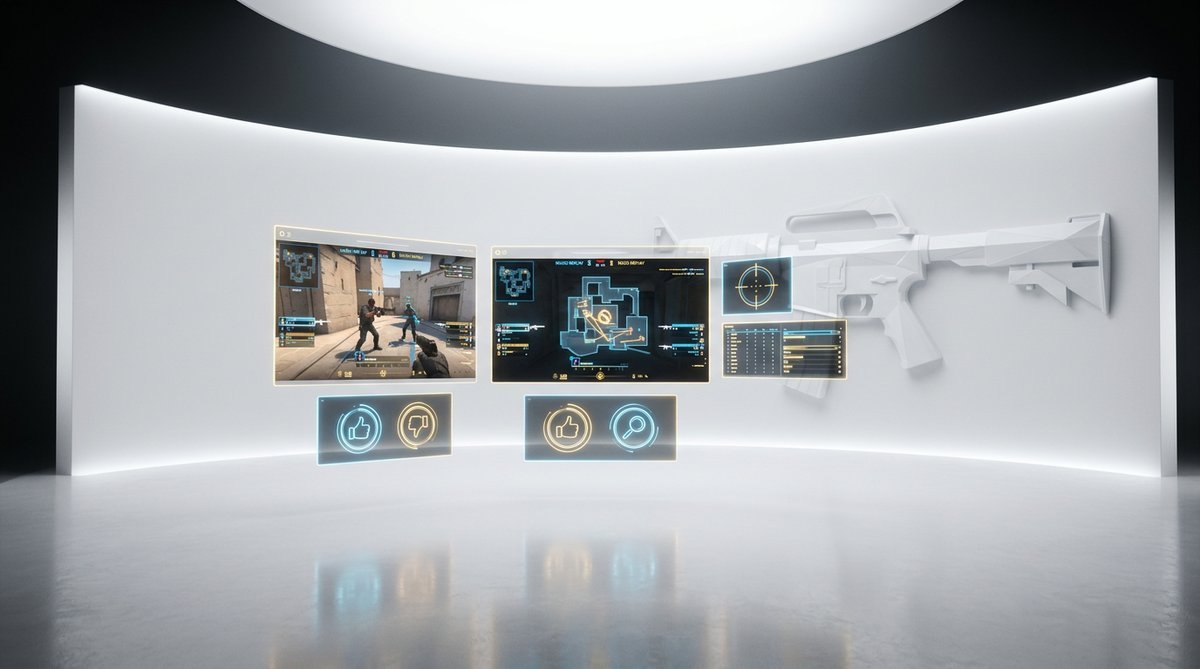
The new version is different in one crucial way: it is wired directly into VACNet, Valve's machine-learning anti-cheat. Instead of verdicts being the final word on a ban, the labels you produce become training data for the AI that detects cheaters automatically. The portal's own warning text says it plainly — your verdict "may be used to train future VACNet models."
Why now? Rumors of an Overwatch revival started circulating on August 7, when insiders claimed Valve was preparing a new review system. The August 10 reports from VPEsports confirmed the direction, and the August 11 update made it concrete. The speed of the rollout — rumor to shipped plumbing in four days — suggests the project had been in development for months, waiting for the right window.
How Does the New VACNet Review Actually Work?
Based on the leaked portal text and the August 11 update, eligible players see short gameplay clips from Counter-Strike matches and answer a set of questions about what they observed. You can render a verdict — cheater or not — or skip the case entirely when the evidence is inconclusive.
Valve is explicit that "Unknown" is an acceptable (and expected) answer in many cases. That is a deliberate design choice: forcing a binary decision on ambiguous footage would poison the training set. The system is built to tolerate uncertainty, which tells you a lot about how VACNet consumes the data.
One warning stands out in the portal text: players are told not to broadcast or record the review footage. The reasoning is security, not secrecy for its own sake — if cheat developers can study exactly which clips get flagged, they can reverse-engineer what VACNet looks for and tune their cheats to evade it.
The clips themselves appear to be short, isolated moments rather than full matches — enough context to judge an engagement, not so much that reviewing becomes a second job. That format matches how machine-learning pipelines are typically fed: small, labeled samples with a clear question per sample.
Will My Verdict Get Cheaters Banned?
Not directly. The portal text is unambiguous: "Your verdict will not directly affect the player you are observing." This is the single biggest difference from CS:GO's Overwatch, where a majority verdict could trigger action.
Instead, think of the human reviewer as a teacher and VACNet as the student. The labels teach the model to recognize the difference between a wall-bang that looks suspicious and an actual wallhack. When VACNet eventually acts on what it learned, the cheater gets banned by the AI — not by your individual vote.
This also explains the timing. In late July, Valve closed a VACNet bypass that had let rage cheats evade AI detection for months. Patching the hole was step one; rebuilding the training pipeline with human labels is step two. A detection model trained on real player judgment is far harder to fool than one trained only on automated heuristics, because the labeled data captures the messy, human side of "this looks off."
Why Is Valve Asking Players to Label Gameplay at All?
Because machine-learning anti-cheat is only as good as its ground truth. VACNet needs thousands of accurately labeled clips — legitimate flicks, obvious aimbot, borderline movement — to sharpen its detection. Valve could hire a team to label footage internally, but the community already proved with CS:GO's Overwatch that volunteers will do it at scale for free.
The economics are real. CS2 consistently pulls over a million concurrent players on Steam, and a fraction of that player base generating labels costs Valve nothing while producing far more training data than an internal team ever could. It is crowdsourcing applied to anti-cheat, and it is the same playbook the company used for a decade in CS:GO.
There is a quality-control angle too. A reviewer who randomly clicks "Unknown" on everything gets filtered out of the program over time. The system scores reviewers against consensus, which keeps the label quality high enough to actually train a model.
The historical precedent is instructive: at its peak, CS:GO's Overwatch had thousands of active reviewers processing cases around the clock. The community proved it could sustain that effort without compensation, driven by the same motivation that keeps people moderating forums and building wikis — a sense of ownership over the game they love.
What Does This Mean for Your CS2 Inventory?
For skin owners, the practical answer is: the economy should get healthier, not worse. Cheating drives legitimate players out of matchmaking, and players who leave stop buying, trading, and opening cases. A functional anti-cheat keeps the player base — and the demand for skins — intact.
There is also a direct inventory angle. Accounts banned for cheating typically have their inventories locked, not deleted, which means those items stop circulating. When cheaters with hundreds of cases' worth of drops get removed from the trading pool, supply tightens slightly. That is why ban waves historically produce a small, short-lived bump in skin prices rather than a crash.
The realistic take: you should not buy skins expecting a VACNet-driven rally. But you also should not fear this change. The return of community review is a structural improvement to the game's health, and a healthier game is a healthier skin market.
One more thing worth watching: if the labeling program expands from a small invite pool to a broader rollout, it becomes a trust signal. Valve only hands Overwatch-style review powers to accounts with a clean record and significant playtime — a status that itself becomes a soft badge of legitimacy in the community, and by extension, among traders who care about the health of the ecosystem they buy into.
What Happens Next
Valve has not announced a public rollout date for the CS2 Video Review portal. The August 11 update shipped the plumbing — the labeling UI and the invitation system — but access appears to be rolling out gradually to trusted players, similar to how CS:GO's Overwatch started with a small pool of reviewers.
If you want to stay on top of where the market heads while this rolls out, the smart money is on watching case prices and knife demand rather than chasing headlines. The items people chase when they play more — knives, gloves, and the cases that drop them — tend to move first when player sentiment shifts. Phantom Cache is a good barometer: it has been opened over 98,000 times on skinvs, and its price moves with exactly the kind of player-confidence swings this update could trigger. Keep an eye on it.
The bottom line is simple. Overwatch is back, VACNet is learning, and the labels come from players like you. Whether you volunteer as a reviewer or just keep trading, the update is net-positive for everyone who treats CS2 as a long-term hobby rather than a quick flip.