Why Your CS2 Skin Is Up 22,000% — and Still Won't Sell
Why Your CS2 Skin Is "Up 22,000%" — and Still Won't Sell
On September 7, a Souvenir USP-S | Forest Leaves in Battle-Scarred condition showed up with a listed price of $1,063.86. Against the previous week that is a move of +22,439.41%. The Field-Tested version of the same finish was sitting near $76. Outside of a small group of souvenir collectors, the skin normally trades in the cents-to-low-dollars range.
There was one more number attached to that listing, and it is the only one that matters: zero. Zero recorded trades for the week. Not a slow week — no transactions at all.
That single listing is the cleanest example of a problem every CS2 trader eventually runs into. Price charts and marketplace feeds can print enormous percentage moves that describe nothing except the ambition of one seller.
The Listing That Moved 22,439% Without a Single Trade
Take.skin's September 7 weekly report flagged the week as "one of the most extreme liquidity vacuum environments" it had tracked in months. The detail that made the week unusual was structural: every single item on both its Top 5 Gainers and Top 5 Losers lists carried zero recorded volume.
The second-largest move on the board was a Sticker | br0 | Cologne 2026 autograph, listed at $5.70 for a +3,971.43% weekly change. Autograph stickers from recent Majors do see genuine speculative spikes. This was not one of them — again, no trades were recorded at that price.
What produces a number like that is not demand. It is the mechanics of a thin order book. When a seller removes their ask and replaces it with a much higher one, and nobody on the other side is bidding, the "market price" simply moves to wherever the only remaining ask sits. One optimistic seller can move a public price by four digits without a single dollar changing hands.
The blue-chip end of the market, meanwhile, was absent from those leaderboards entirely. High-volume play skins, liquid knife tiers and established sticker capsules — the items that actually anchor the economy — did not appear anywhere on either list. When the only movers are items nobody is trading, you are not looking at a market move. You are looking at listing mechanics.
What a 0.00% Median Hides
A week later the headline number looked calm. CSBeacon's September 11 market notes measured 34,333 matched market-listing references and found a median move of exactly 0.00% from September 4.
That flat median was misleading, and the report said so directly. Underneath it, 16,086 references moved lower against only 10,158 that moved higher. Another 8,089 sat inside a plus-or-minus 0.25% noise band. Roughly 6,000 more items fell than rose while the middle value refused to budge.
The breakdown by group explains the tilt:
- StatTrak weapon skins posted a -5.00% median, with 2,169 references lower against 846 higher.
- Standard weapon skins were similarly soft at a -4.66% median.
- Cologne Ranked stickers held a 0.00% median, but 225 references moved lower against 85 higher, with 268 inside the noise band.
This is the part most people miss. A median of zero does not mean the market went nowhere. It means the single middle reference did not move while a clear majority of everything else drifted down. If you own five or six mid-tier skins rather than one median-priced one, your actual week was probably negative even though the headline was flat.
Scale matters here too. Across 42,090 tracked items and 41 marketplaces, the total CS2 market cap sat at roughly $5.464 billion at the end of August, with about $643.1 million of volume turning over in 24 hours. That is a deep, liquid market at the top. The phantom moves live in the thin tail underneath it.
Three Ways to Tell a Real Move From a Phantom One
Sorting genuine demand from listing noise takes about thirty seconds per item, and it is the difference between buying a trend and buying someone's hope.
- Check volume before price. A move with no recorded transactions is not a move. If an item shows double-digit gains and zero sold, treat the price as an ask, not a value.
- Look at the sold-per-day figure, not the listing count. A knife with 1,200 listings and 40 sales a day is liquid. A knife with 12 listings and no sales is a museum piece — you can buy it, but you may not be able to sell it for months.
- Compare the ask against the cheapest credible alternative. If the same skin is listed elsewhere at a fraction of the price, the headline number is simply the highest ask anyone has been bold enough to post.
There is a fourth signal worth watching, and it is the most uncomfortable one: when a listing's own description describes it as the cheapest available and the item still has no buyers, the market has already voted.
Why This Is a Feature of Thin Markets, Not a Bug
Counter-Strike skins trade on dozens of independent venues with no central clearing house, no circuit breakers, and no consolidated tape. Every marketplace computes its own "last price" from whatever listings it happens to see. An item that is genuinely rare can therefore show wildly different values on different sites in the same hour.
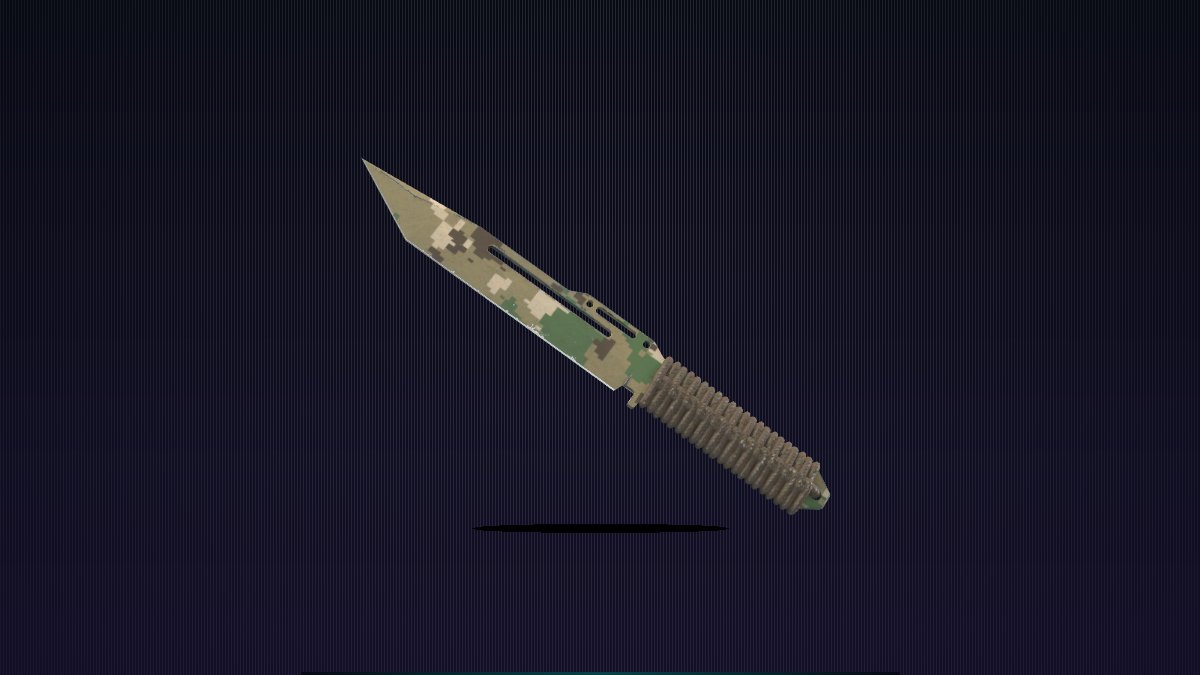
Finishes that sit at the cheap end of a popular knife family are a good illustration. A Forest DDPAT or Safari Mesh blade will usually have deep supply, dozens of live asks and a real traded price — which is exactly why its chart stays boring. The dramatic numbers cluster around low-supply, high-ask items where a single seller controls the visible book.
During the Cologne 2026 cycle this became especially visible in stickers. The event shop stayed available through September 29, which kept supply and attention shifting between finishes and teams week to week. Treating all Cologne stickers as one tradeable block misses the entire point — the 2026 autograph and holographic tiers behaved nothing alike.
For a buyer, the practical lesson is that the number at the top of a listing page is the least reliable piece of information on it. The reliable pieces are traded volume, sold-per-day, and the spread between the cheapest ask and the next one up.
What This Means for Your Own Inventory
If you are holding skins you plan to sell, market yourself against real demand. Two things follow from the data above.
First, patience is not free. A -4.66% median week on standard weapon skins means a two-month hold quietly costs you real value if the item is not also appreciating. High-liquidity items that sell within days are worth their slightly lower ask.
Second, watch your finish, not just your weapon. The gap between a Field-Tested and Battle-Scarred copy of the same skin can run into double-digit percentages, and in thin markets that gap widens faster than the item does.
For buyers, the flip side is opportunity. If you filter out zero-volume noise and shop the liquid end of the market where sellers are genuinely competing, the same skin frequently lists at a meaningful discount to where the dramatic charts say it trades. That is exactly the environment a live marketplace creates — you can browse real CS2 skins with visible pricing, or take a swing at a Phantom Cache and see whether the drop math beats the listing math. For most players chasing a specific finish, it usually does not.
The 22,439% headline will keep appearing. It just will not be describing anything you can actually sell into.