Everything You're Afraid to Ask About CS2 Major Stickers
Everything You're Afraid to Ask About CS2 Major Stickers
You've seen them in the Steam Market. You've watched streamers unbox thousands of them. You've heard people talk about "Kato 14 holos" like they're discussing fine art. But if we're being honest — most of us still don't fully understand how CS2 Major stickers actually work. And that's fine. This is the guide I wish someone had written when I started.
What exactly are Major stickers?
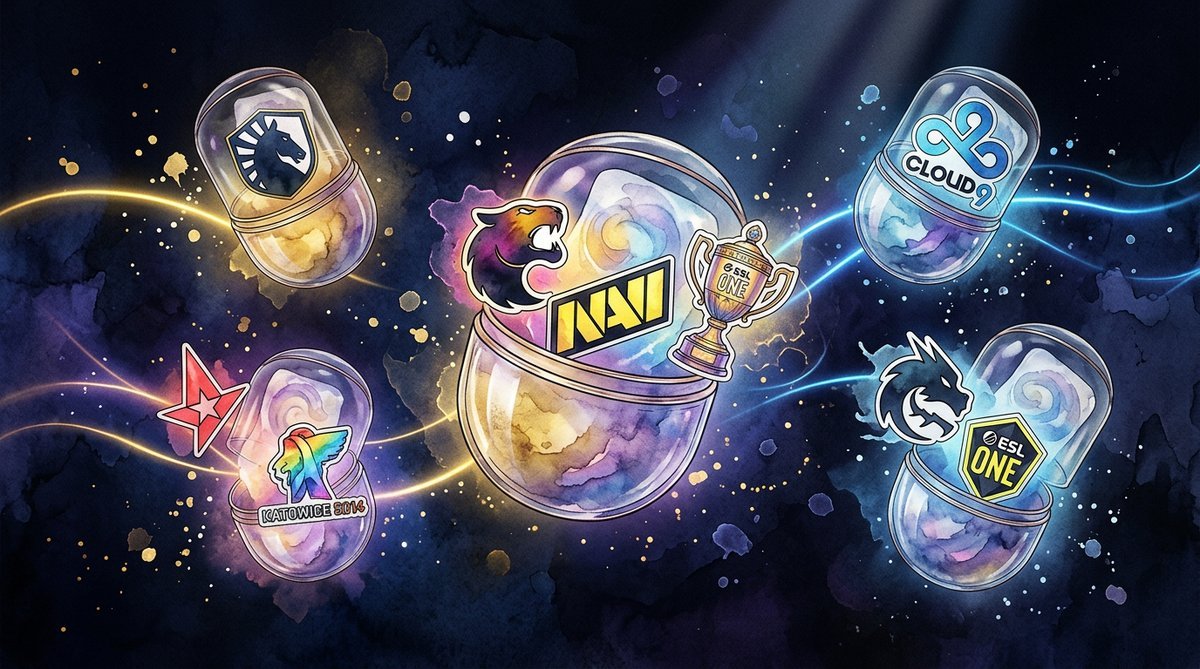
Major stickers are digital collectibles released for each CS2 Major Championship. Think of them as limited-edition trading cards for esports teams. Each participating team gets its own sticker design, and there are usually multiple tiers: Paper, Glitter, Holo, and Gold. The stickers can be applied to any weapon skin in your inventory — and crucially, they can be scraped to create a worn, battle-hardened look.
What makes them special is that they're only available for a limited time — usually 60-90 days during and after the Major. Once the sale ends, the supply is permanently capped. No more are ever created. That's the economic engine behind every Major sticker that's ever appreciated in value.
Why do some stickers cost more than a knife?
A Katowice 2014 iBUYPOWER Holo sticker currently trades for over $60,000. Yes, a single sticker. The math is simple but brutal: when Valve released those stickers in 2014, CS:GO had fewer than 300,000 concurrent players. Almost nobody bought them. Fast forward to 2026: CS2 has 32.4 million monthly players, and the supply of Kato 14 holos is measured in the hundreds.
Every Major sticker follows the same curve — just at different scales. Stockholm 2021 holos went from $1 to $15+. Paris 2023 went from $0.25 to $3+. The formula is always: limited supply × growing player base × time = appreciation. The only question is the multiplier.
Data point: the average return on Major sticker capsules held for 2+ years after the sale ends is approximately 300-500%, based on Steam Market historical data from 2014-2025. But that's the average — some capsules are still underwater, and a few (Kato 14, Krakow 17 Gold) returned 10,000%+.
What's different about the new Cologne 2026 stickers?
Valve just released the Cologne 2026 Ranked Series stickers on July 28, and they break the mold in two important ways.
First, the royalty split. 50% of all revenue from these stickers goes directly to players, teams, and the tournament organizer. Previous Majors had lower or undisclosed splits. This means teams have a real financial incentive to promote their stickers — and that could drive demand in a way we've never seen before.
Second, the visual ranking system. Unlike previous Majors where every team's sticker looked the same (just different logos), Ranked Series stickers visually show the team's tournament placement. A "Champion" sticker is visually distinct from a "Quarterfinalist" sticker. This creates a natural rarity pyramid — and in the CS2 economy, rarity always commands a premium.
These stickers are priced lower than the Event Series and will be available until September 29, 2026. That's a tight 60-day window, which could accelerate the post-sale supply crunch.
Should I buy stickers to apply or to invest?
This is the most important question, and the answer depends entirely on your goal.
If you want to craft: Buy Paper or Glitter stickers. They cost $0.25-$1.00 each and look great on most skins. A 4x craft of matching team stickers on an AK-47 or M4A4 costs less than $5 and looks cleaner than most $50 skins. The new Ranked Series stickers at their lower price point are perfect for this.
If you want to invest: Buy capsules (unopened sticker containers), not individual stickers. Capsules are consumable — every time someone opens one, the supply decreases. Individual stickers are permanent. Historical data shows capsules outperform individual stickers by roughly 2-3x over a 2-year horizon because of this "supply burn" mechanic.
Golden rule of sticker investing: Never open capsules you're holding for investment. The expected value of opening is almost always negative. You're paying for the gamble, not the expected return.
What are the biggest mistakes new sticker investors make?
I see the same three mistakes every Major cycle:
Mistake #1: Buying on day one. Sticker prices almost always start high (hype + limited initial supply), dip during the middle of the sale period, and then recover after the sale ends. The optimal buying window is typically 30-45 days into the sale, when hype has cooled but the deadline hasn't created urgency yet.
Mistake #2: Going all-in on one team. Team stickers are binary bets — if the team disbands, gets banned, or has a scandal, your investment evaporates. Diversify across 5-8 teams, or better yet, buy the capsule itself (which contains all teams).
Mistake #3: Ignoring the Holo/Gold premium. Not all sticker tiers are equal. Gold stickers have an estimated drop rate of less than 1% per capsule, making them genuinely rare. Holos are around 3-5%. Paper stickers are common and almost never appreciate significantly. If you're buying individual stickers, focus on Holo and Gold.
How do I actually check sticker prices?
The Steam Community Market is the most direct source, but it's slow and doesn't show historical trends. Third-party market trackers like skinvs give you real-time pricing, price history charts, and float values — all the data you need to make informed buying decisions.
When comparing stickers, always check: the current lowest listing price, the 24-hour volume (higher volume = easier to sell later), and the price trend over the last 7 days. A sticker that's flat or trending down during the sale period is normal. Sharp upward moves during the sale usually mean FOMO — and FOMO buyers almost always lose.
Ready to start your sticker collection? Browse the complete skinvs market to compare Cologne 2026 Ranked Series sticker prices, track price history, and find the best deals across all rarities and teams. Whether you're crafting a 4x loadout or building a long-term capsule position, having real-time data makes all the difference.