Where CS2 Skins Actually Go When an Account Gets Banned
Where CS2 Skins Actually Go When an Account Gets Banned
In the first week of October, Valve dropped the hammer on a few hundred Counter-Strike 2 accounts that had bought their way into a popular paid cheat. Some of those inventories were not small. Community screenshots showed multiple AWP | Dragon Lore, an M4A4 | Howl, stacks of old tournament stickers, and a StatTrak Glock | Fade that cannot legitimately exist. None of those items will ever be sold again.
That is the part most players get wrong. A ban does not delete your skins and it does not return them to the market. It does something quieter and more final: it freezes the entire inventory in place, on an account that can never move a single item out.
What a Ban Actually Does to an Inventory
Under Steam's rules, a VAC ban is permanent and cannot be appealed. Steam Support does not lift it, with the single documented exception of a confirmed system error. Within seconds of the ban landing, three things shut off at once: the account cannot send items in a trade, it cannot list anything on the Community Market, and it cannot use items as inputs in a Trade Up Contract.
The skins themselves stay visible in the inventory. Nothing is confiscated, nothing is burned. That sounds merciful until you understand the second half. Because trade and market access are gone forever, the collection becomes a display case its owner can no longer monetise. A $2,000 inventory becomes a $2,000 museum piece. Its market value to the holder is zero, and the items it contains are locked out of circulation permanently.
There is a detail traders miss here too. A game ban — scoped to CS2 rather than the whole Steam account — carries the same trade lock on your items. You keep your other games and your account; you lose the ability to do anything with your skins. A "clean second account" solves nothing either, because there is nothing left to transfer from the banned one.
The October Wave: Dragon Lores and a Glock That Shouldn't Exist
Valve ran the October sweep on October 2, 2026, just before shipping its patch that night. The target was a batch of accounts that had purchased hacks from one well-known cheat seller, and the exact number was never published — players simply kept finding profiles that had gone dark.
What made this wave unusual was the value sitting inside it. The accounts being locked down were not throwaway shells. Several held absurd inventories, which is why the reaction spread so fast. That StatTrak Glock | Fade is worth pointing out specifically: that finish does not exist as a legitimate StatTrak item, so its presence is evidence of an inventory-injection tool rather than a lucky unboxing.
The same week brought a rare piece of good news. Players who had been wrongly banned for playing CS2 on Windows 7 had their bans reversed, confirming again that Valve's automated enforcement is not perfectly precise. That matters for the rest of this article, because the error rate is not hypothetical — it is measurable.
How Much Value Goes Quiet
The best-documented wave this year ran August 6 to 10. Community tracking put it at somewhere between 30,035 and 30,630 accounts, with roughly 15,141 of them still holding items when the ban landed. The combined frozen value came to about $69,361, and the single most valuable inventory caught in the sweep was worth $5,618.
Then came the twist. Once the sweep finished, trackers identified 326 accounts whose bans were reversed within three days. Those 326 accounts alone held $47,942 in items — roughly 40% of the entire dollar value caught in the wave. A two-thirds reduction in accounts produced a 40% swing in frozen value, which tells you exactly where the money sits in CS2: in a very small number of very expensive inventories.
A separate scan of the same wave sampled over 21,000 accounts and found something even more revealing. Of the roughly 21,500 inventories checked, 19,962 were worth less than a dollar and half of those were completely empty. Only 78 accounts held more than $100. The total frozen value landed somewhere between $38,000 and $55,000 depending on how deep the scan went.
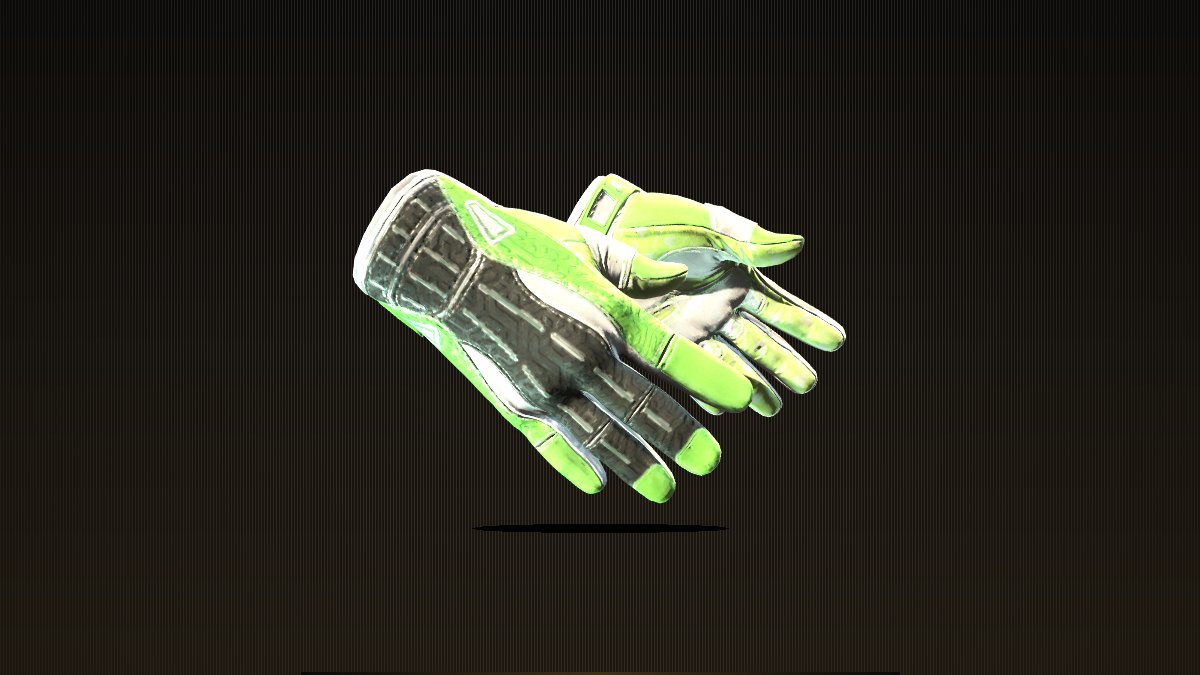
The single most valuable item caught in that scan was a pair of ★ Sport Gloves | Hedge Maze at $3,600, alongside a Factory New Butterfly Knife | Gamma Doppler, an M4A1-S | Party Animal, and a Souvenir AWP | Desert Hydra. Those were the headline pieces — the ones that would otherwise have been listed, sold, and recycled back into the market.
Read those two numbers together and the shape of modern CS2 farming becomes obvious. Disposable shells hold nothing by design; everything they harvest is funnelled into a handful of storage accounts. That is why frozen value concentrates so hard, and why the March wave — 960,000 bot accounts banned in a single day, a figure Valve's own CS2 project lead confirmed publicly — barely dented prices. Banning empty shells removes labour, not supply.
Almost None of These Are VAC Bans
Here is the statistic that reframes the whole story. Across a sample of more than 21,000 banned accounts from the same sweep, there was exactly one VAC ban. Everything else was a game ban.
The distinction is not cosmetic. VAC fires when anti-cheat software detects cheat code on the machine running the game, and it is platform-wide: it follows you across every VAC-secured title on Steam and kills Workshop access too. A game ban is issued by the developer for other violations — farming, boosting, account trading — and is scoped to CS2 alone.
That ratio explains why this year's enforcement has looked so different from the classic cheat-ban wave. It is not primarily an anti-cheat campaign. It is an economic cleanup aimed at the infrastructure that pumps cheap items into the market, and the 2026 pattern reads like a sustained operation rather than isolated incidents: February, March, June, July, August, and now October.
Why Frozen Supply Is the Real Story
For anyone holding a collection, the practical takeaway is that frozen supply never comes back. A trade-locked inventory is out of circulation tomorrow, next year, and a decade from now. The items do not decay, they do not get re-listed, and there is no appeals process to reopen them.
That is a genuinely bullish argument for scarcity, and it is also why the risk cuts the other way. The same enforcement machinery that freezes a cheat seller's Dragon Lores can, as the Windows 7 episode showed, freeze an honest player's inventory for a while. Collections matter now in a way they did not five years ago, and the accounts holding the expensive ones are exactly the accounts that attract attention.
If you want to be on the other side of that line — buying real items, from real sources, on an account you control — start with a case you can actually open and inspect rather than a marketplace listing you cannot verify. The Frost Vault case is a clean example: fixed odds, real drops, items that land in your own inventory where you can see the float and the pattern before anything else touches them.
Own the item. Verify the float. Keep it on an account that has never run anything it shouldn't.