Valve Sent Lawyers After a Skin Changer - What That Means for Your Account
Valve Sent Lawyers After a Skin Changer — What That Means for Your Account
On 1 September 2026, a cease-and-desist letter left Moscow by post and email. It was not addressed to a cheater. It was addressed to the operators of a skin changer — software that lets players wear knives and gloves they have never owned — and it was signed on behalf of Valve Corporation by a Russian law firm.
Ten days later, the project was gone. Website down, source code pulled, social accounts wiped. The leaker Gabe Follower (Maxim Poletayev) published the redacted documents on 11 September, and Russian and English outlets including Shazoo, iXBT.games, TalkEsport, and Dust2.in picked the story up between 12 and 15 September.
Valve has never posted about this publicly. That makes the paperwork itself the story. Here is what it says, what it does not say, and the questions skin owners are actually asking.
What Did Valve Actually Send?
A pre-litigation claim, not a court filing. Valve's Russian counsel is Melling, Voitishkin & Partners — the former Baker McKenzie Russia practice, spun out in October 2022, and a large Moscow firm with more than 110 lawyers and 28 partners.
The claim lists three groups of infringement: Valve's exclusive rights in its software, its rights in the appearance of weapon, knife, and glove skin designs, and its trademarks. The conduct is described as deliberate and ongoing. The demand was blunt: stop immediately, and delete the infrastructure — the software's source code, its websites, and its social pages.
The alternative was spelled out too. Failing compliance, Valve reserved the right to sue for significant monetary compensation and to ask law enforcement to investigate whether the conduct amounts to a criminal offence. The operator's message to users, quoted by iXBT.games and Shazoo, was short: they had received a claim from Valve's representatives demanding that the site and software cease operating, and to their deepest regret they had no choice but to shut the project down. They thanked users for two years and closed.
Wait — Did Anyone Get Banned?
No, and this distinction matters more than any other in the story. The letter went to the operator. It did not name end users, and no user list was ever published. Valve has not announced a ban wave tied to this action.
That does not make a skin changer safe for the person running it. This class of software injects into or modifies the CS2 process, which is a separate enforcement track with its own consequences under VAC and the Steam Subscriber Agreement. Valve's public position is unchanged: third-party modifications that hook into the game carry ban risk, and the absence of a mass ban in the past is not a guarantee for tomorrow.
Two different hammers, aimed at two different targets. A VAC ban hits a player's account. A cease-and-desist hits a business — domain, source code, socials, potential money damages, and a possible criminal referral. Until this file, skin changers had mostly only faced the first one.
Why Is a Skin Changer a Bigger Deal Than an Aimbot?
Because of what it does to the value of everything you own. A skin changer swaps how your client draws weapons, knives, and gloves. It never touches your Steam inventory, and other players still see what you actually own. For years, plenty of players treated that as a harmless way to try on an expensive loadout.
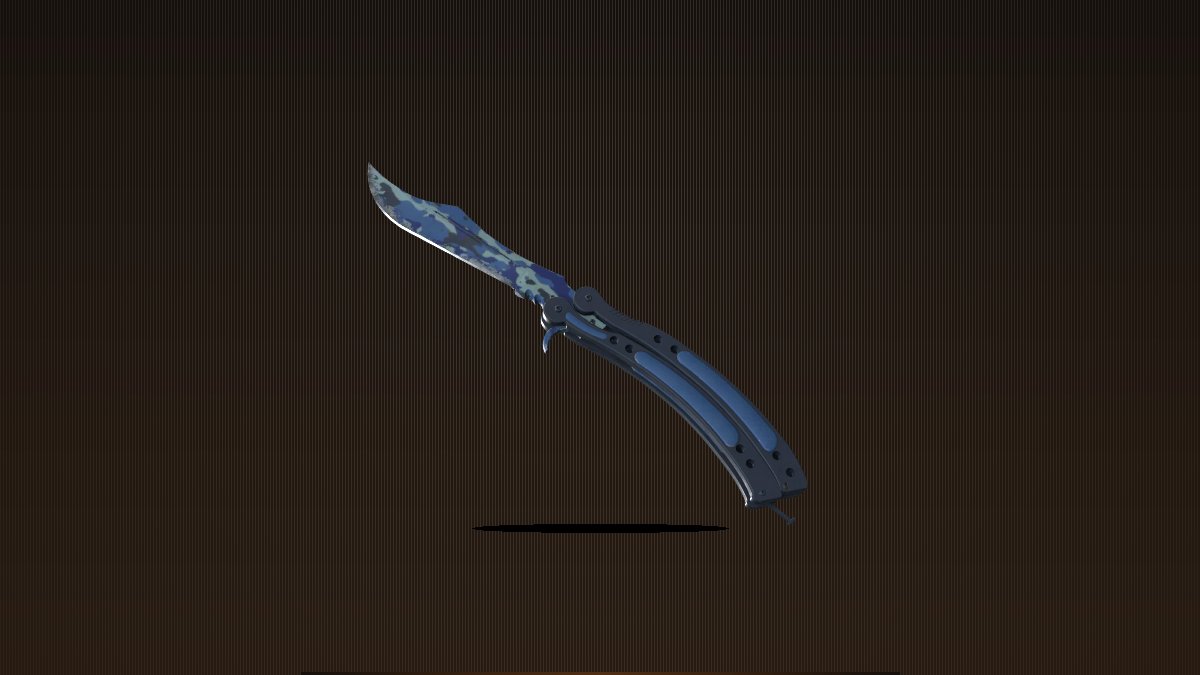
Valve's own economics say otherwise. The entire cosmetics market rests on the premise that a knife on someone's screen was paid for — either by opening cases and buying keys, or by buying the item on the Steam Community Market. If wearing a Karambit you never bought becomes normal, the incentive to open a case weakens with it. That is the argument Dust2.in put next to the fairness one, and both can be true simultaneously: the letter is an intellectual property claim, and its economic effect is that unpaid skins stop generating case and market volume.
Compare the numbers and the stakes get clearer. A weapon case key runs about $2.49 to $2.50, and the published rarity ladder behind it has not changed since 2017: 79.92% Mil-Spec, 15.98% Restricted, 3.20% Classified, 0.64% Covert, and 0.26% for a gold-tier knife or glove — roughly 1 in 385. Every one of those openings exists because the item is real and transferable. A tool that makes the same knife visible for free sits directly on that revenue.
Why Russia, and Why Did This One Actually Land?
Russia is one of the largest Counter-Strike markets in the world, and a meaningful share of skin changer software is sold there. Valve has historically handled this category with anti-cheat detection rather than lawyers, so going through local counsel instead of attempting service from Seattle is the part Russian outlets flagged as a first.
The timing is notable too. Doing this through a Russian firm in 2026, with the sanctions environment introduced in 2022 still in force, is precisely why the case travelled as far as it did. The formal sequence was quick: letter dated 1 September, the project announcing its closure in early September, the documents surfacing on 11 September, and mainstream coverage landing within four days of that.
What is genuinely new in the file is the combination: a CS2 skin changer — software that never touched a Steam inventory — receiving the same style of pre-litigation claim, in Russian, with a demand to delete source code and a criminal-referral threat attached.
Is This the Start of a Wider Crackdown?
Maybe, but that is inference rather than announcement, and it is worth being precise about it.
Valve has used lawyers before. It went after cheat sites in the 2000s, and in 2016 it moved against 23 skin-gambling operators. So "the first time Valve has ever taken legal action" is too strong a claim. The defensible version is narrower: reporting treats this as the first known legal shutdown of a CS2 skin changer, and the first shutdown Valve has achieved through Russian counsel since the 2022 sanctions, plus the first time a skin-changer operator has been pushed to delete source code under threat of criminal referral.
Whether aimbot vendors are next is an open question. A single letter does not equal a sweep of the cheat market, and Valve has not described a wider campaign. What the file does establish is a template: the rights-holder route works, it is cheaper than chasing anonymous operators country by country, and it produces a shutdown without needing a single ban.
What Should Skin Owners Take From All This?
The boring reading is the right one. Enforcement that targets counterfeit access is good news for anyone holding real items, because scarcity is the only reason a finish is worth anything. Every layer of the market — a $2.49 key, a 0.26% gold-tier pull, a Factory New pair of gloves with a clean float — is priced on the assumption that the item behind it is the item. Tools that break that assumption are not a victimless shortcut; they are someone else's inventory being devalued.
So the practical takeaways are simple. If you want a knife behind your name, get it the way everyone else does — open a case and accept the published odds, or buy the exact item you want and skip the gamble entirely. If you are considering software that asks you to run an injector or drop a .dll into the game folder, understand that you are now in the category Valve has taken to a law firm, on top of the existing VAC exposure.
Case openings, with their published ladder, and straight purchases both start from the same place: the item has to actually exist and actually change hands. You can work through that math yourself on Silent Form, where the possible drops and the odds sit on the same page as the price. Or compare live listings across finishes and wear grades on the SkinVS shop and buy the specific knife you were thinking about — legitimately, at a price someone else already bid on.
One letter does not rewrite the market. But the direction of travel is clear: the skins economy is being defended as property, and the players who treat it that way are the ones who keep their value.