Before You Spend $1,126 on a CS2 Trade-Up Contract, Run This Math
Before You Spend $1,126 on a CS2 Trade-Up Contract, Run This Math
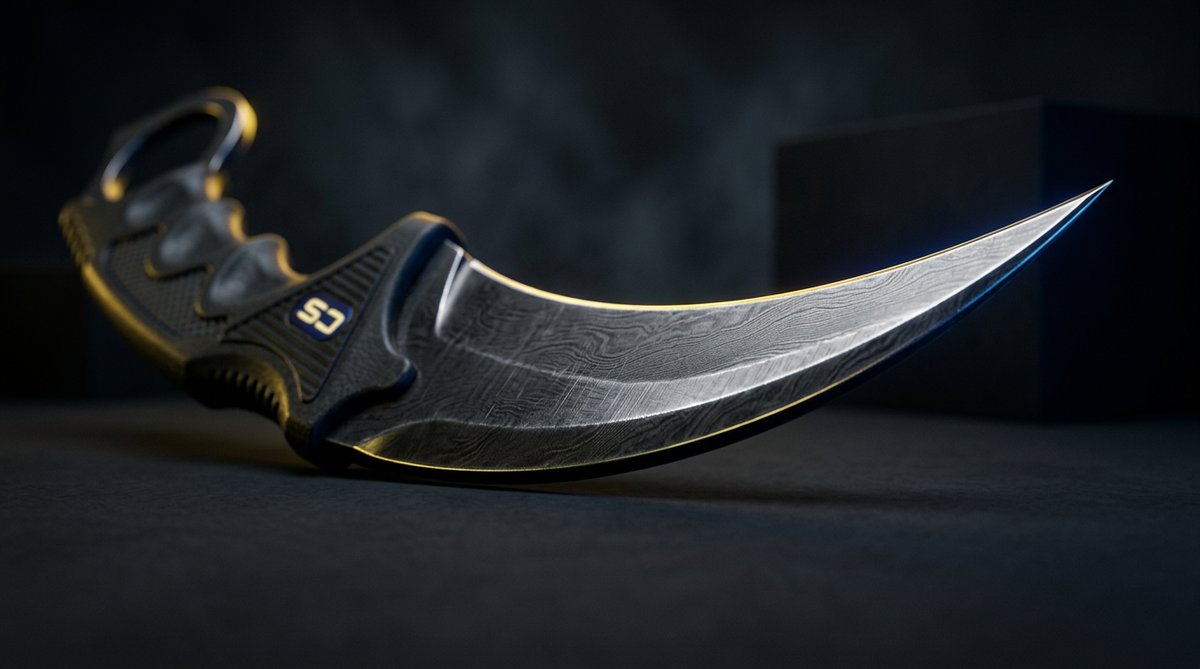
Somebody hands Valve $1,126.55 worth of StatTrak AK-47 | Inheritance skins. Five of them, all Factory New, all at $225.31. The contract resolves and the knife that comes back is worth about $132 across the finishes it can actually produce. He was not unlucky. He was predictable.
Trade-up contracts are the only crafting mechanic in CS2 where every single outcome can be priced before you commit a dollar: the probability, the float, the exact thing you will receive. That is also why most losing contracts are not gambles at all — they are arithmetic nobody did. Here is the arithmetic.
Step 1: Know What the Contract Actually Pays
A standard contract takes 10 items of one rarity and returns 1 item of the next rarity up, drawn from the collections your inputs belong to. The ladder runs Consumer, Industrial, Mil-Spec, Restricted, Classified, Covert. Consumer Grade and Contraband items can never be used, so Industrial Grade is the floor.
Two rule changes matter right now, and both are recent. Since the update of 22 October 2025, five Covert skins can be exchanged for one knife or pair of gloves from the case of one of the inputs — the so-called Covert contract. Since May 2026, Souvenir skins are legal inputs alongside normal ones; the gold sticker, autograph and Souvenir attribute are stripped, and the output is always a normal-quality item. StatTrak stays all-or-nothing: ten StatTrak inputs return a StatTrak result, and you cannot mix.
The probability rule is simpler than people expect. The game picks one of your ten inputs at random, then draws uniformly from that collection's next-tier pool:
P(outcome) = (inputs from its collection ÷ 10) × (1 ÷ next-tier skins in that collection)
Six Snakebite inputs against three Restricted targets gives each target 6 ÷ 10 ÷ 3, or 20%. This single line decides your whole contract. Ten inputs from ten different collections spread your money across ten pools and usually guarantee that no outcome is large enough to pay for the contract.
Step 2: Price Every Outcome Before You Buy a Single Input
Here is a real contract, priced at the lowest asks the calculators could see. The inputs are all Factory New: four Emphorosaur-S at $2.35, three Umbral Rabbit at $1.75, three Block-18 at $1.49. Total cost $19.12.
The tool then lists every possible outcome with its chance and its float. One pool contributes at 0.2333: $16.25, $14.27 and $10.02. A second pool contributes at 0.10: $10.26, $6.95 and $16.22. Probability-weighted, that is $9.46 plus $3.34 — an expected value of $12.80.
That is a loss of $6.32 on average, or 33% of the cost, and the profit chance is 0%. Zero, because no single outcome in the pool is worth more than the $19.12 you paid. Not a bad run, not a cold streak — a mathematically closed door.
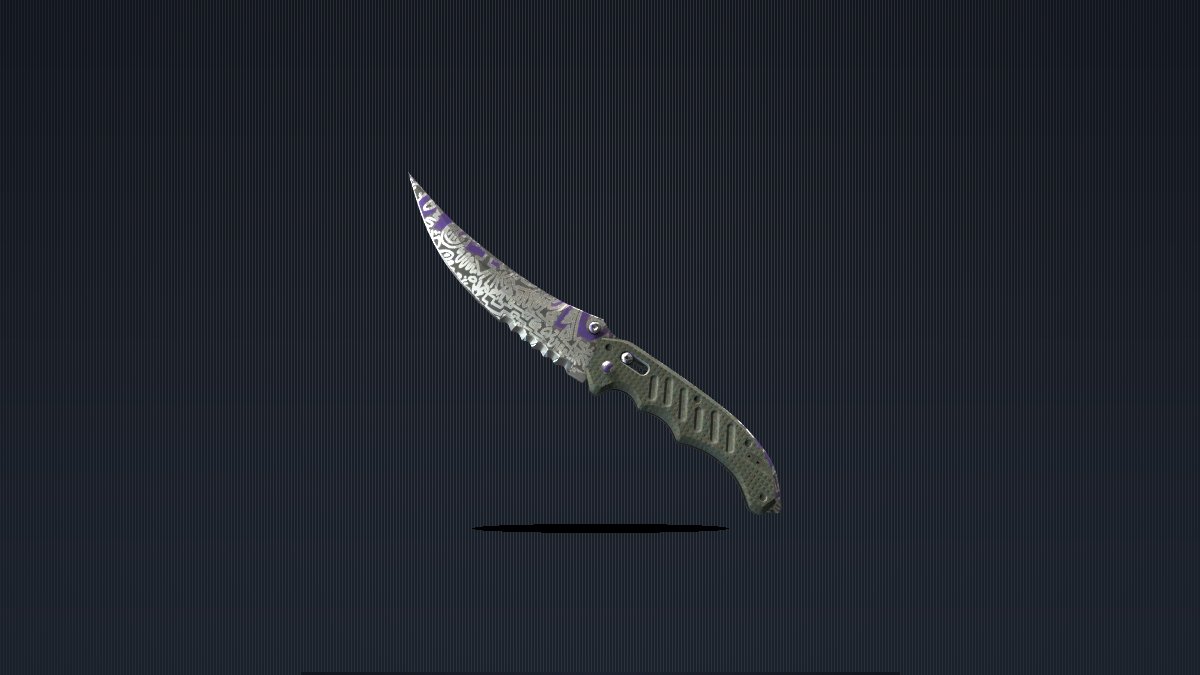
Now scale it up to the contract that opened this article. Five StatTrak AK-47 | Inheritance (Factory New) at $225.31 each is $1,126.55. The StatTrak outcomes on the board were listed at $163.15 for Fade (Factory New), $145.25 for Slaughter (Factory New) and $88.14 for Night Stripe (Minimal Wear); StatTrak Case Hardened in Factory New had no listing at all. Average the three that existed and the expected return is $132.18. The contract loses roughly $994 per run, before a single marketplace fee.
This is the trap of the knife contract. The prize is spectacular, so the cost feels justified. But your inputs are priced at retail and your output is priced by the market, and the gap between the two is where every dollar disappears.
Step 3: Find the Contracts That Actually Clear Break-Even
Positive-EV contracts exist. They are just small and boring. Take the Fever Collection, ranked on a live board recomputed hourly: the cheapest liquid input is P90 | Wave Breaker at $0.32, so ten copies cost $3.20. Expected value $3.65. ROI 14%. Hit chance 100% — every outcome lands, and the best of them, AK-47 | Searing Rage, was listed at $3.73.
Fourteen percent on three dollars is not exciting. It clears break-even for one reason: every input comes from a single collection with a small target pool, so the odds stay concentrated where the value is.
Float is the second lever. Each input's float is normalised inside that skin's own range, the ten normalised values are averaged, and the average is mapped onto the output skin's range. Contracts built from expensive Factory New inputs routinely produce Minimal Wear output, because a skin capped at 0.40 normalises far higher than it looks. To land Factory New output you generally need an average float at or below 0.069 — and on a popular printstream-class skin that distinction is worth real money: a 0.01-float copy at $350 against a 0.07-float copy at $280.
Sourcing is the third. The same Mil-Spec input is routinely 5–8% cheaper on one venue than another, and Steam's 15% seller tax is the quietest killer in the chain. Ten inputs bought 7% under reference is a 7% head start on every contract you will ever run.
Two numbers matter here, not one. A contract with +20% expected value but an 8% win chance is a long-tail bet — you lose it 92% of the time and the average only shows up across runs you may never complete. Expected value tells you the long-run number; win probability tells you how often you will actually see it. Contracts that clear both are the only ones worth repeating.
The fourth lever is speed, and it is the one most people miss. Two rule changes in nine months — Covert-to-knife contracts in October 2025, Souvenir inputs in May 2026 — repriced entire collections before the market caught up. Those windows were worth far more than any float trick, and each one lasted weeks, not years.
What the Case Numbers Say About the Whole Game
If you are sourcing inputs by opening cases, the maths gets harsher. Across 42 tradable CS2 cases priced against a $2.50 key, not one case pays for itself. The best on the list returns 79.5% of what you put in — the worst, 30.4%. An ROI of 60% does not mean 60% profit; it means a 40% loss with nicer framing.
The spread is driven almost entirely by the key. Kilowatt is the clearest example: with a case price of about $0.10 and a $2.50 key, the key is 96% of the entire cost, and the median single open returns roughly $0.06. The published drop odds explain why — Mil-Spec 79.92%, Restricted 15.98%, Classified 3.20%, Covert 0.64%, and knife or gloves 0.26%, or one in 391.
Feeding drops into contracts instead of selling them helps, but less than the guides promise: the maximum boost measured across market cases is 3.9 percentage points. It turns a 40% loss into a 36% loss. That is free money, and refusing it is silly — but it is not a strategy.
What all of this adds up to is a simple habit. Price the pool, not the prize. Before you commit, write down your input cost, the probability of each outcome, and its realistic sale price after fees. If the total is below what you paid, close the calculator and keep your money. If it is above, run enough contracts for probability to do its job instead of chasing one big hit.
If you want real data to practise on, open a Phantom Cache and price its drops against live contract pools before you sell anything. Every skin you pull is either a sale or an input, and the difference between those two decisions is the entire edge in this market.