CS2's Rush Hour Patch Left the Skin Economy Alone — Except for One Line
CS2's Rush Hour Patch Left the Skin Economy Alone — Except for One Line
Valve pushed one of the biggest Counter-Strike 2 updates of the year on September 22. It added a 3v3 mode called Rush, brought clan tags back after roughly three years away, made reloads silent, changed how Premier picks maps, and dropped a new Starjunk 95 music kit at $4.99 ($7.99 for the StatTrak version).
It added zero new cases. Zero new weapon collections. No changes to trade-up contracts either. For anyone holding inventory, it's a changelog with a lot of courses and no calories.
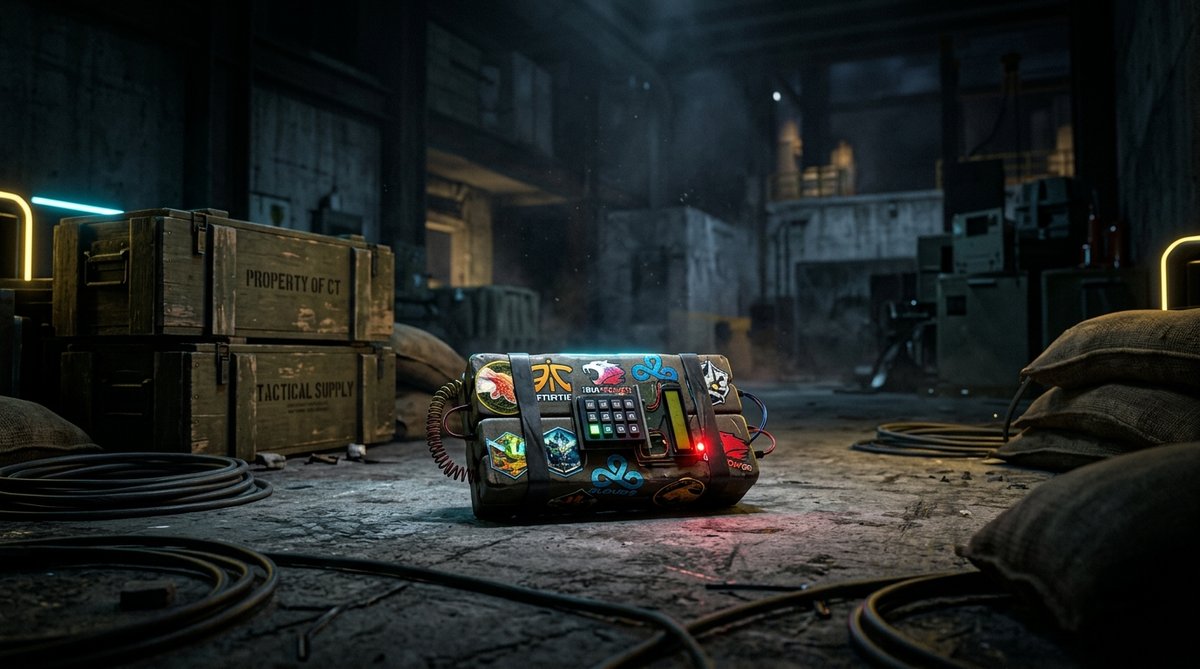
Except for one line that most people skimmed straight past: stickers can now be applied to the C4.
That sentence is the only item-economy change in the whole patch. It got about four seconds of attention. It probably deserves more.
What Actually Shipped
The Rush Hour patch is a gameplay patch first. The headline feature is Rush, a fast 3v3 mode where two squads fight over a tower in randomly selected arenas. Premier got a new map selection flow: each team picks two maps and the game narrows the pool down to one at random, which removes the old ban-and-pick ritual that some players loved and others found tedious.
The quality-of-life list is longer than usual for Valve:
- Silent reloads, and snipers no longer announce themselves when they unscope.
- Clan Tags return for members of Steam Community Groups, set from your player profile.
- Stickers on the C4.
- Blood and bullet impacts are more visible; crosshairs got a dedicated settings tab with new shapes and a "Dynamic Quad" option.
- Halftime scoreboard stats now include the previous round.
- The engine was bumped to the latest Source 2 build, and a kick-ban avoidance exploit was closed.
Notice what isn't on that list. No case, no capsule, no collection rotation, no contract tweak. Valve shipped a game update, not an economy update, and said so by omission.
Why the C4 Slot Matters More Than It Looks
A bomb site is the most-watched object in Counter-Strike. The C4 sits in the open, on the ground, in front of five enemies, for the most tense 40 seconds of any round. It's carried by a Terrorist on every single T-side round, which means it's on screen in scrims, in Majors, in every clip that gets posted to social.
That is a genuinely new display surface, and it's a big flat one — the kind of canvas that suits wide, graphic designs far better than the small curved panels on a pistol grip.

Here's the trader logic. Demand for a cosmetic item comes from how many players want to look at it, and sticker demand has always been driven by crafts: you buy a sticker to put it somewhere visible. A new permanent slot adds a new reason to buy, and it adds it for free — no case to open, no drop to chase. Items like a Holo-finish sticker that reads well at distance are the natural winners, because the C4 is viewed at range, from a defusing angle, by people who are not the owner.
The counter-argument is volume. Stickers are consumables with enormous supply, and one extra slot per inventory is a rounding error against a market where a single popular sticker capsule can hold millions of units. Valve didn't remove anything from circulation here; it just gave existing stock one more place to live. That supports a floor, not a rally.
There's a second-order effect worth naming, though. A sticker applied to a C4 is permanently consumed into that one inventory, and the C4 is the single object every Terrorist in every round is forced to look at. Compare that with weapon charms, where the display is on your own gun and nobody else is watching. Historically, the slots that raise an item's visibility to other players are the ones that move sticker demand, which is precisely why patches and graffiti never gained a crafting culture while stickers never lost one.
The Bull Case: A Patch That Refuses to Reprice Your Inventory
Ask anyone who held knives through October 2025 what a bad patch feels like. The trade-up change that let five Covert skins become a knife pulled roughly $1.75 billion out of tracked market value in a matter of days, and knife and glove prices fell 40–65% on many common finishes.
Against that backdrop, a patch with no new supply, no new drop pool and no contract changes is close to the best news an inventory holder can get. Nothing got more common overnight. Nothing lost utility. The measurable market came into the week flat: the broad CS2 market index sat at 685.0 in early September, up 0.2% over seven days and down 2.2% over thirty, on a tracked market value around $5 billion.
Flat is not exciting, but flat is what a healthy collectibles market looks like when a developer isn't actively rewriting the rules.
Put the calm into numbers. In the week of 6–12 September, a tracked basket of 218 skins posted a median move of 0.0% — the second flat week in a row — with 18 risers against 72 fallers and 128 names that didn't move at all. The largest individual swings in that window, like a Battle-Scarred Glock-18 | Water Elemental up 10.0% to $21.69, were thin order books clearing, not a market re-rating. That is a market digesting supply, not one breaking under it — and it's the environment a no-supply-change patch deserves.
The Bear Case: Valve Is Building a Category It Doesn't Have to Sell
Now the part that should keep traders up at night, and it isn't the C4 slot.
The same patch quietly introduced chicken eggs. Players started finding them in Weekly Drops within hours of the update, and the item takes up both reward slots. There are three breeds — Chicken, Polish and Silkie — and more than 30 colour variants in the game files, plus a Hatchbook to catalogue them. Valve never mentioned any of it in the patch notes.
Community reports say the eggs cannot be traded and cannot be listed on the Steam Community Market. If that holds, Valve has built an entire cosmetic category — hatched, raised, named and photographed — that exists completely outside the player economy. No market, no third-party listings, no price discovery, nothing for a trading platform to index.
That's the strategic read, and it's more interesting than any sticker slot: after nine years of watching skins become a financial asset class, Valve tested a collectible that is only a toy. If chickens stay locked, expect more of that pattern. If they ever open up, the first eggs from September 2026 become the oldest examples of a new category, and Counter-Strike collectors have always paid for oldest.
Where I Land
The Rush Hour patch is the least economically disruptive major CS2 update of the past twelve months, and that is the story. Nothing in it repositions your inventory. The C4 sticker slot is a slow, real tailwind for crafters and for Holo and Glitter finishes that read well from a distance — not a spike you can flip this week.
If you want to act on the parts of this patch that do touch items, the honest answer is to look at supply, not demand. Cases that Valve doesn't rotate keep their drop pools frozen, and frozen supply is where patient money goes. You can see that dynamic playing out on this week's openable pools — the Phantom Cache and its neighbours are the kind of containers whose contents only get rarer while nobody is watching them.
Meanwhile, the chickens are the thing to watch. Not because they're worth anything today — they aren't, and you can't sell them — but because they're the first test case for a Valve collectible that never touches the Steam Market. Everything about how this game's economy behaves for the next two years runs through that question.