Inside Valve's New 'Fairy Tales' Call: How CS2 Skins Actually Get Made
Inside Valve's New 'Fairy Tales' Call: How CS2 Skins Actually Get Made
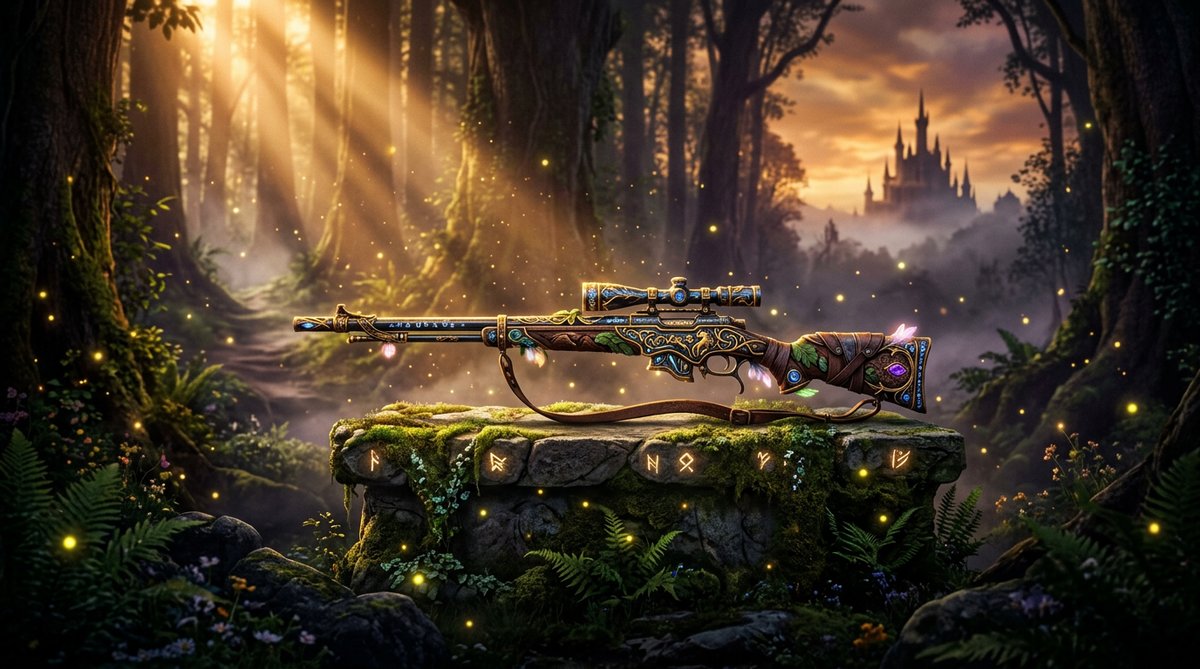
On July 17, Valve quietly opened the door to CS2's next generation of skins. The announcement — titled Call II Arms-ory — asks community artists to submit designs for one brand-new weapon collection called Fairy Tales, plus two new sticker collections: Cryptids and Pop Art.
That's three collections in a single call. Every one of them will be drawn, textured, and submitted by ordinary players — not Valve's internal art team. If you've ever wondered how a skin goes from a blank texture file to a $6 billion market, this is the pipeline, step by step.
Step 1: The Call Goes Out
Valve doesn't design most CS2 skins itself. Instead, it runs rolling "Call to Arms" contests where the community submits finished weapon finishes and sticker designs. The company picks the winners, ships them in-game, and splits the revenue with the artists.
The current call is the second of its kind. The first — run back in late 2025 — produced four collections that are already live in the Armory: the Arabesque and Spy Tech weapon collections, and the Fruits & Vegetables and Auto Racing sticker sets. When outlets covered that first call, Notebookcheck reported community payouts reaching as high as $35,000 per accepted design.
Now Valve is asking for more. The new brief is specific: one weapon collection with a Fairy Tales theme, and two sticker collections called Cryptids (think Bigfoot, Mothman, and other legendary creatures) and Pop Art (bold, comic-inspired color). If the first call's four collections are any guide, expect the winners here to land across a full spread of weapon types, not just rifles.
Step 2: Design, Polish, and Submit
Submission happens entirely through the Counter-Strike 2 Workshop Tool, the same editor Valve uses internally. Artists start with a weapon's base model, paint the finish across the UV map, and test how it reads at every wear level — from Factory New all the way down to Battle-Scarred.
Wear is where most submissions fail. A finish that looks stunning at 0.00 float can turn into a smeared, scratched mess at 0.50. Top creators paint with wear in mind, using darker base layers and strategically placed details so the design holds up even when heavily worn. This is the same reason a Factory New skin can trade for several times what its Battle-Scarred counterpart sells for.
Before anything ships, creators must agree to Counter-Strike 2's Supplemental terms. That's the legal layer that lets Valve put the design in the Armory and pay royalties on every sale. It's also why you rarely see stolen or cloned artwork make it through: the submission pipeline ties each file to a verified creator account.
Quality is brutal. A single weapon collection might see thousands of submissions for a handful of slots. Judges look for finishes that read clearly at a distance, look good on every weapon in the collection, and feel distinct from what's already in the game. If your AK-47 finish looks muddy in dark lighting, it doesn't matter how clever the concept is.
Step 3: From Workshop to Armory (and Then to the Market)
Winning designs don't go straight onto the Steam Market. They enter the Armory, CS2's rotating showcase of featured collections, where players redeem them through the Armory Pass system. From there, the items become fully tradable skins that flow into the same economy as every AK-47, M4A1-S, and knife in circulation.
This is the part that matters for prices. When a fresh collection drops, its launch window usually sees inflated asking prices as collectors scramble for the rarest, cleanest floats. Over the following weeks, supply catches up and values settle — a cycle that's played out for every collection from Arabesque to Spy Tech over the past month.
Rarity tiers shape that value curve more than anything else. A collection's cheapest Consumer-grade finishes might trade for pocket change, while its Covert-tier centerpiece and any knife it includes can anchor the entire set's reputation. The most-watched items are almost always the red-tier finishes and the rare special items that sit at the top of the drop table.
The skin economy as a whole is estimated to be worth around $6 billion, with Counter-Strike 2 still pulling well over a million concurrent players on a typical day. Every new collection adds a few hundred more tradable items to that pool — and every one of them starts as a community submission.
How the Rarity Ladder Shapes Every Collection
Every weapon collection ships with a fixed rarity ladder, and that ladder does most of the price-setting for you. At the bottom sit the Consumer-grade finishes — cheap, common, and usually worth cents. From there the tiers climb through Industrial, Mil-Spec, Restricted, and Classified before reaching the Covert top slot and, in some cases, a special item or knife.
In practice, the top two tiers carry nearly all of a collection's value. A Covert finish might trade for a hundred times what its Consumer-grade sibling sells for, purely because the drop rate is so much lower. When Fairy Tales eventually lands, the red-tier centerpiece is the item to watch — it anchors the collection's reputation and sets the ceiling for everything below it.
Float value is the other dial collectors track. Two copies of the same red-tier finish can sell for wildly different prices depending on whether one sits at 0.03 float and the other at 0.06. On high-end finishes, a single-digit float carries a real premium, and the first clean Factory New pulls out of a new collection are where early buyers fight hardest.
Why the 'Fairy Tales' Brief Matters
A themed collection like Fairy Tales tells you something about where CS2's art direction is heading. Valve isn't commissioning more grey military camo — it's asking for whimsy, magic, and storybook imagery. That's a deliberate swing toward expressive, personality-driven skins, the kind that historically hold value because players actually want to equip them.
Sticker collections get less attention than weapon finishes, but they move enormous volume. Cryptids and Pop Art will slot into the same capsule ecosystem where individual stickers can trade for cents or surge when a specific team or meme catches on. For collectors, the sticker side of a call is often the low-cost entry point.
The best way to understand what's coming is to look at what just shipped. Arabesque leans ornate and geometric; Spy Tech goes sleek and tactical. Whatever wins the Fairy Tales call will likely split the difference — painterly, story-driven, and far more colorful than the mid-2010s default skins.
What You Can Do While You Wait
Fairy Tales, Cryptids, and Pop Art won't land in the Armory overnight — the submission and judging window typically runs for weeks. If you want skins in your inventory today, the existing case pool is still the fastest route. Cases like Carnival Time give you the same rush of a themed drop, with real tradeable skins on the other end, right now.
For the artists reading this: the Workshop Tool is free, and the Supplemental terms are worth reading before you pour hours into a texture. For everyone else, the takeaway is simple — every skin in your inventory was, at some point, a community submission that beat out thousands of rivals. Fairy Tales is just the next chapter in that story.