Cologne 2026 Stickers vs Blue-Chip Skins: Where the Money Actually Is
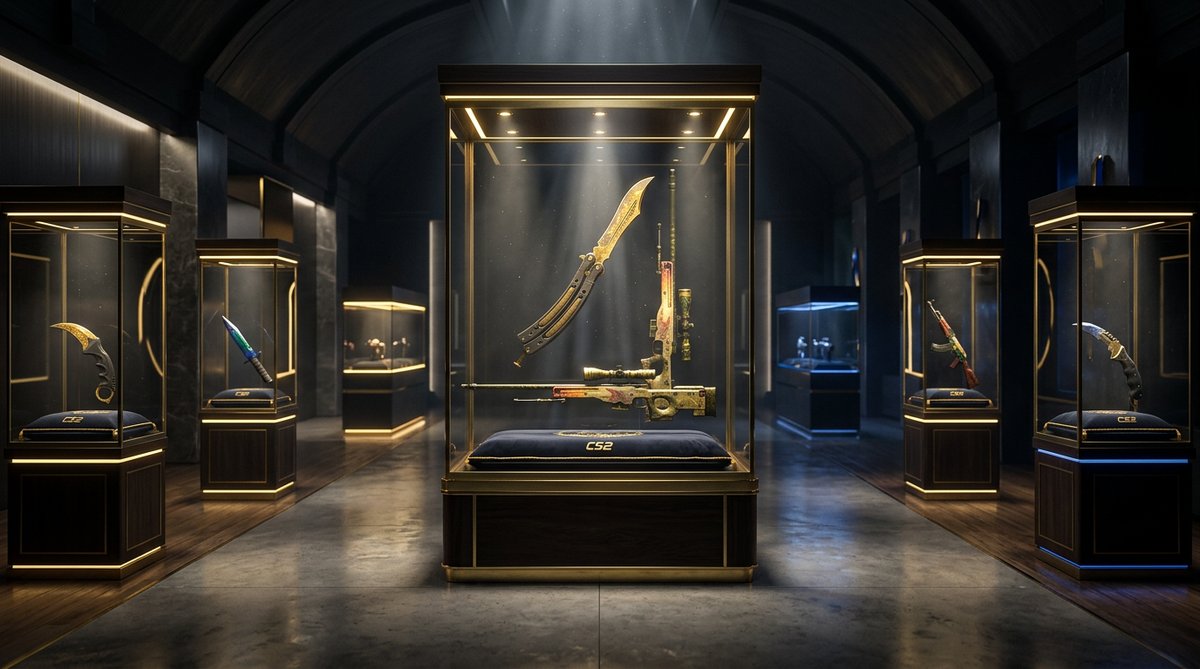
Cologne 2026 Stickers vs Blue-Chip Skins: Where the Money Actually Is
Two items from the same tournament are telling completely different stories. A brand-new br0 | Cologne 2026 autograph sticker is listed at $5.70 — up 3,971% in a week. Meanwhile an AK-47 | Redline (Field-Tested), one of the most liquid skins in CS2, is sitting around $32 and has barely moved in months.
One of those is a ticket to a hype cycle that ends badly for almost everyone. The other is the closest thing CS2 has to a blue-chip stock. Here's how the two stack up across the numbers that actually matter — not the ones that look good in a screenshot.
Round 1: The Hype Cycle
Every Major follows the same script, and IEM Cologne 2026 — won by Falcons with NiKo, m0NESY, and karrigan — is no different. New tournament stickers spike hard in week one, then collapse as the capsule supply floods the market.
The Cologne 2026 autographs are already mid-spike. br0 sits at $5.70 and apEX at $6.90, both up roughly 3,900%. A new tournament sticker typically debuts at $0.50–$1.00 in its first week. Paying $5.70 means you are already several multiples underwater the moment the drop pool widens.
It gets worse at the top of the board. The s1zzi Cologne 2026 sticker was tracked around $1,420 in mid-August with effectively no volume — a number, not a market. That's the classic profile of a sticker with the float locked by a supply shock, and it's exactly the kind of entry that becomes a 90% drawdown the instant real supply returns.
The pattern is brutally consistent: past Majors have seen fresh stickers crash 70–90% within four to six weeks. The Cologne 2026 Shop itself stays open until September 29, so supply is still growing — and the new Ranked Series stickers now share 50% of royalties with players, teams, and the tournament organizer, keeping them flowing into the economy for weeks. That royalty mechanic incentivizes sustained supply, which makes today's "scarce" prices even less likely to hold than in previous cycles.
The souvenir side is a second supply wave hitting at the same time. Souvenir packages enter the drop pool around a Major, flooding the market with the exact items — souvenir skins and gold-autographed stickers — that spiked hardest during the event window. Last August's data showed lower-tier souvenirs like the AUG Condemned and Desert Eagle Mudder dumping 97–99% in a week once the "souvenir premium" narrative cracked. Chasing the sticker board means fighting both of these supply waves at once.
Round 2: The Blue-Chip Baseline
Now look at the other side. Blue-chip skins don't spike 3,900% — and that's exactly the point. They move in single digits, on real volume, with order books thousands of listings deep.
SteamDB's spring 2026 snapshots tell the story. The median tracked item fell 9.1% between April and June, but the liquid core barely budged: the AK-47 Redline (FT) drifted from $34.42 to $32.36, the AWP Asiimov (FT) from $132.07 to $124.30, and a Factory New Karambit Doppler from $1,490 to $1,386. A Factory New Butterfly Knife Doppler moved less than 2%.
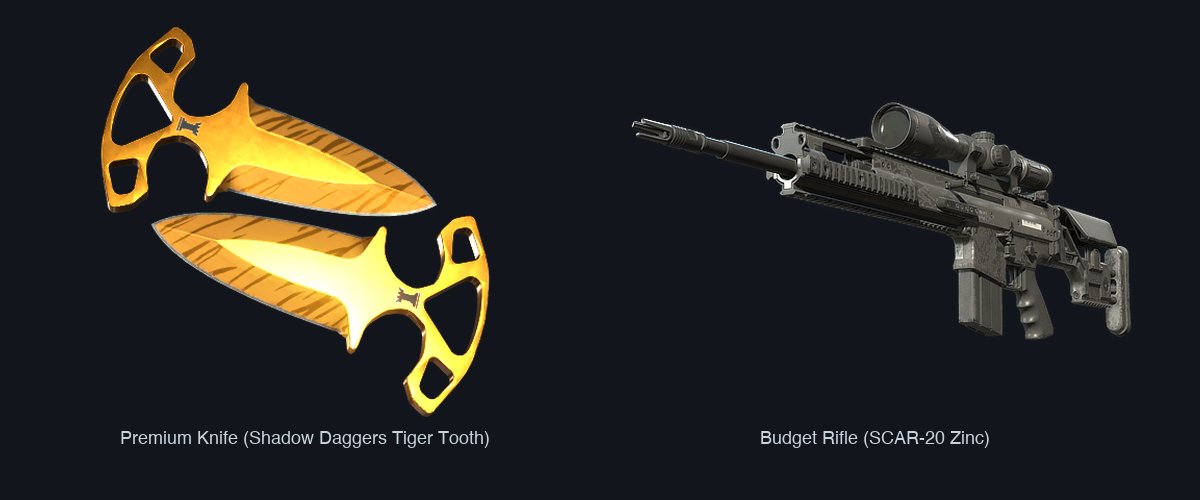
These are the items with real price discovery. The Redline had roughly 3,400 live listings on CSFloat and 8,800 on BUFF163 in the same snapshot. When you want to exit, you exit in minutes at a predictable price — not on a hope and a prayer. Value in this market concentrates hard at the top: knives, gloves, and rare-pattern rifles account for a disproportionate share of the ~$6.9 billion market cap, even though they're a tiny fraction of total items. That's why the "stable" side of the market isn't boring — it's where the actual money sits.
Within that premium tier, a collector market is emerging. Blue-gem Karambits, high-float StatTrak pieces, and historically significant legacy skins now trade as digital collectibles with long-term value, not just cosmetics. That demand gives them a floor the sticker market simply doesn't have — a sticker's value is tied to one tournament's narrative, while a rare knife's value is tied to a decade of accumulated scarcity.
The knife market is also the most consistently active premium segment. Butterfly and Karambit knives move almost instantly on recognizable demand and animation appeal, while niche blade types require patience and a sharper read on float and pattern tiers. That constant churn — buyers re-entering at lower price points, real volume in both directions — is what creates the price floor the sticker board can only dream of.
Round 3: The Fees That Eat Your Profit
Here's where the comparison gets uncomfortable, because fees hit both sides — but they hit the chaser harder. Sell on the Steam Community Market and the buyer effectively pays roughly 15% on top of your ask (a 5% Steam fee plus a 10% CS2 fee), and the proceeds land in a wallet you can never withdraw.
Third-party marketplaces are far cheaper: 2% on CSFloat and DMarket, 2.5% on BUFF163, and 8% on Skinport. But even at 2%, the math is sobering. Buy a Redline at the $29.23 ask and instantly re-sell it, and you're down about 4.1% before the price moves at all — roughly $28.03 net after the 2% fee. On a Karambit Doppler it's over 6%.
On a hyped sticker with no bid depth, the "haircut" is effectively total — there is nobody on the other side of the order book. That's the difference between a fee you can calculate and a loss you can't. It's also why the spread matters more than the sticker price: on a $5.70 sticker, a 15% Steam fee plus a 70% crash means you need a price more than triple your entry just to break even — on an item structurally designed to fall.
The Verdict
If your goal is a quick flip, the sticker board will tempt you with 3,900% moves — but those gains exist only on paper, held by people who bought at $0.50 and are waiting for you to buy at $5.70. Every previous Major proves the same thing: the week-one spike is the top, not the floor.
The smarter money does the boring thing. Blue-chip skins offer lower ceilings and dramatically lower friction — real volume, real liquidity, and an exit you can actually take. If you're building an inventory, that's the side of the market worth your time. Put another way: a sticker you can't sell at its listed price is worth zero, while a knife with 3,000 listings behind it is worth whatever the bid says, today, in cash.
You don't have to wait for a Major to get started. A system case with a known pool — like Frost Vault — gives you clean, transparent odds on real items, and the live skinvs market shows you exactly what those items are worth right now, not what a hype cycle wants you to believe.