The Cologne 2026 Sticker Shop Closes in 3 Weeks - What the Numbers Say You Should Buy
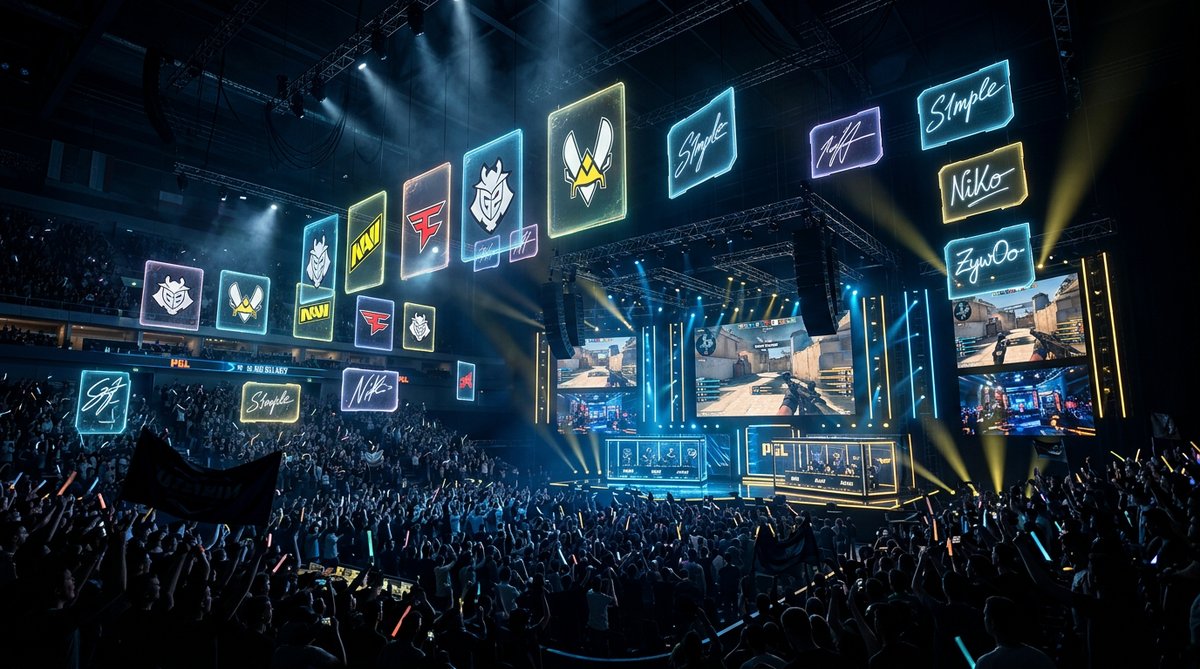
The Cologne 2026 Sticker Shop Closes in 3 Weeks — What the Numbers Say You Should Buy
When the Cologne 2026 sticker shop opened, a single Gold autograph for donk crossed $1,220 within hours. Then it fell, hard. A swing that violent on a single sticker is exactly why the next three weeks matter more than most players realize.
This is the first CS2 Major where Valve killed sticker capsules entirely and replaced them with a direct, demand-priced shop. No lottery. No praying for a good pull. You pay for the exact team or player sticker you want — and the price moves like a live exchange while you watch.
The shop closes on September 29. After that, the remaining supply freezes and secondary markets take over. Here's what the data actually says about whether any of it is worth your money before the deadline.
The Numbers Behind the Hype
Valve built the new shop around a simple unit: 100 tokens equal $1, with the smallest top-up bundle at $0.99 for 100 tokens. Prices are not fixed. They move in periodic batches based on demand — the more people buy a specific sticker, the higher its price climbs, while quieter stickers slowly drift down.
The most extreme example came on day one. Donk's Gold autograph, one of the most sought-after items in the entire shop, crossed roughly $1,220 within hours of release before settling far lower on third-party markets once supply caught up. That's a spread of hundreds of dollars on a single sticker, driven purely by early demand.
Compare that to the old capsule system, where a random capsule cost a few dollars and your odds of pulling a specific Gold autograph were microscopic. The new shop front-loads the cost: you see the exact price before you buy, which feels fair — but it also means a sticker can reprice while you're still deciding whether to pull the trigger.
How the Ranked Series Is Different
The Ranked Series stickers, added in the July 29 update, carry each team's final placement stamped into the corner. The winner's sticker reads CHAMPION across the top instead of a number. A team that finished second gets a "2"; a team that finished 28th gets a "28".
The frame is a stained-glass design with the Cologne 2026 wordmark along the bottom, and finishes vary between a gold treatment and a lighter holographic one. For collectors, that placement number is the whole point — it permanently ties a sticker to exactly how a specific team performed at this specific Major.
Falcons won the event, and their Champions autograph stickers went live on July 1. Those champion variants are the rarest tier of the Ranked Series, and they're precisely the kind of item that tends to appreciate once the shop closes and no new copies can ever be minted.
What the Royalty Split Means for Prices
Half of everything the shop earns — 50% — flows back to the tournament organizer, teams, and players. The split is not fixed: before the grand final, payouts track each team's VRS global ranking; once the event ends, the distribution switches to final placement.
Within a team's share, half goes to the organization and the other half is split equally among the five players. One analysis laid out the math: if Valve sold $100 million in stickers and passes and Team Vitality won, the club would take home roughly $1.425 million while each player received about $285,000.
That matters for pricing because it changes incentives. Teams and players are now directly paid on sticker sales, which means the most popular rosters get the most attention — and the most demand — which in turn pushes their sticker prices higher. It's a self-reinforcing loop that concentrates value in the top teams.
The Price-Drop Protection Catch
Valve built in a safety net: if a sticker you buy drops more than 25 tokens within 24 hours of purchase, the difference is refunded to your token balance automatically. It sounds generous, but read the fine print — it only covers the early, sharp swings, not gradual declines.
In practice, that means you're protected against the donk-Gold scenario in reverse. Buy at a local peak and the price crashes within a day, and you get tokens back. But if a sticker slowly bleeds value over a week, there's no refund. The protection is a day-one guarantee, not a floor.
This is the most underrated detail of the whole shop, because it changes the risk math. Buying the moment something spikes is less dangerous than it used to be — but only for 24 hours. Once that window closes, you own the downside.
What Happens After September 29
When the shop closes on September 29, the Ranked Series supply freezes. No new copies enter circulation. From that point, every sticker that gets applied to a weapon or destroyed is permanently gone from the market.
That's the same supply mechanic that has historically made discontinued Major stickers appreciate. Older event holos — Katowice 2014 and 2015 — now trade for thousands of dollars, and the rarest of them for six figures, because their supply was frozen over a decade ago and has only shrunk since.
The Ranked Series is unlikely to reach Katowice-tier status, but the champion autographs and the top teams' gold variants are the obvious candidates to hold value. The finishing-number system also creates niche scarcity: a "CHAMPION" sticker and a "28" sticker from the same event are completely different collectibles with completely different demand curves.
The Souvenir Angle Nobody's Talking About
The same update that killed capsules also introduced Souvenir-O-Matic, which lets you turn any regular skin you already own into a Major souvenir tied to a specific match and player. You can even use souvenir skins in trade-ups now, optionally mixed with normal-quality skins — the result is a normal skin, but the change means souvenirs that used to be worth far less than their normal variants now price much closer to them.
For sticker buyers, that's the missing half of the equation. A Gold sticker is worth more when there's a weapon worth putting it on. The souvenir rework pushed a fresh wave of demand into the same shop, which is part of why the top-tier autographs spiked so hard on day one.
The Smart Play Before the Deadline
If you're buying to make money, be reasonable with your expectations. Stickers themselves are rarely a great standalone return — the common wisdom is that they work best as a complement to a strong souvenir or loadout. Buy the team or player you actually want to support, and don't chase day-one spikes.
The healthiest approach is to treat the deadline as a reminder, not a fire sale. Wait for popular picks to stabilize, lean on the 24-hour price-drop protection if you buy anything volatile, and remember that the champion-tier items are the ones most likely to matter after September 29 passes and the shop goes dark.
One more lever worth knowing: the Pick'Em Challenge and Viewer Pass feed directly into the same token economy. Each coin upgrade — from Bronze up through Diamond — rewards you with 300 tokens to spend in the shop. For players who enjoy the prediction game, that's a way to offset sticker costs without extra cash, though the premium Viewer Pass with 900 additional tokens is rarely worth it purely as an investment.
If you'd rather put your money toward something with a guaranteed outcome instead of a sticker that might reprice mid-session, opening a real case gives you the same rush with a known floor. Take a look at the Silent Form case on skinvs — you'll see the exact odds and pricing before you commit, which is more transparency than the old capsule lottery ever offered.