Valve Is Quietly Rebuilding CS2's Mission System — Here's What It Means for Skins
Valve Is Quietly Rebuilding CS2's Mission System — Here's What It Means for Skins
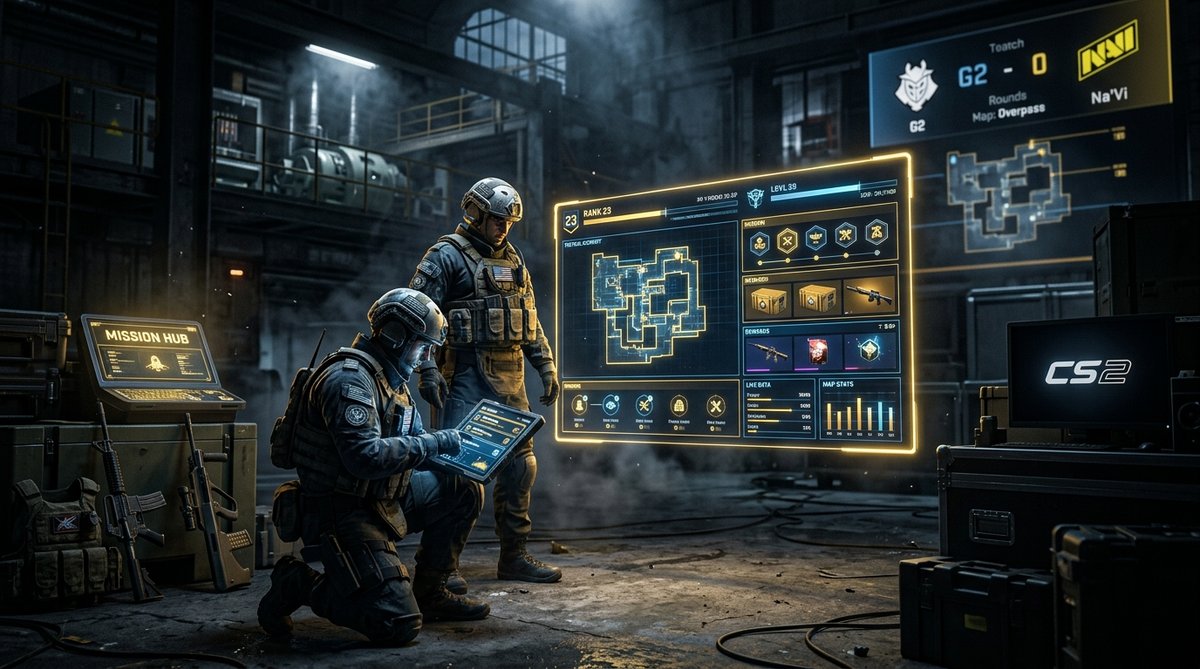
Valve hasn't announced anything. But the code has been talking. In a recent localization update, developers left detailed comments that reveal plans for a complete client overhaul and a mission system rework — the kind of infrastructure you'd build before dropping a full Operation with progression tracks and cosmetic rewards.
For anyone who trades skins or opens cases, that's a bigger deal than any single patch note. A new mission system is how Valve historically ships new cases, new collections, and new reasons for millions of players to open them. Here's what the leak actually says, and what it means for the market.
What the Code Actually Says
The discovery, first reported by KeyDrop, comes from comments left inside the game's localization files. The key phrase is that Valve needs to synchronize a new client with a new game coordinator — the "brain" that validates mission completion and awards rewards.
Right now, Valve is entering a transition period where the new game coordinator will send updated data. The presence of detailed comments about mission infrastructure and new tokens suggests the team is preparing for structured, repeatable content delivery. In plain terms: this is the plumbing for an operation with multiple missions, progression tracks, and rewards.
There's a technical reason it matters too. By updating the client and the coordinator at the same time, Valve can introduce mission types that weren't technically possible before. Currently, if the coordinator sends new data and your client is outdated, incompatibility issues break things. A synchronized rollout removes that bottleneck entirely.
The Bull Case: A New Operation Is Coming
The optimistic read is straightforward. Valve's last big content drop was the July 2026 Armory update, which added the Spy Tech and Arabesque weapon collections alongside two new sticker collections. Before that, the Dead Hand Terminal in March 2026 introduced the first new gloves to CS2 since December 2020 — a meaningful event for the glove market's long-term supply.
A full mission system with progression tracks is a bigger lever than either of those. Operations have historically been the single biggest driver of case volume and market activity in Counter-Strike, because they give every player — not just collectors — a reason to grind, open, and trade. If the leaked infrastructure ships with a new Operation, expect new cases, new collections, and a fresh demand spike across the board.
Every past Operation shipped the same package: a new case, one or two new weapon collections, agent skins, and a reward track with stars you spend on specific items. If the rebuilt mission system arrives with an Operation, that's at least one new case hitting the market — and new cases are where opening volume concentrates immediately after release. The last time this kind of content dropped, it moved the needle fast.
For the market, that's the bullish scenario. New content is how Valve re-energizes a cooling economy. Right now the skin market is drifting lower, with most categories down double digits. A well-timed Operation is exactly the catalyst that has reversed those slides in past cycles.
The Bear Case: Don't Hold Your Breath
The pessimistic read is just as defensible. Code comments are not a release date, and Valve has a documented history of taking its time with major updates. A comment about mission infrastructure could sit in the game files for months — or lead nowhere — before anything actually ships.
There's also the question of whether more content is even good for prices. Every new case and collection adds supply, and the market is already absorbing the aftershock of the October 2025 trade-up change that let players convert five Covert skins into a knife or gloves. If a new Operation floods the market with fresh Covert skins, that's more ingredients for trade-ups, not fewer — which could push commodity prices down further.
The quieter reality of August supports the cautious view. Valve shipped three updates in August — on the 3rd, the 12th, and the 19th — and none of them touched balance or the economy. They fixed a wall-movement speed bug, removed the Outside A boost on Cache, closed a long-standing exploit where grenades could be thrown through geometry, and expanded the Workshop scripting API with player tracing and weapon pickup events. Useful work, but nothing that suggests a massive content drop is imminent.
Those August patches are actually the more useful signal for now. Three updates in a month, all focused on maps, movement, and Workshop tools, tells you Valve is stabilizing the current build rather than rushing a content drop. The mission system is being assembled quietly underneath — not shipped. When the cadence shifts toward mission text and reward tokens in the localization files, that's when the countdown really starts.
What History Tells Us
The strongest signal isn't in the code — it's in the pattern. Valve rebuilt Major monetization for IEM Cologne 2026 from scratch, replacing sticker capsules with a token-based, dynamically priced shop where 50% of royalties went directly to players, teams, and the tournament organizer. That same appetite for infrastructure change is visible in the mission system leak.
When Valve commits to a structural rebuild like this, it's usually because the current system has hit its ceiling. The last true Operation was years ago, and the mission system hasn't been meaningfully expanded in a long time. A synchronized client and coordinator update would give Valve room to ship exactly the kind of repeatable, reward-driven content loop that keeps players coming back — and keeps cases moving.
For traders, the practical takeaway is to watch the update cadence, not the rumor mill. If localization files start filling with mission text, reward tokens, and case definitions, that's the real signal that a content drop is being assembled.
My Take
I'd bet the leak is real and the direction is correct — Valve is building toward a mission system rework. But I'd also bet it arrives later than the hype suggests, and that the market impact will be uneven. The collections tied to the new system will spike on release, while standard knives and gloves keep grinding on their own, slower path. That matters in a market worth roughly $5 billion in tracked value, where a single new case can redirect millions in opening volume overnight.
The smart position is the same one that has worked all year: keep an eye on the categories with verifiable demand, and don't overpay for hype before Valve actually ships. Case opening is still the cleanest read on real sentiment — when players are confident, they open. If you want a live example of where that demand actually is, the Fan Favorite case is one of the most-opened cases on the platform right now, and its open count moves with exactly the sentiment swings that will tell you when the next content wave is truly coming.
Valve can change the rules at any time — that's the only certainty in this market. The mission system leak is a reminder that the next rule change is already being written into the code, one comment at a time.