Dead Hand Terminal: The Numbers Behind CS2's New Drop System
Dead Hand Terminal: The Numbers Behind CS2's New Drop System
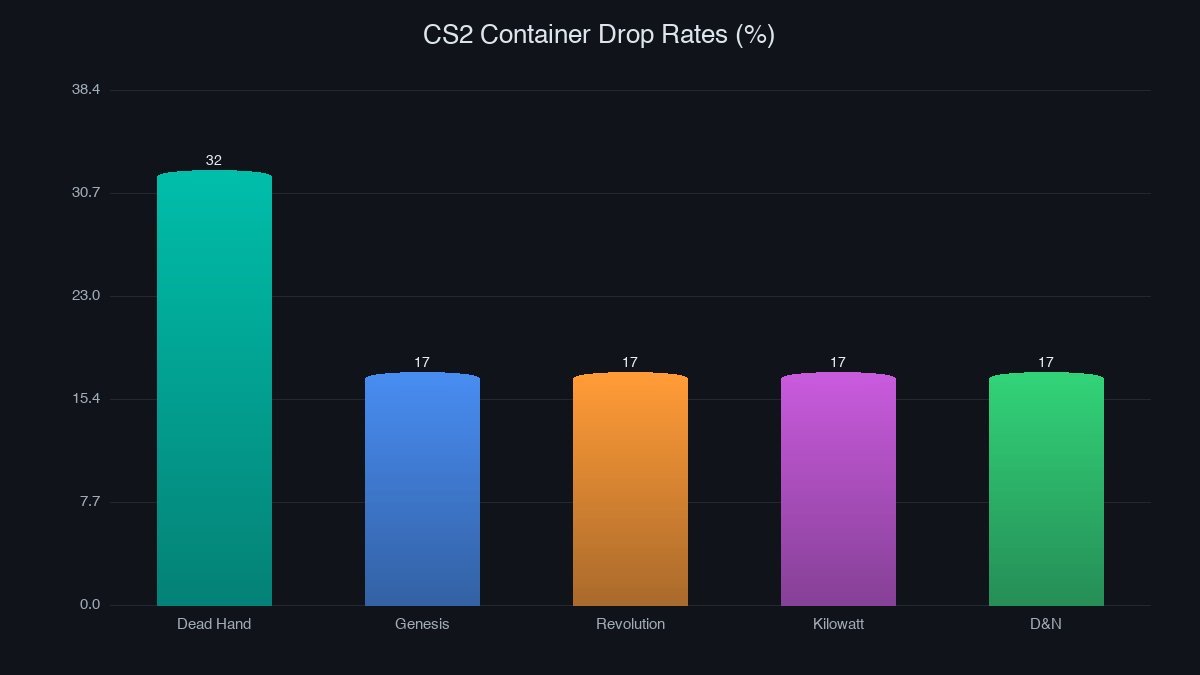
On June 12, 2026, Valve shipped one of the most significant updates to the CS2 economy in years. At the center of it: the Dead Hand Terminal — a new container with a drop rate that defies every pattern we've seen before. Community tracking databases now peg its drop chance at roughly 32% of all Weekly Care Package container rolls. The other four active containers — Genesis Terminal, Revolution Case, Kilowatt Case, and Dreams & Nightmares Case — each sit at approximately 17%. Dead Hand is getting almost double the exposure of any competitor.
This isn't an accident. It's a deliberate design choice by Valve, and understanding why it matters reveals a lot about where the CS2 skin economy is heading in the second half of 2026.
The Raw Numbers
Let's break down exactly what the current drop system looks like as of June 2026. Every week, Prime Status players earn a Weekly Care Package through XP rank-ups. Each package presents four randomized reward options — typically a mix of containers (cases and terminals), skin collection drops, and sometimes graffiti or low-tier filler. You pick two items before the Wednesday reset, and anything unclaimed is gone forever. There is no backlog, no catch-up, no "I'll grab it next week."
The active container pool now includes five options. Dead Hand Terminal leads at ~32%, with Genesis Terminal, Revolution Case, Kilowatt Case, and Dreams & Nightmares Case each hovering around 17%. That means in any given week, a Prime player has roughly a one-in-three chance of seeing Dead Hand as one of their options — and over the course of a month of active play, they're almost guaranteed to encounter it multiple times.
On the skin collection side, five collections are currently active in the drop pool: Harlequin, Achroma, Ascent, Boreal, and Radiant. These represent the new Season 4 lineup and span multiple rarity tiers, from Consumer Grade all the way up to Covert. The Harlequin and Achroma collections in particular have drawn collector attention for their distinctive visual designs — a departure from the more muted palettes of earlier seasons.

What Surprised Us
The 32% Dead Hand rate is the headline, but there are several less obvious patterns in the data that deserve attention.
First: terminal economics differ from case economics. Traditional cases require a key purchase to open; terminals do not. This means every Dead Hand Terminal that enters a player's inventory is immediately openable with no additional spend. The supply of Dead Hand items is therefore much higher relative to the number of Terminals in circulation than it would be for a key-gated case with the same drop rate. That has implications for long-term pricing that the market hasn't fully priced in yet.
Second: the Wednesday reset creates a weekly liquidity event. Every Wednesday at reset, a wave of new items hits the market as players claim and list their drops. Smart traders have already learned to time their purchases for the Wednesday/Thursday window when supply peaks and prices dip — then sell into the Monday/Tuesday demand window when supply has dried up. This weekly rhythm is predictable and exploitable, and it's creating a new breed of short-cycle traders who don't hold skins for months but for days.
Third: the drop pool is dynamic, not static. Community trackers like SkinClub and Swap.gg maintain live databases that update as Valve adjusts rates. The 32% figure for Dead Hand could shift — and probably will — over the coming months as newer containers enter the pool. The lesson from past cycles is clear: the container with the highest drop rate today is rarely the container with the highest drop rate three months from now.

The Smart Play
If you're trying to maximize value from the Weekly Care Package system, the data points to a clear strategy.
Prioritize containers over collections. When your four weekly options appear, containers (cases and terminals) consistently offer better expected value than skin collection drops. A single Dead Hand Terminal or Revolution Case can be sold on the Steam Market for a reliable return, while skin collection drops are more of a gamble — you might get a Consumer Grade skin worth pennies, or you might hit a Covert worth hundreds. Unless you enjoy the lottery, take the guaranteed value.
Claim every week. The Wednesday reset is unforgiving. Miss a week and those two unclaimed items are gone permanently. Set a calendar reminder, make it part of your post-game routine, or just check before you log off on Tuesday night. Over the course of a year, a player who claims every week versus one who claims half the time is leaving somewhere between $50 and $200 on the table — not life-changing money, but real enough to care about.
Watch for pool rotations. The container lineup changes over time. When a new container enters the active pool (like Dead Hand did in June), its drop rate is typically elevated for the first few months to ensure wide distribution. That window of elevated drops is the time to accumulate. Once a container rotates to the rare pool, its drop rate plummets to roughly 1% of the active rate — and prices for the items inside tend to rise as supply constricts.
Don't sleep on the skin collections either. While containers get most of the attention, the five active skin collections — Harlequin, Achroma, Ascent, Boreal, and Radiant — represent the other half of the weekly drop system. Unlike containers, which are uniform by design, skin collection drops are randomized by rarity. You could pull a Consumer Grade skin worth a few cents or a Covert skin worth hundreds. The expected value math favors containers for consistent returns, but the lottery-ticket appeal of hitting a rare collection drop keeps millions of players engaged week after week.
The Dead Hand Terminal era is just beginning. Whether you're a casual player picking your weekly drops or a serious trader building a position, understanding the numbers behind the system is the difference between guessing and knowing. And in a $7.27 billion economy, knowing is worth a lot. Want to see what's actually inside today's most popular containers? You can open a case and explore the full item list with real-time market prices — no key required.