Your Free CS2 Case Is Worth 7 Cents. Here Is the Full Ledger
Your Free CS2 Case Is Worth 7 Cents. Here Is the Full Ledger
The weekly care package is the only free item source left in Counter-Strike 2, and it has quietly become a rounding error. On November 11, 2026, the cheapest container in the active drop pool — the Sealed Genesis Terminal — carried a lowest Steam Market listing of $0.07. A second price snapshot taken the same week put it at $0.03.
That is not a typo, and it is not a temporary dip. It is the end state of a supply system Valve rebuilt twice in fourteen months without saying much about either change. Here is the whole ledger, container by container, because the arithmetic explains more about the current skin market than any index does.
The Five Containers, Priced
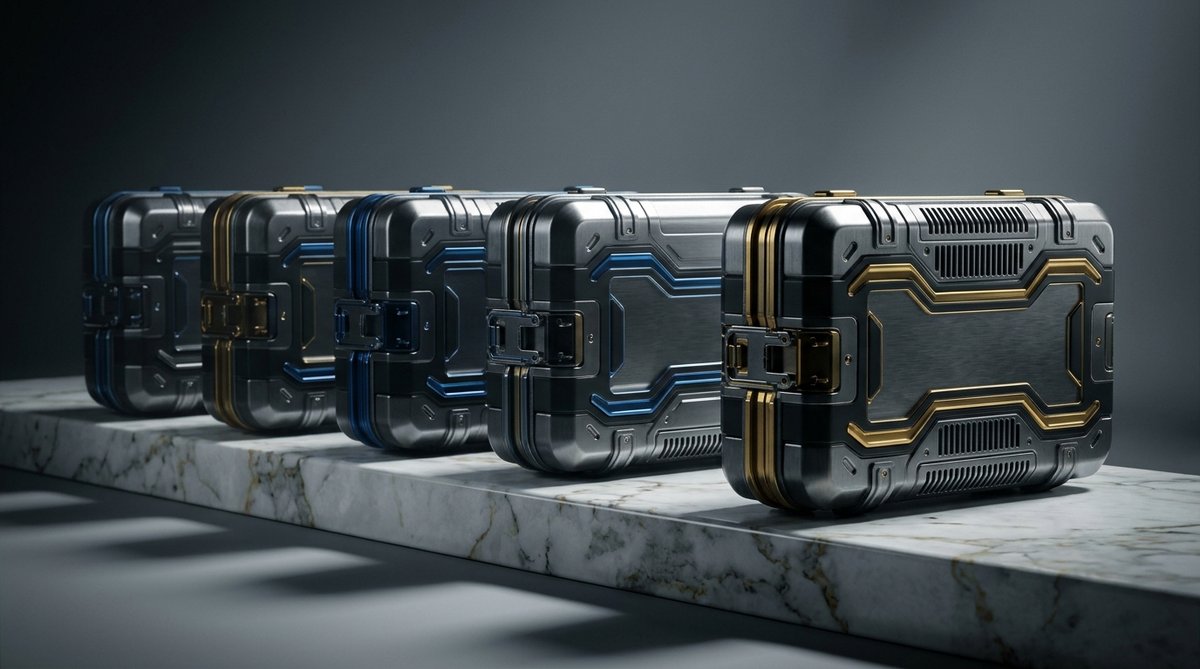
The active pool holds five objects. Three are traditional cases that need a key. Two are terminals, which open without one and instead show you a specific skin at a fixed price you can accept or decline.
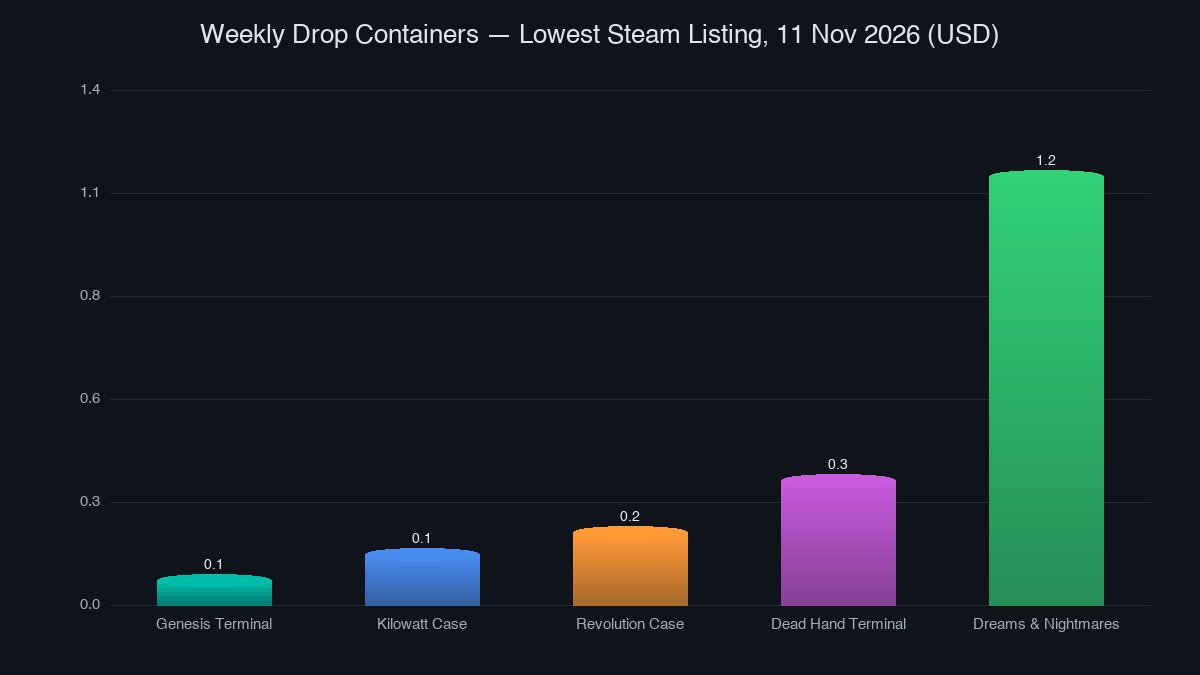
Lowest Steam Market listings from a November 11 snapshot:
- Sealed Genesis Terminal — $0.07. No rare special items at all. No key required.
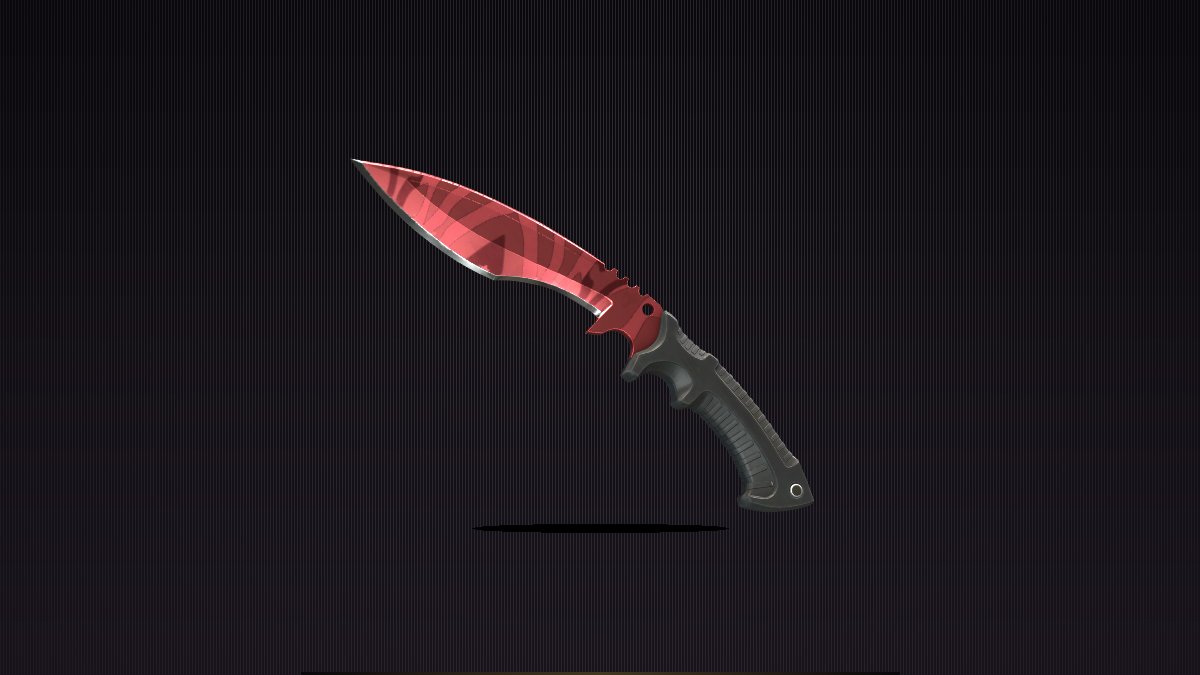
- Kilowatt Case — $0.14. Rare slot is the Kukri Knife. $2.49 key.
- Revolution Case — $0.20. Rare slot is 24 glove finishes. $2.49 key.
- Sealed Dead Hand Terminal — $0.34. 22 glove finishes. No key required.
- Dreams & Nightmares Case — $1.16. Butterfly Knife plus four more knives. $2.49 key.
A different tracker, sampling other listings in the same window, reported the same five at $0.03, $0.06, $0.12, $0.15 and $0.74. Take the two snapshots together and the picture gets clearer: the spread between the cheapest and dearest container is roughly an order of magnitude, and the whole set lives inside the price of a coffee.
For contrast, the retired cases people still argue about — Operation Bravo, Weapon Case 1, the old operation cases — left this pool entirely. They do not appear in a care package at any chance anymore.
What a Week Actually Pays
The mechanics have not changed. Prime account, first profile level-up of the week, one care package. A level is 5,000 XP from official matchmaking, and the package offers four items of which you keep two. Playing a hundred matches instead of ten does not produce a second package, and a skipped week does not carry over.
Now price a year. If the pool weights are roughly even across the five containers — the community tracking figure is about 20% each — the average container is worth $0.38 at the November 11 prices. One package a week for a year, always taking the container offer, is $19.86 of market value. On the cheaper snapshot the same year is $11.44.
If you only ever take the best container on offer, you cannot take five. You get one shot per package at the Dreams & Nightmares slot, which was worth $1.16 that week. Fifty-two perfect weeks of that would be $60.32, and it would require a specific container to appear in a specific slot 52 times in a row.
Then subtract what you cannot sell. Chicken eggs entered care packages on September 22, 2026, and choosing an egg consumes both of your picks. Eggs cannot be sold or traded at all. Three breeds, 34 colours, zero market value — a genuinely popular addition that pays the player back in pets rather than cents.
Why the Number Collapsed
Two dates explain almost all of it.
Around December 17, 2025, the rare drop pool went to zero. That pool was the small branch of the weekly drop — community estimates put it near 1% — that could hand you a legacy case like Operation Bravo or Weapon Case 1 instead of a current one. More than 35 older cases stopped dropping when it closed. Valve never published an announcement; trackers noticed the drop count flatline and the change stuck.
Then on March 11, 2026, the Recoil Case left the active pool and the Sealed Dead Hand Terminal took its slot. That detail matters more than it looks. Valve replaced one active case drop with a terminal rather than adding a sixth object, which means the total number of container drops per week did not grow — only the mix changed, and the newcomer was a glove terminal with no key.
So the free faucet now produces: two terminals that often clear under a quarter, two cases in the ten-to-thirty-cent band, and one case with a real knife pool. The jackpot branch is gone, and the replacement objects are the cheapest things in the game.
The Key Never Got Cheaper
Here is the number that makes the collapse matter: a key still costs $2.49.
Take the average container value of $0.38 and divide by $2.49. The free drop now covers about 15% of the cost of opening what you were just given. Total cost to open a Kilowatt Case that week was $2.63, of which the case itself was 5%. Open a Dreams & Nightmares and the bill is $3.65, with the case contributing 32%.
That is the asymmetry nobody talks about. The container's price collapsed because supply is continuous and free. The key's price did not move because Valve prices it, not the market. So every year the free drop becomes a smaller discount on a fixed-cost action, and the case price stops being a meaningful variable in the decision at all — it is now roughly the difference between two coffees.
It also explains the shape of the pool. Two of the five objects are terminals precisely because terminals skip the key. Valve's newer format shows a specific skin at a set price, so the transaction does not depend on a $2.49 key being worth it. The design choice is a quiet admission about where the margin now sits.
What the Cheap Cases Still Contain
None of this means the cheap containers are worthless to open. It means the decision has moved entirely to the contents.
The Kilowatt Case is the interesting one at $0.14. Its rare slot is a Kukri Knife, which is the only non-Butterfly knife pool among the key-based containers in the drop. The Revolution Case goes the other way: its rare slot is 24 glove finishes, no knife. Dead Hand is also gloves, 22 finishes, and Genesis has no rare special items at all — which is why it trades for pennies while still being a legal drop.
Dreams & Nightmares remains the pool's outlier at $1.16. It holds a Butterfly Knife and four more knives in the rare slot, it has been in the pool since January 2022, and its price is the only one in the group that still behaves like a container with a reason to own it.
What to Do With the Drop
Three practical conclusions, all of them boring.
Sell the drop, do not open it. If you were not going to buy that specific container, receiving it free does not make opening it cheap. A $0.14 case plus a $2.49 key is a $2.63 bet on a knife pool where the published rare rate is measured in fractions of a percent.
Treat the free container as a coupon, not a prize. Its value in 2026 is 15% off one key. If you already open cases, take the container you were going to open anyway and stop thinking about the rest of the offer.
Pick the egg if you want the egg. It uses both picks and it cannot be sold, so it is the one choice in the care package that is purely cosmetic. That is fine — just do not count it as value.
If you do want to open something, open it deliberately rather than out of habit. Our Silent Form case runs the same format you already know from the weekly drop, and the marketplace is where the specific knife you actually want costs less than the keys you would burn chasing it. A Kukri with the finish you like is a purchase. A Kukri you might get is a subscription.
The weekly care package was never a lottery ticket worth much. As of November 2026 it is worth about seven cents, and the honest thing to do is price it that way.