When to Sell CS2 Skins in 2026: A Timing Playbook Built on Real Prices

When to Sell CS2 Skins in 2026: A Timing Playbook Built on Real Prices
You bought a knife at the right moment. The question nobody prepares you for is when to sell it. In August 2026, that question is harder than it has ever been — CS2's player count has now fallen for five straight months, the Steam Community Market got its biggest redesign in years back in May, and the price gap between "just listed" and "actually sold" has never been wider.
This playbook is built on real asking prices from skinvs listings pulled on August 9, 2026. No vibes, no "trust me, it'll pump." Three steps, each with a concrete number behind it.
Step 1: Read the Market's Temperature
Selling into a falling market is like catching a knife — you can do it, but the timing has to be surgical. The first step is knowing which phase the market is in, and there are three signals that matter more than any single price chart.
Signal one: player count. Counter-Strike 2's concurrent player numbers have dropped every month since March, according to data reported by games.gg on August 3. Player count is not a direct price driver, but it is a demand meter — fewer players means fewer new buyers entering the skin market, which means liquidity thins out first on mid-tier items.
Signal two: content cadence. Valve shipped the Season 5 Armory content in June, added 22 new glove finishes in March, and reworked the entire Major sticker system for Cologne 2026 — direct shop sales instead of capsules, with the shop running until September 29. Every content drop re-baselines prices: new supply enters, older items have to justify their premiums against a wider field. The weeks right after a content drop are historically the worst time to sell anything that isn't brand new.
Signal three: platform changes. The Steam Community Market overhaul in May changed how listing pages look and how buy orders work. Redesigns always create a temporary bid-ask mess as traders relearn the interface. If you sold during the first week of that rollout, you were competing with thousands of confused sellers — a mistake this playbook exists to prevent.
One more temperature gauge worth tracking: esports events. The EWC 2026 last-chance qualifier wrapped up this week, and Major sticker shops — like the Cologne 2026 shop running until September 29 — inject fresh sticker supply while tournaments pump short-term attention into the game. Event weeks are when casual buyers come back, which makes them historically decent windows for selling recognizable items into real demand. The counter-intuitive part: the item that benefits most from an event is not necessarily the one being showcased — it is the one casual buyers recognize from their own inventory.
Take the temperature weekly. One quick scan of these three signals takes five minutes and tells you whether you are in a seller's window or a waiting window.
Step 2: Anchor Every Decision to Live Prices
Here is the trap: your brain remembers the price you paid, or the price you saw last month, and treats it as the truth. The market does not care. The only number that matters is what a buyer is willing to pay right now.
As of August 9, 2026, here is what the high end of the knife market actually looks like on skinvs:
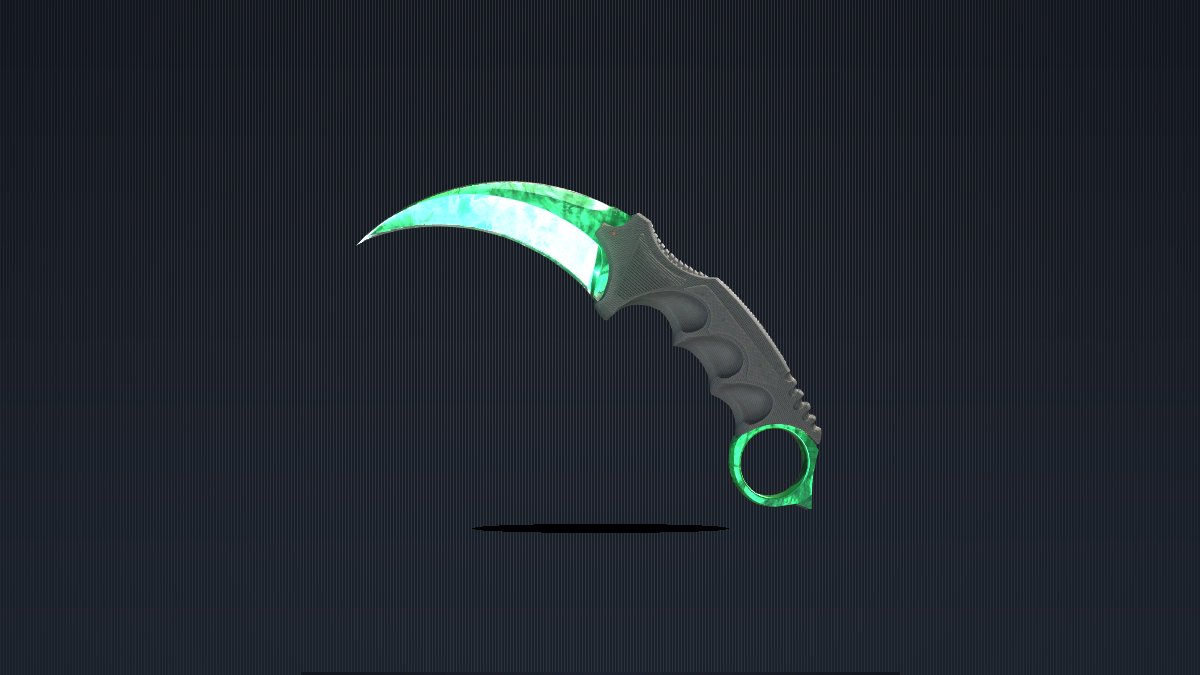
- ★ Karambit | Gamma Doppler (Minimal Wear) — $2,294.77 asking
- ★ Butterfly Knife | Doppler (Factory New) — $2,334.71 asking
- For context, the glove market runs from roughly $4,033 to $11,617 depending on family and wear
Notice what these numbers are not: they are not the prices you saw in a YouTube video last month, and they are not the median from a site that aggregates listings from three months ago. They are current asking prices on a live marketplace. When you anchor to live data instead of memory, two things happen: you stop overpricing (which just leaves your listing rotting), and you stop panic-underpricing (which is how the "90% of players lose money on skins" stat, cited by HackerNoon earlier this year, stays true).
The discipline part: before you list anything, look up its current asking price, then look at the wear tier above and below yours. The spread between them is your real information. If a Factory New item asks 40% more than Field-Tested, that is the market telling you FN buyers are scarce right now — list competitively or wait.
Step 3: Pick Your Exit Before You Need It
Deciding when to sell while you are calm is the entire game. Deciding while the price is dropping is how you sell at the bottom. So set your exit criteria now, in writing, before the moment arrives.
Rule one: sell into spikes, not out of fear. When an item's price jumps — a major sticker change, a content update, a tournament run — that spike is a gift, not a signal to hold for more. The gloves market showed exactly this in August: the top finishes trade in a thin band, and thin markets spike hard and mean-revert fast. If your item is up 15-20% on no news, that is a liquidity event, not a trend.
Rule two: liquidity beats price. A $2,300 knife you can sell in a day is worth more than a $2,600 knife that takes six weeks. Popularity is the liquidity proxy. The Butterfly Knife | Doppler at $2,334.71 moves because it is a beloved, widely recognized finish. A rare StatTrak oddity at the same price sits. When choosing what to buy — and when to sell — ask "who else wants this?" before asking "what is it worth?"
Rule three: know which wear tier actually sells. Some finishes barely degrade with wear, and the market knows it. Moto Gloves | Finish Line in Battle-Scarred asks $7,397 — more than eight Field-Tested gloves from other families — because the checkered pattern hides scratches almost completely. If you own a finish like that, sell the cheap wear tier and let buyers skip the Factory New premium. If you own a gradient finish, the opposite is true: wear destroys value, so hold the good float or accept the discount.
The One Rule That Beats Everything
Every step in this playbook reduces to one sentence: sell when the market is liquid and the price is high, not when you need the money and the price is falling. Player counts down, content cadence up, and live prices available in seconds — the 2026 market punishes hesitation and rewards preparation in equal measure.
Start with the temperature check. Then anchor to live listings. Then pre-commit to your exit. If you want to see what real buyers are asking for the items you already own, the Phantom Cache case page is a decent place to check how case supply feeds into knife and rifle prices — and the market page shows live asking prices across every category.
The market rewards the seller who planned. Pick your moment, set your number, and let the data do the arguing.