CS2 Cologne 2026 Major Shop: How the Token System Replaced Sticker Capsules
CS2 Cologne 2026 Major Shop: How the Token System Replaced Sticker Capsules
For the first time in Counter-Strike history, you no longer have to open a capsule and pray. Valve rebuilt the entire Major item economy ahead of IEM Cologne 2026, killing randomized sticker capsules and replacing them with a direct-purchase token shop. If you have bought stickers in the past, everything you know is now wrong — and that is actually good news.
The new system went live alongside the Major Hub on May 22, and it changes how you spend money, how sticker prices move, and even how souvenirs are made. Here is exactly how it works, step by step.
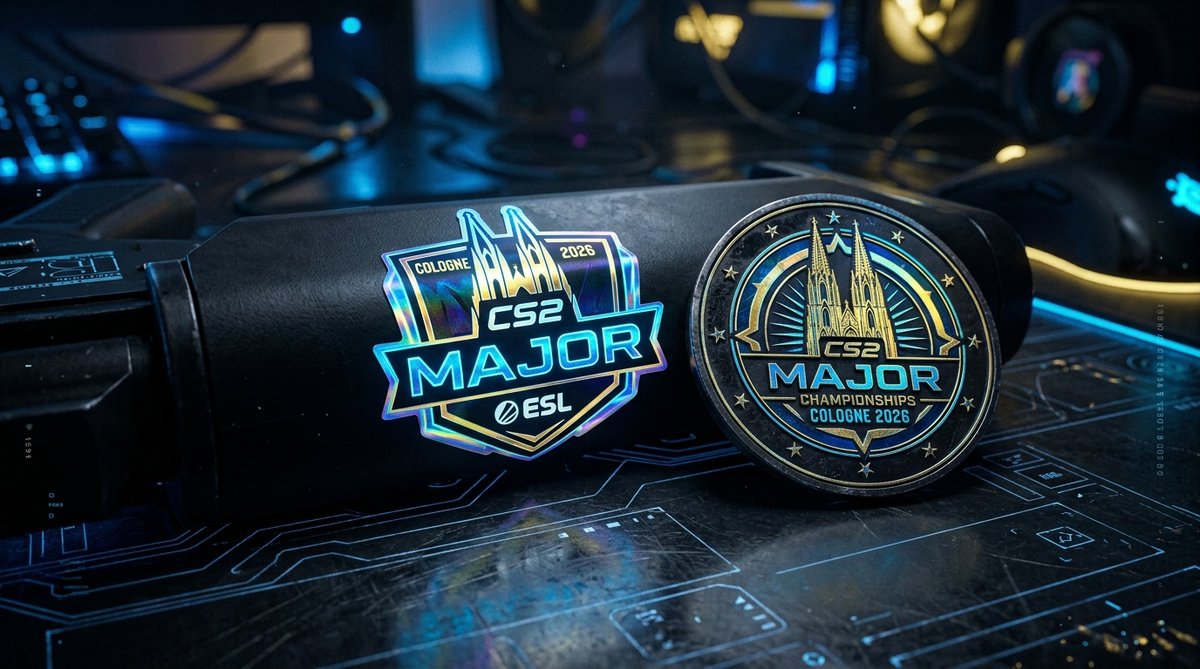
The Big Change: Capsules Are Gone
Sticker Capsules and Autograph Capsules no longer exist. For nearly a decade, getting a specific player's autograph or a team's holo logo meant opening capsules and hoping the random number generator landed in your favor. That lottery is over.
Now every one of the 772 new Cologne 2026 stickers is available to buy directly. You pick the exact team logo or player signature you want, in Paper, Holo, Foil, or Gold, and you pay for exactly that item. No duplicates piling up in your inventory, no opening 40 capsules chasing a single holo.
Valve's stated reason is simple: the old system was popular but locked out players in certain regions, and the community has been asking for direct purchases for years. The quieter driver is regulation — Germany, the host nation, has been tightening rules around loot-box mechanics, and a no-randomness shop sidesteps that pressure entirely.
Step 1: Buy Tokens (and Understand the Price)
The Major Shop runs on a new currency called Cologne 2026 tokens. The baseline rate is 100 tokens for $0.99. You cannot pre-purchase tokens in bulk — they are acquired at checkout, and only when your balance falls short of what you need.
Sticker purchases are final once tokens are redeemed, but if you cancel before activating tokens, you get a full refund. If you cancel after activation, the tokens simply stay on your balance. The minimum top-up is that 100-token, $0.99 block, which is the cheapest way to dip into the shop.
The Viewer Pass is the smart starting point for most players. The standard pass costs $9.99, and a bundle with 900 bonus tokens costs $18. Activating either pass grants you the Cologne 2026 Challenge Coin, which starts at Bronze and can be upgraded through the Pick'Em Challenge.
Step 2: Pick Your Stickers in the Major Shop
This is where the new system gets genuinely different. Sticker prices are not fixed — they fluctuate based on demand. When a sticker sells heavily relative to its peers, its price climbs while the rest fall. Prices refresh periodically in batches, and the shop warns you before an update hits while you are browsing.
That dynamic pricing has already produced eye-watering results. Valve sleuth Gabe Follower flagged that buying one of each of the top 100 Cologne 2026 stickers would now cost $19,447.37, with the single most expensive sticker priced at $1,522. A single breakout player sticker, the s1zzi Cologne 2026 sticker, has been listed at $1,420.39 — though with effectively zero trading volume, so treat that number as a vanity listing rather than a real market price.
Even mid-tier autographs move a lot. A Foil autograph sticker for a star player like ZywOo has traded in a $3.51 to $44.87 range on third-party marketplaces since release — a spread that shows just how demand-sensitive this pricing model is.
Step 3: Protect Yourself With the Price-Drop Refund
Valve built a safety net into the shop because prices move in real time. If any sticker you buy drops by more than 25 tokens within 24 hours of your purchase, you automatically get the difference back. The refund lands on your token balance within a week, no action required.
This is a real departure from the old market, where buying at the wrong moment meant eating the loss. The mechanism only protects against a specific, sudden drop, but it removes the worst-case scenario of buying a hype sticker right before a price correction.
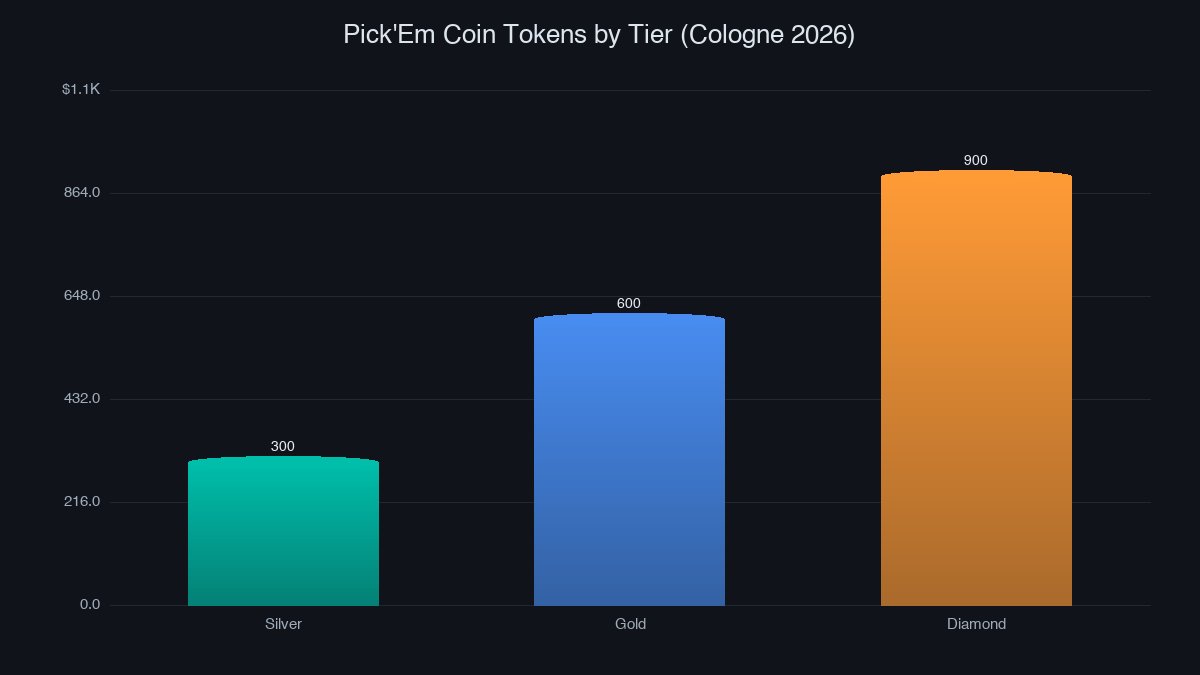
The Pick'Em Challenge also feeds back into the token economy. Each coin upgrade tier awards 300 tokens — so a player who grinds their coin from Bronze all the way to Diamond walks away with up to 900 tokens, which is enough to cover several stickers without spending beyond the pass.
Step 4: Craft a Souvenir With Souvenir-O-Matic
Souvenirs changed just as dramatically. Forget waiting for a random drop during a live match. The new Souvenir-O-Matic lets you take any Normal or Souvenir-quality weapon from your inventory, pick a completed Major match, and choose one player from that game to stamp onto it.
The weapon is permanently converted to Souvenir quality with gold team, autograph, and map stickers applied. You can preview the final result before confirming, and you start from a weapon you already own instead of gambling on a package roll. One important tradeoff: any stickers already applied to the weapon are removed before conversion, so peel off anything valuable first.
The cost of a souvenir depends on two factors — demand for the specific gold stickers involved, and the rarity of the base weapon. A rare gun carrying a top player's autograph will cost noticeably more than a common one. Souvenir quality is now on par with Normal quality, which has started pushing older souvenir skins closer to their standard counterparts in price.
What This Means for Your Inventory
The tournament itself is enormous: 32 teams competing across Challengers, Legends, and Champions stages at the Lanxess Arena in Cologne, with a prize pool of roughly $1.2 million. Cologne last hosted a Major a decade ago, and this is the first CS2 Major of 2026.
Revenue from the Major Shop and passes is split down the middle — half to Valve, half to the organizer, teams, and players. Within each team's share, half goes to the organization and the rest is divided equally among the five players. That means when a team runs deep, its players' sticker royalties climb, which is why autograph prices for the tournament's biggest names have moved so sharply.
For the average player, the takeaway is control. You no longer need luck to build a collection — you need timing. Prices move with tournament results, so a player's breakout series can push their autograph up within hours, and an early team exit can pull a logo down. If you want to round out a loadout or snag a souvenir that actually means something to you, the tools are now in your hands. When you are ready to put that to use, the same logic applies to case opening at Phantom Cache — know what you want before you spend, and watch the numbers before you click.