CS2 Charms Are Down 76% Since They Launched. Stickers Went Up This Week.
CS2 Charms Are Down 76% Since They Launched. Stickers Went Up This Week.
Two cosmetic types, same game, same player base, same month. The charm index we track closed at 239.9 against a starting level of 1,000 in October 2024 — a 76% loss in two years, and it is still falling. The sticker index went the other way in the same week, up more than two percent.
That is not a story about taste. It is a story about two machines that produce items in completely different ways, and the difference shows up in every price table that separates them.
Round 1: One Tap vs a Calendar
Charms have exactly one production source. You buy an Armory Pass, you spend credits, and three credits buys one random charm from a collection you choose. That is it. There is no charm capsule, no charm case, no weekly drop, no tournament window, no trade-up contract that consumes charms as material. The supply tap opens when you turn it and closes when you stop paying.
Stickers come from a calendar. A Major happens, a sticker shop or capsule opens, players buy for a fixed window, and then the window shuts and no new copies are ever printed again. Cologne 2026 stickers exist because Cologne 2026 happened. When the sale ended, the supply froze where it was.
That single difference explains most of the chart. An item whose supply stops becomes a candidate for holding value. An item whose supply only stops when nobody buys the pass is not scarce in any structural sense — it is priced by how many people currently want to look at it.
Round 2: What $1.23 Actually Buys
An Armory Pass costs $15.99 and yields 40 credits. Three credits per charm pull means 13 pulls per pass, which works out to roughly $1.23 per random charm — and you never choose the charm, only the collection.
Here is the same math from the other side. Our book holds all 78 regular charm variants, and 42 of them — more than half — trade below $1. The median charm is $0.86, which is two thirds of the cost of the pull that produced it. The tiers break down like this:
- High Grade — 26 charms, $0.15 to $0.39, median $0.27
- Remarkable — 24 charms, $0.40 to $2.47, median $0.82
- Exotic — 16 charms, $1.41 to $8.86, median $2.98
- Extraordinary — 12 charms, $7.43 to $151.40, median $18.42
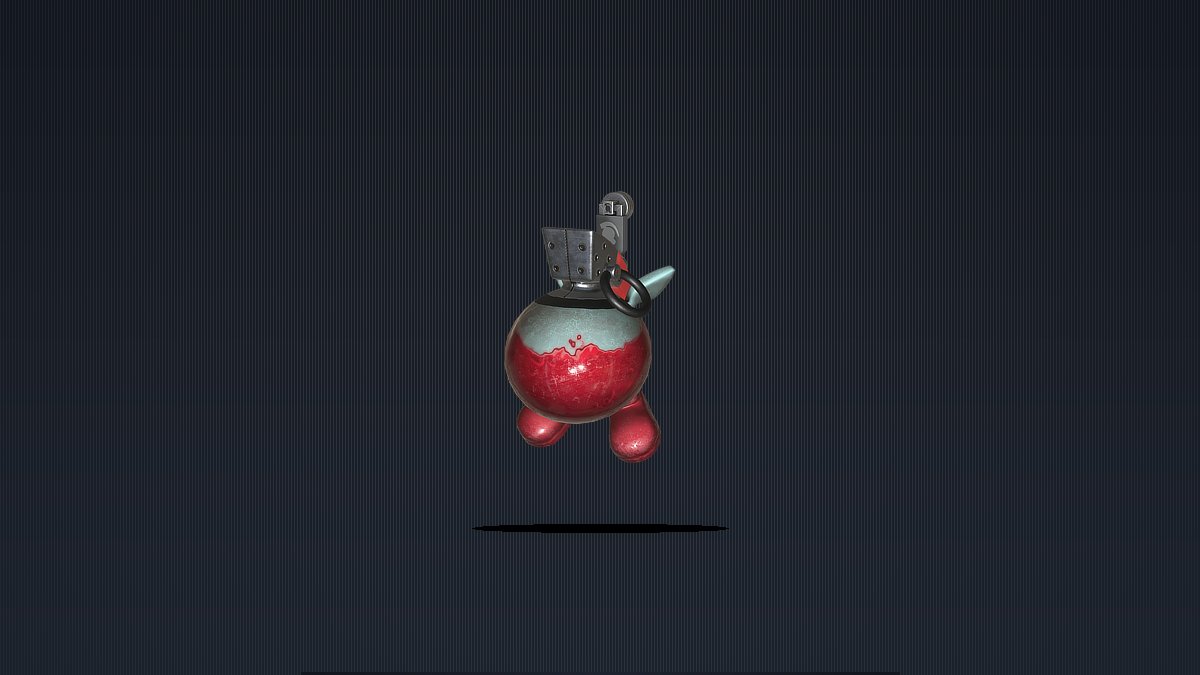
The top of the book is Charm | Butane Buddy at $151.40, then Charm | Lil' Boo at $85.34, Charm | 8 Ball IGL at $38.97 and Charm | Lil' Eldritch at $34.28. Four charms carry most of the category's value, and everything else is loose change.
Cross-check that against the global ranges other trackers publish for the same 78 charms: High Grade $0.09 to $0.25, Remarkable $0.27 to $2.33, Exotic $1.15 to $8.41, Extraordinary $6.80 to $122. Our book prices the top of every single tier above the wider market's ceiling — Butane Buddy at $151.40 against a $122 high-end reference is the widest gap, and a 39-cent High Grade against a 25-cent ceiling is the most common one. Charms are thin enough that where you look changes what you're told.
Round 3: The Record
Across the 27 days from 14 October to 10 November, charm variants moved a median of -14%. That is the worst of any cosmetic category in the same window: knives -3.3%, gloves -4.3%, weapon skins -2.4%, stickers -2.3%, cases -2.6%. Only 69 of 255 tracked charm variants rose, against 170 that fell and 16 that sat flat.
Stickers over the same 27 days: 4,836 variants, median -2.3%, with 1,504 up against 2,721 down. Fewer than a third of sticker variants fell meaningfully, against two thirds of charms.
The longer record is harsher. The charm index has lost 4.8% over the last 30 days and 1.8% in the last week, on roughly $87,000 of weekly volume — thin enough that a handful of sales moves the number. A second tracker that weights charms differently puts the same category at -11.4% over seven days and -15.8% over 30, with a total market value around $1.1 million and $4.6 million of volume in the week. One of these two readings is noisier than the other, but neither shows a floor.
Meanwhile the sticker index was the best-performing category of the week, ahead of graffiti and keys, with crates, weapons, patches, agents and music kits all negative.
Round 4: The Detachment Tax
There is a cost in the charm system that does not exist anywhere in the sticker system. Attaching a charm is free. Removing it is not — it consumes a Charm Detachment. Valve hands you three free detachments each time you redeem a charm from the Armory. A charm you buy on the market arrives with none.
So the same object is a different product depending on how you got it. A pulled charm is movable three times for free. A purchased charm is fixed to the weapon you first mount it on unless you go and buy consumables. That is a tax on the second-hand market built into the item class, and it is the sort of thing that quietly caps resale demand: the buyer knows the thing they just bought is worth slightly less the moment they install it.
Stickers have friction too — scraping destroys them — but scraping is a choice a crafter makes deliberately, and the sticker's value after scraping is a known function of how much of it is left. The charm's value after mounting is the same charm, minus a consumable you have to buy to get it back.
Round 5: One Chord Per Gun
A weapon holds one charm. A rifle takes up to five stickers. That ratio decides how much of a collection can be absorbed.
Stickers get stacked, matched, misaligned, scraped into crafts, and glued to guns that then get traded as units. The culture generates destruction, and destruction is what makes a discontinued sticker behave like a collectible. Charms sit on one gun, in one slot, and a player with twelve rifles needs twelve charms at most. Demand stops at the number of guns in circulation rather than scaling with how deep someone wants to go.
The one charm class that escapes this is the Souvenir Highlight charm — the ones tied to specific Major moments, which come out of souvenir packages and carry an event that will never repeat. Those have traded as high as $1,020 for the Budapest 2025 jcobbb versus MOUZ on Nuke pull. That is not a coincidence. It is the only charm with an end date on its supply, and it is the only charm with a price that looks like a sticker's.
The Verdict
Charms are a subscription, not a stock. You pay roughly $1.23 a pull for a random object with a median value of $0.86, whose supply never closes, whose second-hand use costs extra, and whose demand ceiling is one per weapon. The category has lost three quarters of its index value in two years while the sticker index it gets compared to held flat and then rose.
That does not make charms bad. A $2 charm that makes a rifle look better is a better purchase than a $2 sticker that does the same thing, on a per-dollar-of-difference basis. What it makes charms is a purchase rather than a position: buy the exact one you want, mount it, and stop counting it as an asset.
Stickers reward the calendar, charms reward the catalogue. If you are holding a bag of charms you never mounted, the SkinVS trade page is the fastest way to convert them into something you will actually look at — and unlike holding them, that has a defined outcome.