The X-Ray Scanner Doesn't Change CS2's Odds. It Changes Who Takes the Risk.
The X-Ray Scanner Doesn't Change CS2's Odds. It Changes Who Takes the Risk.
On 19 November, Counter-Strike 2 shipped an update of roughly 700 MB. Most of it was housekeeping: walkable ledges in Cobblestone long A, an empty skybox, a grenade clip on the assault van bumper, a Molotov exploit from church to dark on Inferno B. Tucked under a heading near the bottom sat the part that actually matters to anyone who buys containers: players in Switzerland now open every case through an X-Ray Scanner.
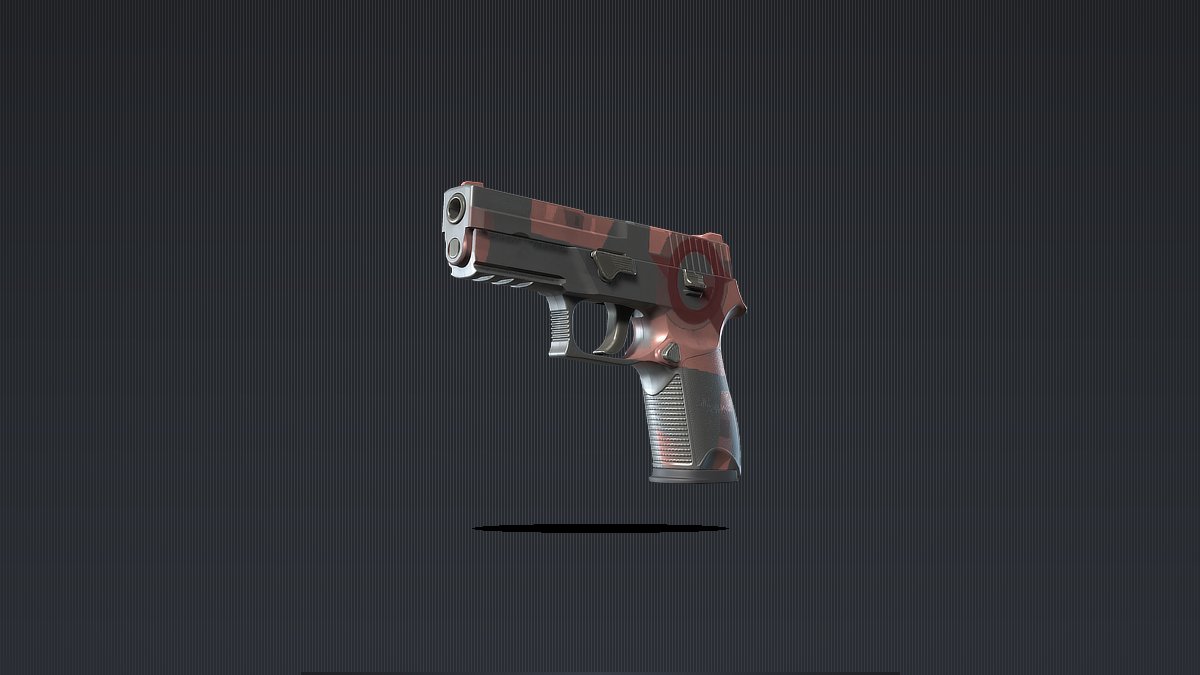
Valve's own wording is short. Swiss accounts get a scanner tab in the inventory, and for those players "containers can only be opened via X-Ray Scanner." The scanner arrives loaded with a one-time, exclusive, non-tradable Genuine P250 | X-Ray that has to be claimed before it will reveal anything else.
Here is the part that gets lost in the patch-note thread: the drop rates did not move. The 0.26% gold roll is still 0.26%. What moved is the order of two events that used to be fused together. You used to pay, then find out. In Switzerland you find out, then pay.
The Bull Case: You See It Before You Pay
Outlets that tested the feature describe it the same way. The scanner shows the exact item inside the container before purchase — not a rarity tier, the actual item, with its wear condition, its float value, its pattern seed and whether it is StatTrak. Nothing is hidden except the decision.
Set that against the published odds and the appeal is obvious. Every standard weapon case runs on the five-tier ladder Valve disclosed in 2017 and has never revised: 79.92% Mil-Spec, 15.98% Restricted, 3.20% Classified, 0.64% Covert, and 0.26% for a knife or gloves — about one in 385 openings. Those numbers held through October 2026 without a single change.
Read the ladder from the buyer's side and 79.92% of every scan is a reject. Before 19 November, a Swiss player buying a key discovered that after the money left their wallet. Now they discover it before, and they can walk away with the key still unspent. That is not a cosmetic change. It converts a blind purchase into a priced one.
It also explains the starter skin. A free, non-tradable P250 with a name that literally spells out the mechanic is a tutorial item, and making it non-tradable means nobody can farm Swiss accounts for a marketable pistol on day one. Valve thought about the loophole before shipping it.
The Bear Case: The Container Stops Being an Asset
The restrictions reported alongside the rollout are where the economics get uncomfortable. According to coverage of the change, scanning a container consumes it and leaves it non-tradable and non-marketable. You can hold only one revealed item at a time. You must claim it before scanning another. And you cannot wave away an unwanted result and move on to a fresh case.
That last rule is the whole ballgame. If you could skip bad reveals, the scanner would be a filter, and every Swiss player would simply scan until a good item appeared. You cannot. A revealed Mil-Spec is a decision point, not a do-over. So the scanner does not reduce how many containers get opened. It reduces how many get opened unscanned.
The market consequence runs deeper than the odds table suggests. A sealed case is a tradable good. A scanned case is a used ticket. Once the container is consumed and de-listed, the secondary trade in sealed containers has nothing left to trade for Swiss accounts — and that trade is not a rounding error. Retired cases have historically been one of the few CS2 assets that behave like a supply-constrained collectible rather than a consumable, precisely because unopened stock is finite and sealed.
Now apply it to the person actually holding inventory. Say you paid $0.33 for a Phantom Cache case. You scan it, the scanner shows a blue Mil-Spec worth pennies, and the case is now a dead object you cannot sell. You decline the $2.49 key. Your loss is the case, but the case was the cheap part — and you can no longer recover it. Under the old system you would have paid $2.49 and lost more. Under the new one you lose less, but the loss lands on the container instead of the key.
Which raises an obvious question about who ends up carrying that exposure. Cases come from drops and from the market. Keys come from Valve. A mechanic that shifts loss from the key purchase onto the container is a mechanic that shifts loss away from the party that sells keys.
The Bit the Patch Notes Leave Out
Valve did not state a reason. It never does with these. But the shape of the change is familiar, because this is the third rollout of the same system: France first in 2019, then Germany on 16 March 2026, and now Switzerland. Coverage of the German and Swiss launches both tie the mechanic to local rules treating blind container opening as a game of chance — the reveal step is what separates a purchase from a wager.
The detail that should interest anyone outside those three countries is how the earlier rollouts behaved. In France and Germany, players could scan one case at a time and had to purchase the scanned item before scanning another. Switzerland got the same skeleton. That consistency is the signal: this is a template Valve can switch on per jurisdiction, not a one-off experiment.
Which means the interesting question is not whether the scanner is good or bad. It is how cheap it is for Valve to keep turning it on. A client-level flag per region costs nothing to flip. The drop rates stay identical across every market, so the published odds never have to change, and the Phantom Cache still costs $0.33 whether you are in Zurich or Zagreb.
What It Costs, In Numbers
Take one standard case and do the arithmetic that the scanner makes visible. A key runs about $2.49. Working from the published ladder and typical per-tier values, the expected return on a single standard case opening lands near $1.94, against roughly $2.82 paid — case plus key. That is a return of about 62 cents on the dollar, in line with the roughly 62% RTP commonly quoted for official cases.
Now walk through what the scanner does to that number for one player. There is a 79.92% chance the scan reveals a Mil-Spec item and a 15.98% chance it reveals a Restricted one. Most of the time the revealed item is worth well under the price of the key. A player who declines leaves the case dead and keeps the key. A player who claims is choosing, with full information, to pay $2.49 for something they can see is worth less.
That is not the same as making cases profitable. The expected value per opening is unchanged, and it was never positive. What changed is that the bad half of the distribution now announces itself before the transaction instead of after. Anyone who claims a revealed blue is not unlucky. They are informed and still paying, and the difference matters for how often the loss happens and who it lands on.
For context on how rare the outcome people actually want is: after 385 openings you have only about a 63% chance of having hit at least one knife or pair of gloves. A thousand openings gets you to roughly 92.6%, at about $2.60 per opening — somewhere near $2,600. The scanner does not touch any of those numbers. It just makes each individual roll legible before it is paid for.
My Take
The scanner is a compliance device wearing a feature's clothes, and the tell is that it deliberately does not change the thing a regulator would care about most. The odds are identical. The expected return is identical. What it changes is disclosure, which is exactly what loot-box law asks for and roughly what players were already told in a table on the case's own information panel.
That makes it a genuine improvement in one narrow sense — nobody in Switzerland will pay for a key without knowing what they are buying — and a real cost in another. Swiss players lose the container as a tradable asset, lose the ability to skip a bad reveal, and gain a decision they now have to make while staring at a Mil-Spec they do not want. Valve loses nothing. The key price is the same in every region.
If you are in Switzerland, treat cases as consumables from now on, not savings. The 5 Covert-to-knife trade-up that arrived on 22 October 2025 still works, still draws its pool from the collections you feed it, and involves no container at all — that is the route that survived the change intact. If you want a specific knife rather than a random one, the marketplace prices it in the open, which is the same principle the scanner is built on, applied before you spend anything.
And if you are anywhere else: France got this in 2019, Germany in March, Switzerland this week. The odds tables in your region have not moved once in nine years. The plumbing around them is being rebuilt one country at a time, and the pattern so far is that the ladder stays and the ceremony changes.