Steam vs Everywhere Else: The 55% Premium CS2 Buyers Keep Paying

Steam vs Everywhere Else: The 55% Premium CS2 Buyers Keep Paying
Pull up an AK-47 | Asiimov in Factory New and you can pay $632.50 for it. Or you can pay $353.38 for the identical item, same wear, same float band, on the same afternoon. The only thing that changes is the website.
That is not a seasonal spread or a rare arbitrage. A June 2026 study by skinbase.io compared 8,661 CS2 items that were listed both on Steam and on at least one third-party marketplace. Steam came out above the cheapest filtered third-party listing on 8,558 of them — 98.81% of the sample. The median Steam premium was 55.05%.
The two venues people use most often are not competing on price. They are competing on convenience, and the convenience has a sticker on it.
Round 1: The Sticker Price
The 55% median is only the midpoint. The same dataset found a 67.58% premium at the 75th percentile, 89.88% at the 90th, and an average across the whole sample of 61.16%. In other words, the typical item is not slightly more expensive on Steam — it is dramatically more expensive, and the expensive half is worse than the headline suggests.
The study's own sample rows make the size of the gap concrete:
- AK-47 | Asiimov (Factory New) — Steam $632.50, cheapest third-party $353.38 on SkinSwap.
- AK-47 | B the Monster (Field-Tested) — Steam $183.04, cheapest third-party $123.91 on CSFloat.
- AK-47 | Aquamarine Revenge (Minimal Wear) — Steam $97.82, cheapest third-party $61.55 on SkinFlow.
- 3rd Commando Company | KSK — Steam $17.19, cheapest third-party $11.32.
Notice that the pattern holds all the way down the price ladder. This is not a phenomenon limited to four-figure knives. On a $17 agent, the premium is still well over 50%.
There is a second layer to the same finding. Because the premium is a percentage and not a flat fee, it scales with whatever you are buying. Save 55% on a $20 skin and you have recovered enough for another cheap skin; save 55% on a $900 knife and you have paid for a second knife. Buyers who check the same item on two venues before every purchase are, over a year, effectively running a small arbitrage on their own shopping list.
Round 2: It Is Not Just Steam
A separate study from June 2026 looked at 18,197 skin variants that carried prices on Steam and at least one other venue. Steam was the more expensive place to buy 95% of the time, with a median saving of 42% for shopping elsewhere and a median of $11 saved per skin.
But the same research did something more useful than picking on Steam. It took 12,963 variants that appeared on three or more marketplaces and measured the gap between the cheapest listing and the most expensive one. The median spread was 50%.
So the real conclusion is not "Steam is expensive." It is that the same item routinely has a half-price copy sitting somewhere, and which site is cheapest changes from skin to skin. A more recent snapshot of 12 popular Factory New variants across 29 marketplaces, taken on September 8, found a median quote gap of 6.2% between the lowest and median advertised price — a reminder that once you leave Steam, the differences between third-party venues are usually measured in single digits, not tens of percent.
The practical takeaway: the big win is leaving the Steam order book. The small win is comparing two or three third-party venues before you check out.
Round 3: Fees, Rails, and What You Actually Keep
The gap exists for a structural reason. Steam charges a combined fee of roughly 15% on every sale, and the balance it credits you can never be withdrawn as cash. Sellers price that in. A seller who wants $85 in real money has to list at a number that survives the fee, so the buyer pays for the round trip.
Third-party venues work differently, and the difference shows up in two places.
- Seller fees. The lowest-fee marketplaces let sellers accept a lower ask and still keep the same amount, which pulls buyer-facing listings down with them.
- Payment rails. On venues where you fund a balance, card deposits commonly cost 2.8% to 4.2% while crypto funding runs 0% to 1%. On direct-checkout venues the card carries no extra venue fee, so the rails roughly tie.
There is a trap worth knowing here. Sites advertising zero buyer fees often see sellers bake the commission into the ask, which can inflate listed prices by 15% to 25%. The sticker number and the checkout number are different things, and only the second one is real.
Wear discipline matters for the same reason. A Field-Tested copy at float 0.14 and a Field-Tested copy at float 0.34 carry the same label and look meaningfully different, and the market prices them accordingly. On finishes that hide wear well — matte, dark, heavily patterned — buying the low-float end of Field-Tested is one of the largest single savings available, often 20% to 40% under the Factory New ask for a skin that renders almost identically in game. Buy the float, not the grading label, and the premium you are avoiding gets larger still.
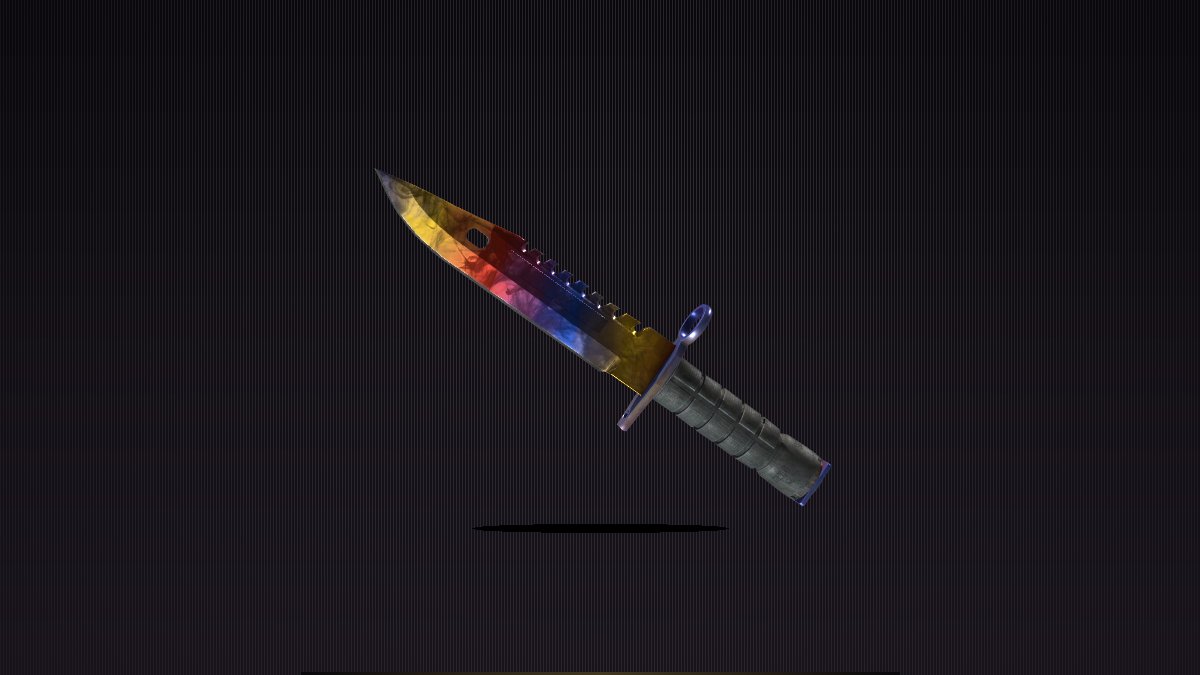
Scale also matters for how much of this you should care about. Across 42,090 tracked items on 41 marketplaces, the total CS2 market cap sits near $5.46 billion, with around $643 million changing hands daily. The single largest item by market cap is a ★ Butterfly Knife | Gamma Doppler in Factory New — roughly $1.7K per copy, 27,556 in supply, and about $47.7 million of total value. On items that size, a 55% premium is a four-figure mistake. On a $5 skin, it is a rounding error.
The Verdict
Steam wins on exactly three things, and they are real: zero counterparty risk, instant settlement inside the client, and the ability to convert skins into wallet credit you were going to spend on games anyway.
That makes Steam the right venue when you are selling something cheap and want it gone within hours, or when the third-party premium on a specific item has compressed below the 15% fee. It is the wrong venue when you are buying anything above trivial value, because you are paying a convenience tax on every single transaction.
The smart habit is boring and takes two minutes: check the Steam price first to anchor yourself, then compare the same wear and float on two or three marketplaces before committing. Do that consistently and the savings compound — the studies above put the median at dozens of percent per purchase, which is far more than most traders make on the flip itself.
If you want to see the difference for yourself, browse a live CS2 skin marketplace with visible pricing and compare it against the Steam listing for the same item. And if you would rather not pay a premium on a single specific skin, a Fan Favorite case gets you a shot at a popular finish for the price of a coffee — no 55% markup attached.
Same skin. Same wear. Same week. Fifty-five percent is the only difference, and it is entirely optional.