The Day CS2 Skin Investing Died — And What's Quietly Rising From the Ashes
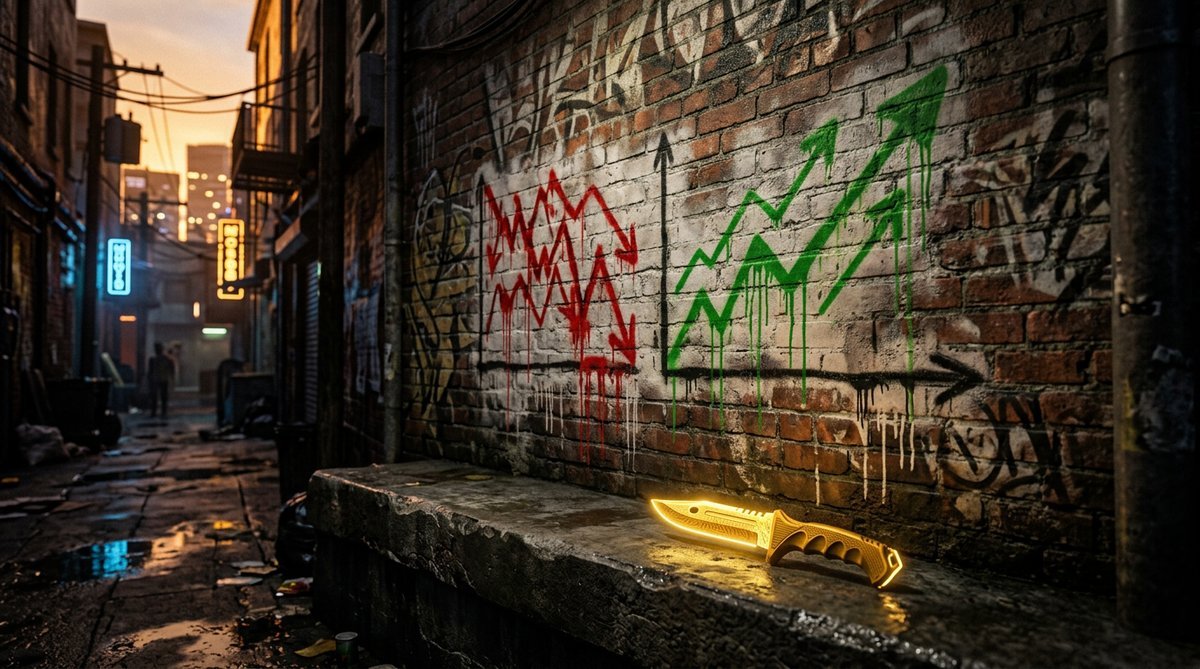
The Day CS2 Skin Investing Died — And What's Quietly Rising From the Ashes
I remember the exact Reddit thread. Mid-July 2026, a post titled "CS2 Investing Is Dead" sitting at 2,300 upvotes on r/csgomarketforum. The OP laid out a brutal case: Valve's Armory update flooded the market, trade-up changes killed knife scarcity, and the $14 billion market cap from late 2025 wasn't coming back. People in the comments were panic-selling their inventories at 20-30% losses.
I closed the tab and opened my own inventory. A Karambit I'd bought for $890 was showing $640 on SteamAnalyst. A stack of sticker capsules that had been my "safe bet" was down 40%. The doomers weren't wrong about the numbers. But they were wrong about what the numbers meant.
The Crash That Everyone Saw Coming (Sort Of)
Let's rewind to late 2025. The CS2 skin economy was running hot — total market capitalization hit an estimated $14 billion, driven by a perfect storm of new players from Counter-Strike 2's launch, institutional money experimenting with skin-backed funds, and a speculative frenzy around rare stickers and knives.
But beneath the surface, the foundations were cracking. Trade-up bots were producing knives at industrial scale, diluting the rarity that gave those items their value. Sticker capsule investors were sitting on stockpiles in the tens of thousands, waiting for the "guaranteed" post-major price spike that had reliably delivered 200-400% returns in previous cycles. Everyone was playing the same game, and the table was getting crowded.
Then Valve did what Valve always does: they pulled the supply lever. The trade-up contract update in early 2026 made it dramatically easier to produce knives and gloves through industrial-grade crafting. Supply of what were once "guaranteed appreciation" assets spiked. Prices, predictably, cratered. A Butterfly Knife Fade that traded at $2,400 in November 2025 was down to $1,450 by March 2026.
But here's what the "investing is dead" crowd missed: the market wasn't dying. It was maturing. And mature markets don't look like the Wild West of 2023-2025. They look like this: slower, smarter, and punishing to anyone who confuses luck with strategy.
Three Numbers That Defy the Doom Narrative
While the headlines screamed about the crash, three data points told a different story:
First, Armory collection skins are holding value better than expected. The Arabesque Collection, released July 8, already has Covert-tier skins stabilizing at $80-$200 — higher than the initial community predictions of $40-$80. When a brand new, high-supply collection commands these prices, it signals that buyer demand hasn't evaporated — it's just become more selective.
Second, sticker capsule investments are finding a new equilibrium. The panic-selling that drove capsules down 40% has slowed. Current prices for the Lucky Coin and Jackass Sticker collections are trending sideways, not down — suggesting that the sellers who wanted out have already exited. Historically, this sideways consolidation phase has preceded slow, steady appreciation in CS2 collectibles.
Third, the case opening economy is healthier than ever. Monthly case opening volumes tracked by community data aggregators show no significant decline from Q1 2026 to Q2 2026. People are still opening cases. They're just being more deliberate about which cases they open — and that's actually good for the ecosystem, because it funnels demand toward proven cases rather than spreading it thinly across everything.
What Actually Changed (And What Didn't)
Let's be honest about what died in July 2026: the "buy anything and it goes up" era. For three years, you could throw money at almost any Covert skin, any rare sticker, any glove, and watch the number go up. That wasn't investing — that was a rising tide lifting all boats. The tide has receded, and now you can see who was swimming naked.
What didn't die: genuine rarity, aesthetic demand, and the fundamental appeal of CS2 skins as digital collectibles. The player base isn't shrinking — Concurrent players on Steam remain at healthy levels. The competitive scene is growing, with the Cologne 2026 Major driving record viewership. And every new player who falls in love with CS2 is a potential future skin buyer.
The market didn't die. It grew up. And growing up hurts.
The Smart Money Is Moving to Cases
If there's one clear trend emerging from the July 2026 market data, it's this: cases are becoming the preferred vehicle for skin acquisition. Why buy a single skin on the Steam Market when you can open cases with defined odds, community-verified drop rates, and the genuine thrill of the pull?
Case opening volumes have remained stable because the value proposition has actually improved. The Armory update brought fresh collections, which means fresh cases. The Spy Tech and Arabesque skins inside those cases are visually distinct and genuinely desirable — not filler content. Platforms that let you open cases without the Steam Market friction are capturing an increasing share of the action.
Compare the two paths side by side. Buying a Factory New Covert skin outright costs $80-$200 on the Steam Market. Opening cases to chase that same skin costs $2.49 per case, with community-tracked Covert drop rates hovering around 0.64% — roughly 1 in 156 cases. At those numbers, the expected cost to pull a specific Covert is around $388, but you're also accumulating dozens of other skins along the way. For many players, the journey is the point.
If you're sitting on a Steam wallet balance wondering what to do with it, consider this: the most consistent returns in the current market come from opening cases with verified drop rates and known item pools. The Fan Favorite case is a strong starting point — it aggregates some of the community's most popular skins into a single drop pool with transparent odds.
The era of passive skin appreciation is over. But the era of informed, strategic collecting is just getting started. And honestly? That's way more interesting.
Here's the thing about a maturing market: it stops rewarding luck and starts rewarding knowledge. If you know which collections have trade-up support, which cases have proven drop rates, and which platforms offer transparent odds, you're already ahead of 90% of the people still panic-posting on Reddit. The gold rush is over. The real work — and the real opportunity — is just beginning.