Nobody Makes Money on CS2 Knife Trade-Ups. That Is Why Knives Got Cheap.
Nobody Makes Money on CS2 Knife Trade-Ups. That Is Why Knives Got Cheap.
Five Covert skins go in. One knife comes out. On paper that is the most generous thing Valve has ever done for a player who cannot afford a case habit — five reds from a $0.14 case, converted into an item that used to require a 0.26% roll.
In practice, the people running those contracts are burning money at a rate of about a third per attempt. And that is not a flaw in the system. It is the system working exactly as designed, and it explains almost everything that has happened to knife prices since October 2025.
The number is zero
Gfinity checked all 204 normal knife contracts across the 43 weapon cases, at every input wear, using the cs2tradeup.gg calculator on 10 November 2026. Prices for inputs and outcomes were both taken from the lowest marketplace listing that day.
Contracts with a positive expected value: zero. Median result per contract: −31.3%. Cheapest contract: $110.55. Closest to break-even: −1.7%.
The cheapest one is worth spelling out, because it is the one people recommend to each other. Five Battle-Scarred AWP | Chrome Cannon skins from the Kilowatt Case cost $110.55 and return $60.37 on average — a 45.4% loss. The Kilowatt gold pool has 13 items in it. Exactly one of them is worth more than the inputs. That gives you a 7.7% chance of profit, which means you lose money twelve times out of thirteen.
Steam prices tell the same story with one small mercy: one of the 204 contracts is positive before fees, and none are positive after Steam's 13% cut, split as 5% Steam fee and 8% CS2 fee.
The case for the mechanic anyway
Here is where the opinion part starts, because "trade-ups lose money" is a true statement that gets used to argue for something false — that the update was bad for the market.
Before 22 October 2025, a knife was a lottery ticket with a 1-in-390 payout. You could not manufacture one at any price. Supply was whatever Valve's drop system happened to release, which meant the price of a standard knife floated on almost nothing.
The trade-up rule replaced that with a production function. Five reds, one knife, unlimited attempts. And the market repriced instantly: Pricempire data at the time showed more than $1.7 billion leaving the market in under 24 hours.
For anyone who wanted to own a knife and play with it, that was the best day in the history of the game. For anyone holding one as an asset, it was a permanent haircut. Both reactions are correct. They are describing the same event from opposite ends of the trade.
Why the ladder loses 31 percent
The burn rate is not random. It comes from four things stacking.
Rarity is not value. Covert is the top of the ten-skin ladder, but the pool of Covert skins spans $4 map-collection fillers and $240 case coverts. The contract only checks rarity, not price. Fill it with the wrong Coverts and you are converting expensive inputs into a pool where the average outcome is cheaper than the inputs.
Fees land on the way out. A contract that is 10% ahead before fees is behind after a 13% Steam sale, or roughly level on a third-party market with a lower cut. Every EV figure in every calculator is a before-fee figure unless it says otherwise, and the difference between a +8% contract and a −5% one is often just the marketplace you sell on.
Float decides wear, and wear decides everything. The output float is not the average of your input floats. It is the average of each input's position inside its own float range, mapped onto the outcome skin's range. Ten inputs at 0.10 on a 0.00–1.00 skin average 0.10; the same 0.10 on a 0.06–0.80 skin counts as 0.054. Push inputs to 0.08 and an output skin with a 0.00–0.80 range lands at 0.064 — Factory New instead of Minimal Wear, often several times the price. Get it slightly wrong and you land on the wrong side of a wear threshold that costs you the entire margin.
The trade lock follows the result. Skins bought on the market cannot be traded on for seven days, and the output inherits the longest lock among the inputs. You can craft today and be unable to sell for a week — long enough for the price you calculated to stop existing.
Why the loss is a transfer, not a hole
This is the part the "trade-ups are a scam" posts miss. A 31.3% median loss on a contract is not money destroyed. It is money paid to convert one asset into another. The knife exists afterwards. Someone owns it. The 31.3% is the minting fee, and the crafter pays it because they wanted the knife more than the five reds.
Which means the thing the fee actually prices is patience. Buyers who are willing to wait get a knife at the crafter's loss. That is why standard knives without rare patterns still sit roughly 40 to 55 percent below their October 2025 levels, while the same models with a rare pattern held far more of their value — no contract guarantees a pattern, so blue gems and Crimson Web finishes never became manufacturable.
A clean example: Butterfly Knife | Fade was around $4,300 in Factory New before the update. It starts at $2,850.83 now. Nobody is going to mint a specific fade percentage, so the price found a new floor instead of falling through it.
What survived, and why it survived
The survivors are the items that became inputs rather than outputs.
Covert skins are now crafting fuel, and fuel demand is not the same as collector demand. P90 | Asiimov, a budget classic for a decade, starts at $243.36 because it feeds contracts that can return a knife from its collection. A skin that looks overpriced as a skin is often priced as an ingredient, and the two prices do not move together.
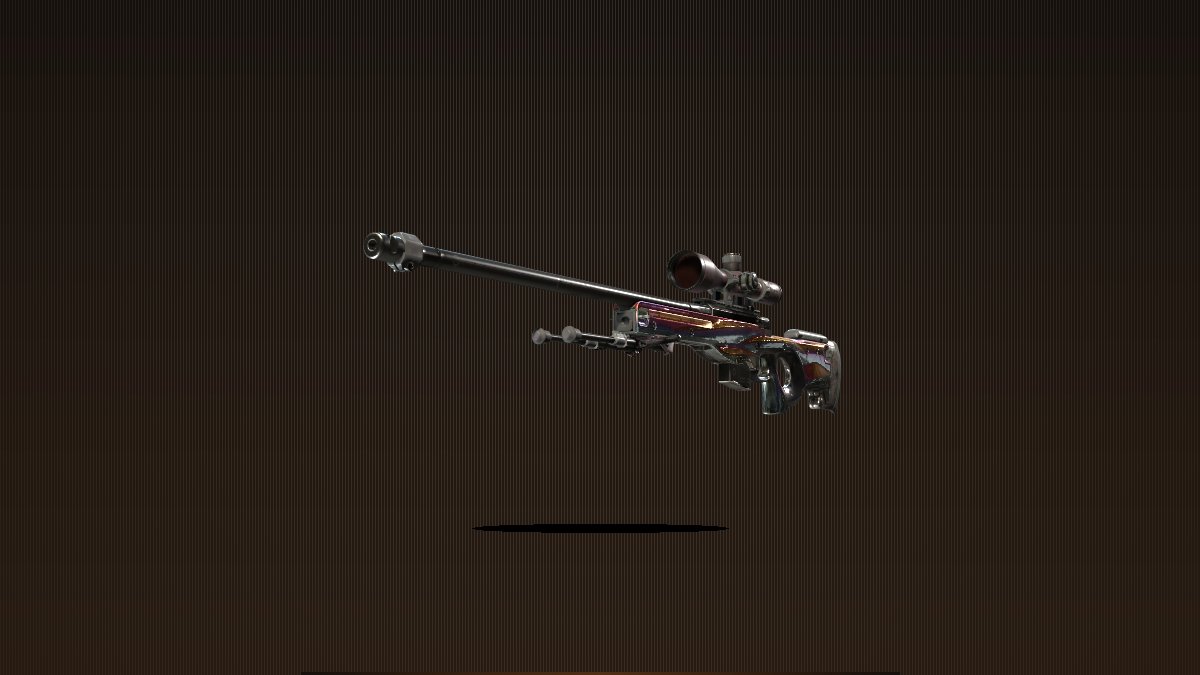
The AWP | Chrome Cannon is the purest version of this. It is the cheapest way into a knife contract in the entire game, so its price is set by contract maths rather than by how it looks. When the knife pool behind it is thin, the input gets expensive; when the pool is deep, the input gets cheap and the knife gets cheaper.
That relationship is the closest thing CS2 has to a real market mechanism, and it is worth more attention than any single skin's chart.
The one contract shape that pays
Zero of 204 knife contracts were positive on 10 November. But knife contracts are not the whole trade-up market. On 20 November, cs2tradeup.gg's live scan had 164 of 2,529 single-collection contracts positive on expected value before fees, and 115 of those also cleared a 50% or better chance of profit.
The best knife-side result that week was not a cheap contract. It was 5× M4A4 | The Battlestar in Battle-Scarred StatTrak, cost $196.40, expected value $297.21 — a +51% return. Cheap inputs did not make the profitable contract. The near-break-even contracts all cost more than $200, which is the opposite of the intuition that drives most people into the $110 Chrome Cannon pile.
The pattern that repeats: few possible outcomes, a collection whose next tier is expensive, and inputs whose float sits just under a wear threshold. Everything else is a lottery with a 31% entry fee.
Where I would put money
Not in knife contracts, and not in standard knives. The 31.3% median loss is a stable feature, not a temporary mispricing — it will not close, because the moment a knife contract turns positive, buyers pile into the inputs until it isn't. Profitable contracts last hours, not weeks.
If you want exposure to the mechanic rather than a bet on it, the honest version is to buy the output instead of building it. That is what the knife market is now: a permanent discount on manufactured supply, paid for by everyone else's losses. The skin marketplace is where that discount is visible, and comparing a knife's price against five times its cheapest Covert input tells you immediately whether the market has already priced the burn in.
The trade-up update did not break CS2's economy. It put a manufacturing cost on the top of it, and the market has spent a year learning to read that cost. The people still losing money are the ones treating a production function like a lottery ticket — buying the ticket, and then being surprised the house priced it correctly.