Why Are Cheap Red Skins Suddenly the Hottest Item in CS2?

Why Are Cheap Red Skins Suddenly the Hottest Item in CS2?
A year ago, nobody bothered hoarding a $12 battle-scarred AWP. Today, traders buy them by the dozen — and it has nothing to do with a new collection or a streamer flex. It comes down to a single Valve update that turned cheap "red" Covert skins into raw material for something far more valuable: knives.
If you've been away from the market for a while, here's the short version: the entire floor underneath cheap red skins changed in October 2025, and it hasn't gone back since. Understanding why is the difference between overpaying for a red you don't need and spotting the next crafting wave before it hits.
What Actually Changed
On October 23, 2025, Valve shipped the most disruptive skin-market update in Counter-Strike history. For the first time ever, knives and gloves became craftable through trade-up contracts. Before that day, the trade-up chain dead-ended at Covert (red) rarity — you could combine 10 Classified (pink) skins into one red, but that was the ceiling. The update extended the ladder one more rung: 10 Covert (red) skins now craft into a knife or a pair of gloves.
For years, knives and gloves had been the market's safe asset. They didn't drop from cases at meaningful rates, there was no crafting route, and their supply was effectively fixed by what Valve released. That scarcity was the whole reason a Karambit or a Butterfly Knife could hold a four-figure price tag. The crafting update broke that assumption in a single afternoon.
The market reaction was immediate and brutal. Skin.Club reported $1.75 billion wiped from the market overnight, while Beebom and Notebookcheck put the number at $2 billion or more. Rare knives and gloves suddenly had a crafting path, and their prices cratered as holders raced to sell before values slid further.
But something else happened at the exact same time. Pley.gg tracked the first 12 hours and found the opposite move: "Covert skins skyrocket while rare knives and gloves crash." The cheapest red skins became the one ingredient every crafter suddenly needed, and demand followed. That's the part most people missed — the crash wasn't just a knife story, it was a Covert-skin story too.
The Rarity Ladder, Explained in One Minute
CS2 skins run through seven color-coded rarity tiers, and the color is the whole story:
- Consumer (white / gray) — the cheapest drops
- Industrial (light blue)
- Mil-Spec (blue)
- Restricted (purple)
- Classified (pink)
- Covert (red) — the highest regular tier
- Knives and gloves (gold) — plus the lone Contraband, the M4A4 Howl
A trade-up contract always follows the same rule: combine 10 items of one rarity to receive 1 random item of the next rarity. Ten Classified skins become one Covert. And since late 2025, ten Covert skins become one knife or glove. That's why "red" matters now — every Covert skin is a potential ingredient in a knife recipe, and that permanent demand is what lifted the whole tier.
Why this matters for pricing: the value of a Covert skin is no longer just "what it looks like." It's also "what it can be turned into." A red skin that used to be worth its cosmetic appeal alone now carries a utility premium, because someone out there wants to feed it into a knife recipe.
What Makes a Covert Skin "Cheap"
Wear is the biggest lever. Skins come in five wear levels, from Factory New (the most expensive) down through Minimal Wear, Field-Tested, Well-Worn, and Battle-Scarred (the cheapest). For trade-up fodder, wear barely matters — the output knife is random regardless — so crafters buy the cheapest wear tier they can find.
Collection and hype matter too. A Factory New Covert from a premium collection can run $100 or more, while the exact same skin at Battle-Scarred often sits at $15 to $25. That spread is the entire point: a crafter doesn't care what the red looks like, only that it's a red. The moment a red's cosmetic appeal stops mattering, its floor becomes the price of the cheapest wear tier available.
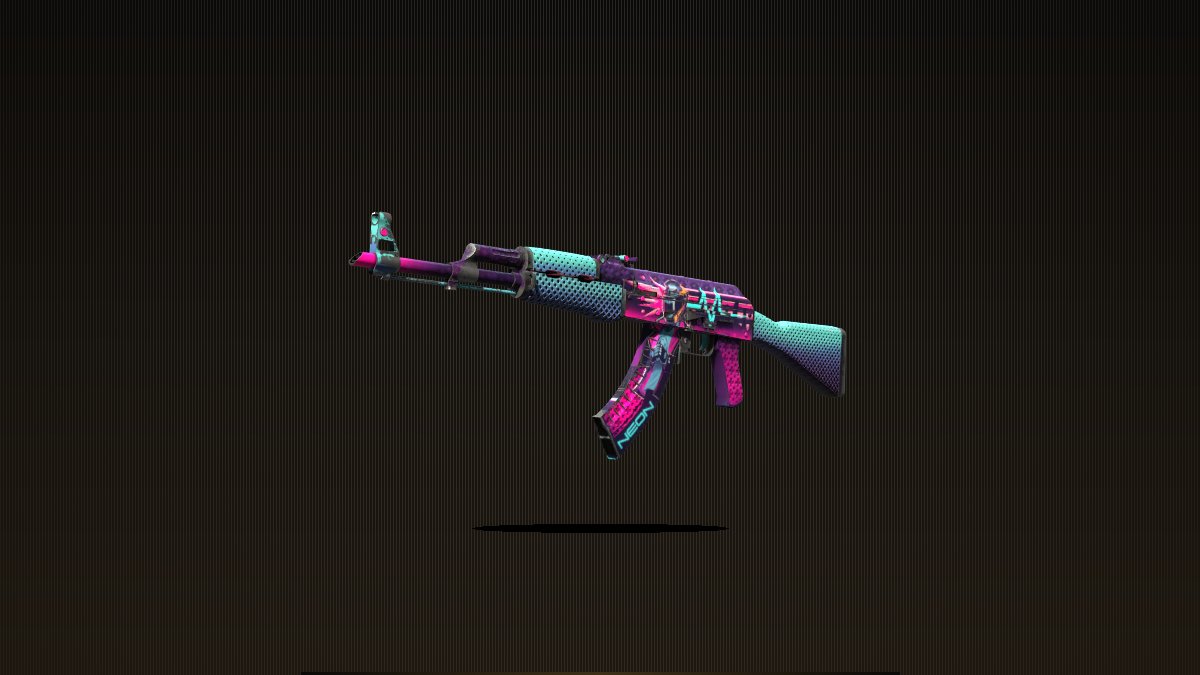
Well-known Covert skins that trade in the tens of dollars at Field-Tested include the AK-47 | Neon Rider, the AWP | Wildfire, and the M4A4 | Temukau. They're all red-tier, all recognizable, and all far below the price of the Factory New reds from newer collections. Compare that to a hyped new-collection Covert at Factory New, and you can see the same rarity tier spanning a 5x price range — that range is where the crafters shop.
The Numbers Behind the Play
Club386 projected that knife and glove prices would stabilize at roughly half their pre-update value, and that's largely held. A knife that cost $500 in early October 2025 is commonly $250 to $300 today, and the drops were steepest at the very top of the market, where single items lost thousands.
The broader market, however, recovered faster than anyone expected. By late November 2025, escorenews reported the total market cap back at $5.5 billion for the first time since the crash. By mid-2026, Windows Report confirmed the market had hit a new record high. The "crash" turned out to be a repricing, not a collapse — and the money that left knives largely flowed into the Covert skins that feed the new crafting loop.
The trade-up math itself is simple but unforgiving. Buy 10 cheap Covert skins at $15 each and you've spent $150 for a single roll. If the cheapest knives now go for $100 to $150, the expected value is usually negative — but the upside of landing a rare, expensive knife keeps people rolling, exactly like a case opening with better marketing.
Is It Actually Worth It?
Here's the honest version: trade-up contracts are gambling with extra steps. The output is random across every knife in the pool, so your ten reds could turn into a $120 budget knife or a $2,000 Doppler. Just like cases, the expected value usually sits below the cost of inputs, and the house edge is hidden in the randomness rather than printed on a label.
That doesn't mean the play is dead — it means the smart money shifted. When the update landed, cheap Covert skins jumped in value precisely because everyone needed them at once. Watching supply and demand around the red tier has become its own mini-economy, and the people who profit are the ones who buy reds when they're cheap and sell when a crafting wave hits.
Where we go from here is clear: as long as knife crafting exists, cheap red skins have a structural floor beneath them. That's not a hype cycle — it's a permanent change to how the market prices the entire Covert tier, and it's the reason a battle-scarred red can now matter more than a mid-tier knife.
If you want to see which Covert skins are trading cheap right now, browse the red tier and watch the wear levels — the gap between Factory New and Battle-Scarred is where the opportunity lives. And if you'd rather chase the payoff the old-fashioned way, opening a case like Phantom Cache gives you a shot at those same reds — plus the knives everyone is now crafting toward.