Valve Fires Back: Why the .3 Billion NY Loot Box Lawsuit Matters for CS2 Case Openings
Valve Fires Back: Why the $4.3 Billion NY Loot Box Lawsuit Matters for CS2 Case Openings
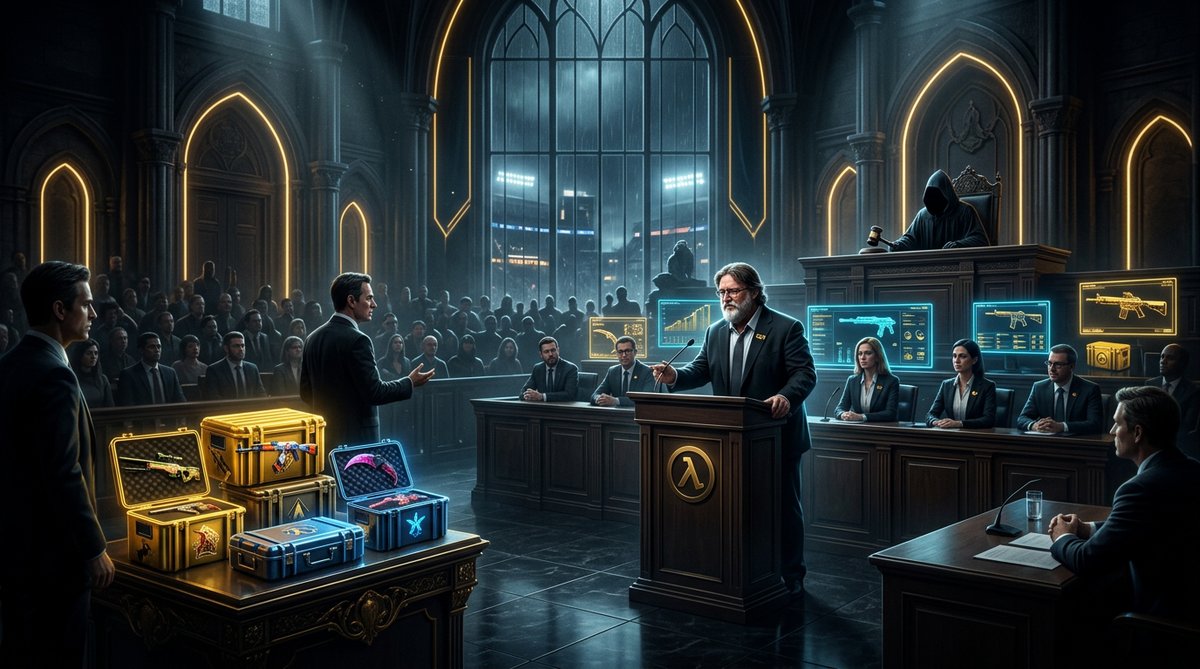
On May 18, 2026, Valve filed a 42-page Motion to Dismiss against New York Attorney General Letitia James' $4.3 billion lawsuit targeting CS2 loot boxes. Valve's core argument? Opening weapon cases is no different from buying baseball cards, Happy Meal toys, or grab bag blind boxes — and calling it "illegal gambling" is, in Valve's own words, "nonsensical." This is the most significant legal battle the CS2 skin economy has ever faced.
What the Lawsuit Actually Claims
Filed earlier in 2026, the New York Attorney General's lawsuit accuses Valve of making "billions of dollars by letting children and adults illegally gamble" through CS2 cases. The suit seeks $4.3 billion in damages and claims that CS2's loot box system violates New York gambling laws by allowing players to pay real money for a randomized chance at rare items with real-world market value.
According to Courthouse News and IGN, the lawsuit specifically targets the mechanism where players purchase keys to open cases, receiving random skins whose value can range from pennies to thousands of dollars — a system the AG's office argues mirrors slot machine mechanics.
Valve's 42-Page Counter-Argument
Valve's Motion to Dismiss, filed late on May 18, 2026, makes several key arguments that could reshape how digital items are legally classified:
- "People enjoy surprises" — Valve argues that the element of randomness is entertainment, not exploitation. The company points to blind-box toys, trading card packs, and mystery figurines as established industries that operate on the same principle.
- Players always receive something — Unlike traditional gambling where you can lose everything, every CS2 case opening guarantees an item. Valve argues this fundamentally distinguishes loot boxes from gambling.
- Items have no official cash value — Valve maintains that CS2 skins are digital goods with no inherent monetary value — their resale value on third-party markets is not Valve's responsibility.
- Slippery slope warning — If CS2 cases are gambling, then Pokémon card packs, Kinder Surprise eggs, and baseball card packs would also be gambling, Valve argues.
The filing, covered extensively by PC Gamer, TechPowerUp, and IGN, has already sparked massive discussion across Reddit communities including r/pcgaming (200+ comments), r/Games (240+ comments), and r/gaming (560+ comments).
What This Means for CS2 Players and Skin Traders
While the legal battle will likely take months or years to resolve, the immediate implications for CS2 players are significant:
- Case opening continues uninterrupted — The Motion to Dismiss is a procedural filing, not a ruling. CS2 cases remain fully operational and will continue to function normally throughout the legal process.
- Third-party platforms are watching closely — Sites like skinvs.com, Skin.Club, and other case-opening platforms operate in a gray area that could be affected by the outcome. A ruling against Valve could cascade to the entire skin economy.
- Skin values could fluctuate — Legal uncertainty often spooks markets. If the lawsuit gains traction, some investors may liquidate high-value inventories, potentially creating buying opportunities.
- Age verification may become mandatory — Regardless of the lawsuit's outcome, Valve may preemptively add age gates to case openings, similar to what European regulators have pushed for.
The Baseball Card Defense
Valve's most compelling argument draws a direct parallel to the sports card and trading card industry — a comparison that resonates with the CS2 community:
"If purchasing a CS2 case key is gambling, then buying a pack of baseball cards, a blind-box toy, or a Happy Meal with a mystery prize is also gambling."
This argument is particularly relevant in 2026, as the sports trading card industry has seen its own regulatory scrutiny over "breaks" and mystery packs. Valve's defense essentially asks: why are CS2 skins treated differently from physical collectibles with randomized contents?
The comparison has gained traction on Reddit, where users on r/pcgaming noted that "they're comparing CSGO loot boxes to baseball cards, Happy Meal toys, grab bag blind boxes, etc." — and many seem to agree with the logic.
What Happens Next?
The legal timeline moving forward:
- Now-May 2026: The NY Attorney General's office reviews Valve's Motion to Dismiss and files a response
- Mid-2026: Judge rules on whether to dismiss the case or allow it to proceed to discovery
- If dismissed: Valve wins, setting a precedent that loot boxes ≠ gambling under NY law
- If not dismissed: The case enters discovery, where Valve's internal data on case opening revenue, player demographics, and addiction metrics could become public
Legal experts quoted by Courthouse News suggest Valve has a strong case under current New York law, but the political climate around gaming and youth protection could influence the outcome.
Community Reaction
The CS2 community's response has been mixed but leans toward supporting Valve:
- Water CS2 (YouTube, 29K+ views) published a detailed breakdown titled "Why Valve Just Put The Government On Defense," arguing Valve's legal team has crafted a strategically strong response
- Reddit threads across r/cs2, r/csgomarketforum, and r/pcgaming show most players view the lawsuit as government overreach
- Skin.Club's community blog covered the filing, noting that "the case argues that Valve's loot boxes effectively allow players to pay for a chance to receive a rare digital item with real market value"
- Some players expressed concern that a loss could lead to CS2 cases being region-locked or age-restricted, similar to how the Netherlands and Belgium previously forced changes to loot box mechanics
Frequently Asked Questions
Will CS2 case openings be shut down because of this lawsuit?
Almost certainly not in the short term. The Motion to Dismiss is an early procedural step. Even if Valve loses this motion, the case could take years to resolve. Case openings will continue normally throughout the legal process.
Is opening CS2 cases actually gambling?
Legally, this is exactly what the lawsuit aims to determine. Valve argues no — because you always receive an item, and skins have no official cash value. The NY AG argues yes — because skins have real-world market value and the randomized reward structure mirrors gambling mechanics. The answer depends on which argument the court finds more persuasive.
Could this lawsuit affect skinvs.com and other third-party case sites?
Potentially. If Valve loses, the legal reasoning used against them could be applied to third-party platforms that simulate case openings. However, many third-party sites operate differently from Valve's system (free-to-open models, different reward structures), which may provide legal distinction.
What happens to my CS2 skins if Valve loses?
Your skins are safe regardless of the lawsuit's outcome. The case targets Valve's business practices, not individual players. Worst case scenario: Valve might need to modify how cases work (e.g., disclose odds more prominently, add age verification), but existing inventories won't be affected.
Have loot boxes been banned anywhere else?
Yes. The Netherlands and Belgium classified certain loot box mechanics as gambling and forced publishers to remove them. However, CS2's system was modified to comply with these regulations, and Valve has navigated similar challenges before — experience that likely informs their current legal strategy.
Open Cases While You Still Can — For Free!
While lawyers argue about the legality of case openings, you can enjoy the thrill of unboxing rare knives and covert skins right now on skinvs.com — completely free. Our Phantom Cache case is one of the most exciting in CS2, packed with vibrant skins and the ever-elusive knife drop.
Try the Phantom Cache: /cases/open/phantom-cache/