Selling Your CS2 Skins: Steam's 15% Fee vs the 2.5% Alternative

Selling Your CS2 Skins: Steam's 15% Fee vs the 2.5% Alternative
Every time you sell a CS2 skin on the Steam Community Market, Valve keeps 15% of the sale price. Sell that same skin on a third-party marketplace and the fee can drop to 2.5%.
On a $500 knife, that's a $62.50 difference per item. Multiply that across a loadout, an inventory, or a year of trading, and defaulting to Steam is quietly one of the most expensive habits in the game.
But the fee is only the first number that matters. There are two more costs hiding in plain sight, and together they decide where your skins actually belong. Here's the full comparison — fees, spreads, and the price gap between venues.
Round 1: Fees
The headline difference is the seller fee, and it isn't close. Steam charges a flat 15% on every Community Market sale, with zero buyer fee on top. Third-party venues split into three distinct camps, and the spread between them is wide.
- Classic marketplaces (marketplace model): a median seller fee of 3%, ranging from 0% to 8%.
- P2P marketplaces (peer-to-peer, seller lists and buyer pays): a median fee of 2.5%, ranging from 0% to 5%.
- Instant-sell / trade venues: no "fee" line item, but a built-in margin of 15% on average — and it can run from 5% all the way to 60%.
The catch with instant-sell is that "no fee" is marketing, not math. You're not paying a commission, but you're selling below market value, and that gap is effectively your fee. For quick liquidity it can still beat Steam's 15%, but only if you read the actual quote before you click accept — and only for items where the margin is on the low end.
Scale the difference and it gets serious fast. Sell a $100 rifle on Steam and you keep $85; on a P2P marketplace you keep $97.50. Sell a $2,000 Karambit and the gap becomes $300 versus $50. That $250 difference per high-ticket item is why serious traders almost never touch the Steam Community Market for anything they plan to resell.
Across the 36 marketplaces SteamDB tracks, the pattern is consistent: the official Steam venue is the most expensive place to sell, by a wide margin, and the only reason it survives is convenience.
Round 2: The Spread
A fee is only half the cost. The other half is the buy/sell spread: the gap between what you'd pay to buy an item at its cheapest ask and what you'd get instant-selling it to the best buy order, net of the venue's seller fee.
Across 9,311 items with live data on both sides, the median spread is 24.8%. But the category breakdown is where the real story lives:
- Knives: 2.4% — the tightest spread in the game. High-value, high-volume items trade efficiently.
- Gloves: 2.3% — nearly as tight as knives.
- Weapon skins: 4.9% — still reasonable for popular rifles and pistols.
- Stickers: 30.5% — a brutal spread, driven by illiquid listings and stale buy orders.
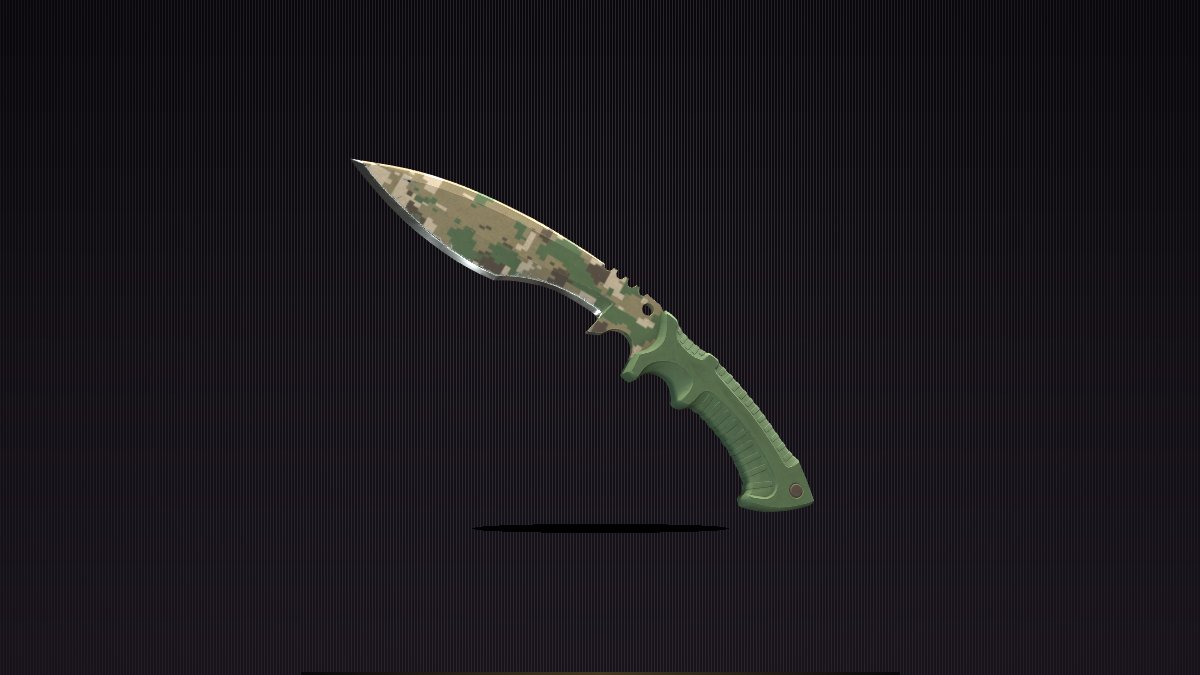
The practical rule is simple: the more liquid the item, the cheaper it is to move. A knife like a Kukri trades within a couple of percent of its true value, so the fee you choose dominates the outcome. A niche sticker, by contrast, can cost you a third of its value just to exit the position — which means the spread, not the fee, is your real enemy.
A quick worked example makes it concrete. You buy a $400 knife at its cheapest ask and instantly sell it to the best buy order. At a 2.4% spread plus a 2.5% P2P fee, you lose roughly $20 — about 5% total. The same knife through Steam's 15% fee, plus the wider gap between its asks and bids, costs you closer to $70. That is the difference between trading for profit and trading for fun.
Round 3: Price Dispersion
There's a third hidden cost most players never check: the same skin sells for different prices on different sites. SteamDB's dispersion index measures exactly how far apart venues price the identical item.
The median dispersion across 13,230 items listed on five or more marketplaces is a staggering 216.7%. Knives are the most efficient at 24.1%, while stickers blow out to 275.8%.
Translated into practice: if you sell a knife on the first site you open, you might leave a few percent on the table. If you do the same with a sticker, you could be leaving more than double its value on the table. For high-value items, comparison shopping is not optional — it is the difference between a good sale and a bad one.
Why does this happen? Cheap items dominate the high end of the index — a few cents of absolute difference is a huge percentage on a $0.05 sticker. But even for mid-tier skins, two marketplaces can disagree by double digits, and the only way to capture the better price is to look at more than one venue before you list.
The Verdict
For liquid, high-value items — knives, gloves, popular rifles — third-party P2P marketplaces win on fees almost every time. A 2.5% fee against Steam's 15% is a no-brainer, and the tight 2.4% spread means you get close to full market value on the way out.
For stickers and other illiquid items, the fee advantage still holds, but the 30.5% spread eats into it. Check the actual buy order before you sell, and never assume "no fee" means "no cost."
Steam's real advantage isn't price — it's convenience. Your balance is already in Steam Wallet, and if you're reinvesting into games, that frictionless flow is worth something. But if you're cashing out or rotating into better skins, that 15% is the most expensive convenience in the entire ecosystem.
Whatever you decide, the mechanics stay the same: source your skins from a case with a skin pool that holds value, then sell them where the fee and the spread work for you. A case like the Phantom Cache gives you a modern pool to work with — and when it's time to move the results, a 2.5% fee beats a 15% one every single time.