Building a CS2 Trade-Up That Actually Pays: Five Steps, Real Numbers
Building a CS2 Trade-Up That Actually Pays: Five Steps, Real Numbers
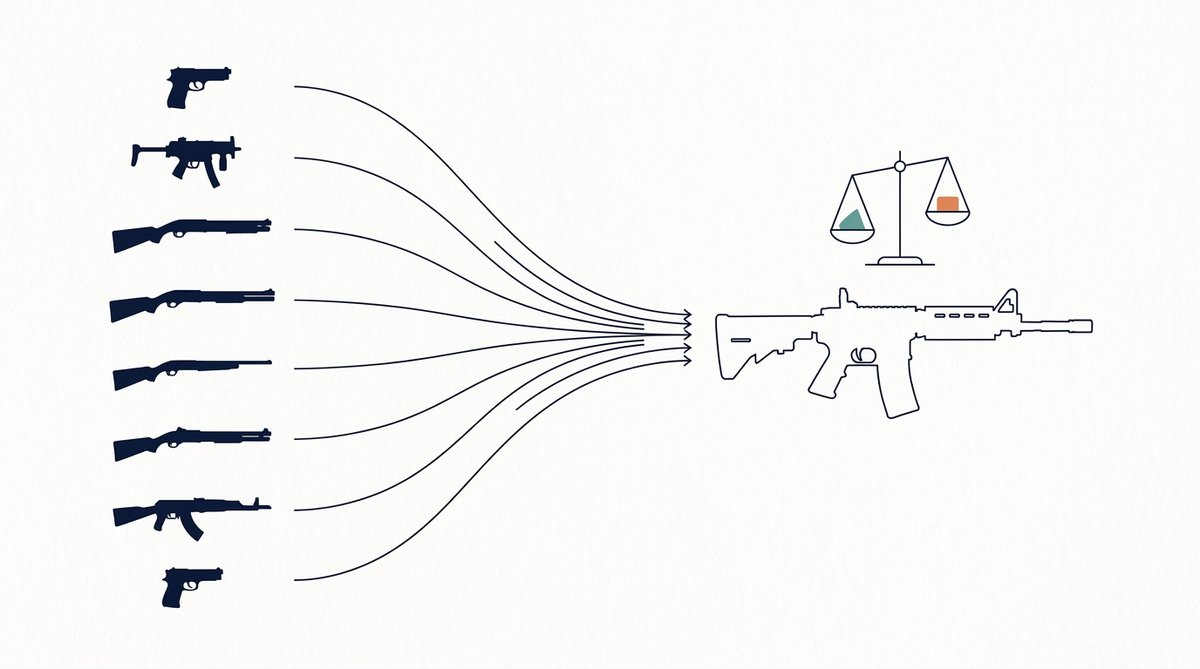
On October 26, Caseway checked 103,277 possible trade-up contracts across 86 collections. After fees, only 10 of them returned more than their input on average while also selling quickly enough to matter. That is a hit rate of roughly one in ten thousand.
Which tells you two things. First, most trade-ups lose money — the maths is not on your side by default. Second, the winners are not secrets; they are just arithmetic done in a specific order. Here is that order, using the contracts that actually cleared the bar this week.
Step 1: Fix the Two Numbers Before You Touch Anything
A trade-up has exactly two numbers that matter: what the ten input skins cost you, and what the outcome sells for after fees. Everything else is noise.
Take the clearest example from this week's list. A Classified contract built from Kilowatt and Fracture skins cost $5.73 in total: nine StatTrak Sawed-Off | Analog Input in Field-Tested at $0.59 each, plus one StatTrak MAC-10 | Allure in Well-Worn at $0.42. Its expected profit was +$1.10, an ROI of +19%, with a 63% chance of beating the input.
Notice what that profit is: nineteen percent. Not nineteen times. Anyone selling you a "guaranteed double" trade-up is selling you a contract whose outcome price is quoted at the cheapest ask rather than the realistic sell price — which is exactly what Step 4 exists to prevent.
Step 2: Read the Float Window, Then the Price
The single most common way a trade-up quietly fails is buying an input whose float cannot produce the outcome wear you priced.
Look at the same contract from the other end. The outcome pool includes StatTrak M4A1-S | Black Lotus in Well-Worn, which only appears if the result lands in the 0.38 to 0.45 float band, and StatTrak USP-S | Jawbreaker in Battle-Scarred, which needs 0.45 to 0.60. Buying a 0.15-float input does not get you there — the contract average is what decides, and the average is dragged by the worst float in your ten.
That is why the rule is to price the input by the worst float in the wear band, not the cheapest listing you can find. A Field-Tested input spanning 0.15 to 0.38 gives you a wildly different outcome distribution at 0.16 than at 0.37. Sites that publish float windows per outcome are doing you a favour; sites that hide them are not.
For context on how much the wear roll matters: across CS2 skins generally, Factory New is roughly 3% of drops, Minimal Wear 24%, Field-Tested 33%, Well-Worn 24% and Battle-Scarred 16%. If your outcome price assumes Factory New, you have priced a 3% event as if it were a certainty. This is the same trap that makes knife investing look easier than it is.
Step 3: Use Two Collections to Steer the Pool
A single-collection contract gives you whatever that collection's next rarity tier happens to contain — you are a price taker. Splitting input across two collections lets you aim.
The standout example this week was a Covert contract built entirely from Dreams & Nightmares: ten StatTrak Dual Berettas | Melondrama in Well-Worn at $4.54 each, for a $45 input. The outcome pool has only two items, split 50/50: StatTrak AK-47 | Nightwish in Well-Worn at about $50, and StatTrak MP9 | Starlight Protector in Field-Tested at about $48. Expected profit +$3.05, ROI +7%, and — the important part — a 100% chance of getting back more than the input.
A 7% return sounds thin until you notice the certainty. Ten percent on a coin flip is a worse bet than seven percent on a two-outcome pool where both outcomes clear. When the pool is that tight, you are not gambling on the roll — you are arbitraging the gap between the input skins and the outcome skins.
Step 4: Liquidity Is Part of the Price
Here is the step almost everyone skips. A contract that returns $10 of item value you cannot sell in under a week is not a $10 profit. Caseway's filter requires an outcome to have at least five sales a week just to be priced, and marks a contract "risky" when too much of its probability sits on outcomes that barely trade.
The Nightwish contract shows why: StatTrak MP9 | Starlight Protector moves around 206 sales a week, while StatTrak AK-47 | Nightwish does about 70. Both are inside the 50/50 pool, and both are sellable — but the difference between 206 and 70 sales a week is the difference between listing at your price and waiting for someone to meet it. Compare that with the third-best contract on the list, which had only 12 sales a week across its whole outcome pool. On paper it looked fine. In practice you would own an item nobody is queuing for.
Then subtract the fee. Steam takes about 13% on a sale; third-party marketplaces charge their own. Your $50 Nightwish is somewhere around $43.50 in your pocket on Steam. If you computed the ROI at the ask price and forgot the fee, you were not profitable — you were approximately break-even and calling it a win.
Step 5: Compare It to Just Opening a Case
Every trade-up competes with the dumbest alternative on the board, and the comparison is not close.
Case opening runs on fixed, published odds: 79.92% Mil-Spec, 15.98% Restricted, 3.20% Classified, 0.64% Covert, and 0.26% for a knife or gloves — about one in 385. The chance of hitting at least one gold item across 385 openings is only 63.3%, because each opening is an independent roll with no pity timer.
The expected value makes it brutal. The Dreams & Nightmares Case costs about $0.76 plus a $2.49 key. Its expected return per opening is $1.91 against a cost of $3.25 — an ROI of −41.2%, with 17 standard items and 50 possible rare items in the pool. A trade-up at +19% and a case at −41% are not the same kind of activity, even though both get called "gambling" in the same sentence.
One practical note before you start: items bought on a marketplace are trade-protected for 7 days, and skins inside that window cannot go into a contract. Since May 22, 2026, souvenir skins can be used in the input alongside normal ones — which widened the cheap-input pool considerably but also means you should check the wear of souvenir inputs more carefully, because their floats skew badly.
Where the Whole Thing Breaks
Two failure modes will cost you real money. The first is stale input prices: a contract that was +19% at the Monday recalculation can be negative by Wednesday if the input skins spiked. The second is outcome drift — if the item you are aiming at rises 30% in a week, the market has already priced in the fact that everyone can build this contract, and the margin closes.
Caseway rebuilds its list every six hours for exactly this reason. If you are doing this manually, the Monday number is a starting point, not a plan. Re-price before you buy, and treat any contract whose margin is under 3% after fees as a coin flip with extra steps.
When you do want the other side of the equation — the cheap, liquid end of the market where input skins are actually affordable — Carnival Time is a reasonable place to start building inventory, and the case floor on skinvs is priced to make the boring Mil-Spec inputs cheap. Buy the input, price the outcome at the sell price, subtract the fee, and refuse anything that needs luck to work.