Why CS2's Cheapest Knives and Gloves Are Still Falling a Year Later
Why CS2's Cheapest Knives and Gloves Are Still Falling a Year Later
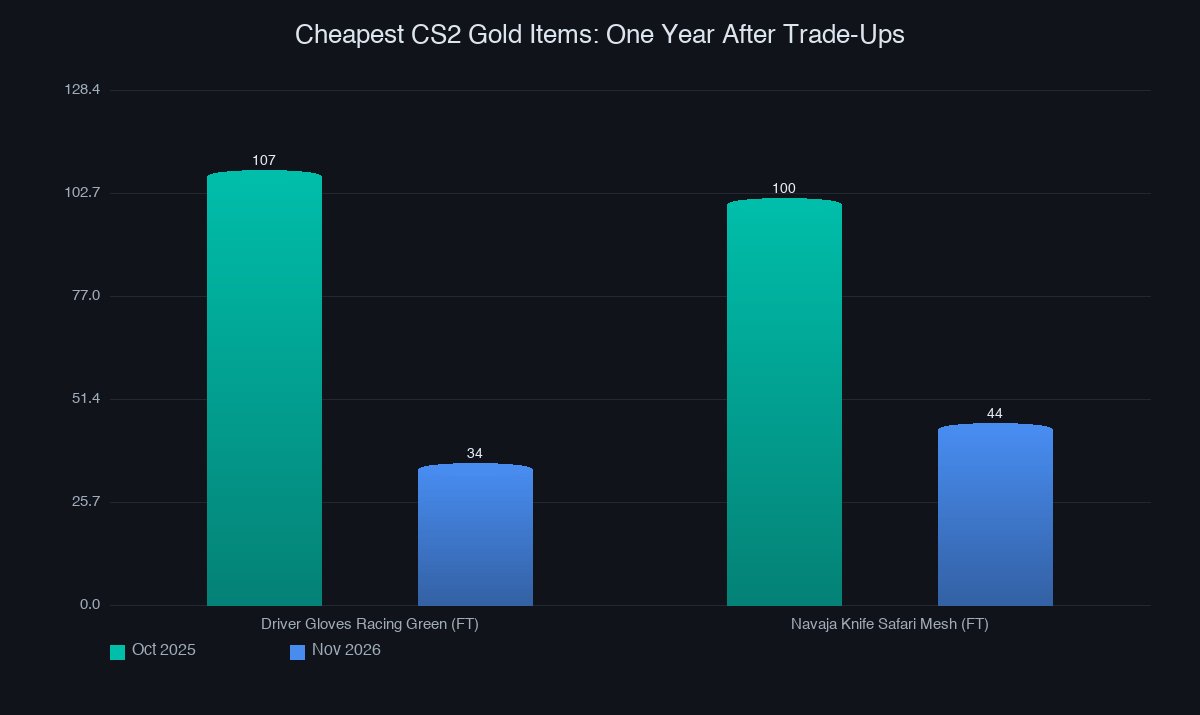
On October 21, 2025, a Field-Tested pair of Driver Gloves | Racing Green sold for about $107 on the Steam Market. Twenty-five copies changed hands that day. Two days later, after Valve let players feed five Covert skins into a Trade Up Contract for a knife or a pair of gloves, the same gloves moved 480 times in a single day and the median sale landed 44% lower.
That was supposed to be the crash. It wasn't. A year later, on October 22, 2026, the same Racing Green gloves cost about $34 — 68% below the pre-patch price — and off-Steam marketplaces list them near $26. The lowest tier of the CS2 gold market did not bounce. It kept sliding, quietly, for twelve months.
The Raw Numbers
The trade-up patch is the single most important pricing event in CS2's item economy. Before October 22, 2025, gold items entered circulation one way: a case opening, at roughly a 0.26% chance. After it, anyone holding five Covert skins could mint a knife or gloves from the collections those skins came from, on demand.
The market repriced instantly. Around $2 billion of estimated value disappeared within a week, with total market capitalization sliding from roughly $6 billion to $3.5 billion by late October 2025.
What most people remember is that first week. The more useful data is what happened after the headlines moved on. From November 2025 through April 2026, the monthly median for a Field-Tested Racing Green sat between 41% and 47% below its pre-update level — flat enough that it looked like a floor had formed. It hadn't. From April to October 2026 it fell another 38%, breaking its previous all-time monthly low (set in December 2022) in August and setting a new one every month since.
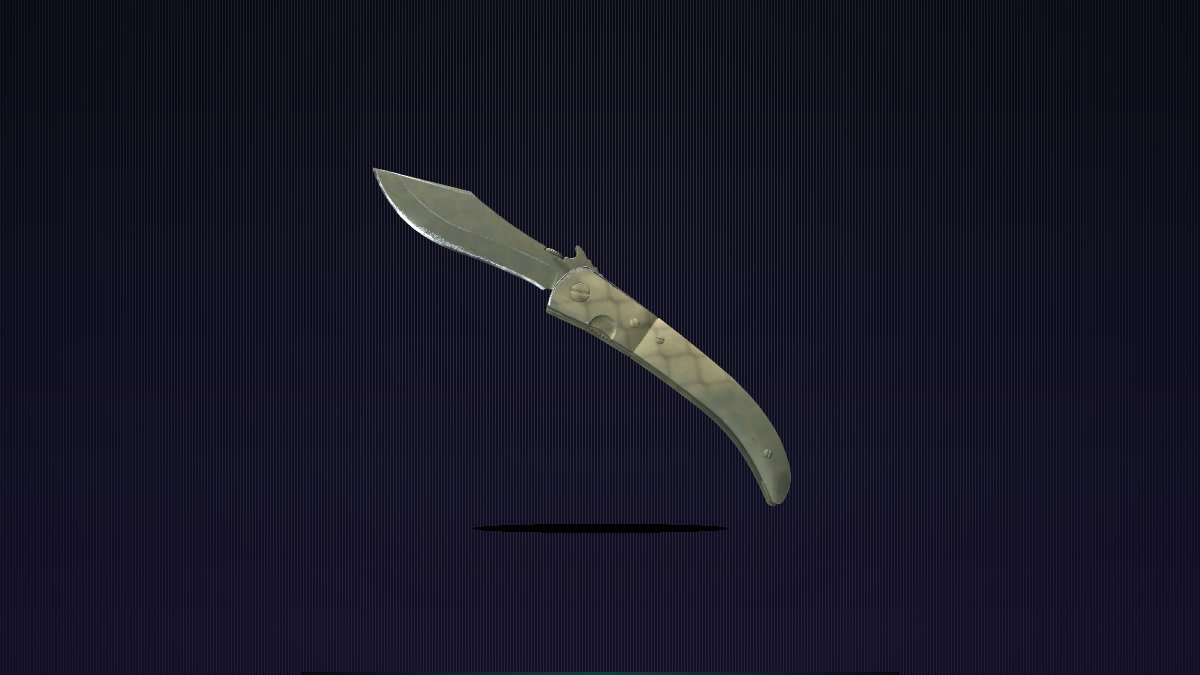
The Navaja Knife | Safari Mesh followed the same script: about $44 on Steam today, 56% under last October, and its October median is the lowest Steam has recorded for it since 2018. Standard, non-pattern knives across the board sit 40% to 55% below their old prices.
Here's the part that makes those numbers easy to misread. The overall market did recover — total estimated value was back around $6 billion by October 2026, roughly where it sat before the patch. That recovery was carried by high-end items, rare patterns and a smaller number of very expensive skins. It did not reach the items in this chart. Aggregate market cap going up and the cheapest gold items going down are both true at the same time, and only one of them shows up in the tweets people quote.
What Surprised Us
Three things in this dataset don't match the "market crashed, then recovered" story that gets repeated in trading Discords.
First, the cheap end fell harder than the expensive end, and it fell later. The initial selloff hit mid-tier listings hardest, with many knives and gloves dropping 20% to 50% within days and some briefly losing 70%. But the recovery never reached the bottom. Blue-gem Case Hardened patterns and rare float combinations held their value because a contract can't target a specific pattern index — five Coverts get you a random finish from a collection, not a specific seed. The items that got crushed were never speculative. They were the ones players bought to finally own something gold.
Second, the Covert skins that fuel contracts went the other way, then gave it back. The MP7 | Bloodsport, one of two Coverts in the Clutch Case, jumped from about $2 to about $38 in Field-Tested overnight, with more than 24,000 Steam sales on October 23, 2025 alone. That price has since eroded 32% from its April peak, because the supply of craftable reds caught up with demand for them.
Third, the contract is now underwater at the cheap end. Five Field-Tested Bloodsports cost roughly $190. The cheapest outcome they can produce — a Racing Green glove — sells for $34. A crafter feeding those five reds is betting entirely on landing one of the expensive Clutch pairs, and every miss adds another cheap glove to a market that already has too many.
The Supply Math Nobody Prices In
Cases are still the only source of Covert skins, but they are no longer the bottleneck for gold items. Every case opened now produces reds that can be converted into knives and gloves at a fixed rate of five to one. That means the supply of gold items grows with both case openings and the stockpile of reds already sitting in inventories, which is enormous.
Case prices tell the same story. The Clutch Case — the source of both the Racing Green gloves and the Bloodsport — trades around $0.49, down 9.3% in a week. Nobody is paying a premium for the container that produces the item everyone is trying to sell.
There's also a friction cost that most price comparisons ignore: crafted knives and gloves carry a seven-day trade hold before they can move. That doesn't stop supply from growing, but it does keep a slice of new output off the market at any given moment, which makes the visible listings a lagging indicator. The real overhang is larger than the order book suggests.
The Smart Play
If you want a knife or gloves to actually use, the math has never been better. Buying the item directly at $26–$44 is cheaper than the $190 of Covert inputs it would take to gamble on a contract, and there is no seven-day hold on a purchase.
If you're holding Covert skins as investments, check what each one can craft before you reprice it. A red that looks overpriced as a skin is often priced as an ingredient — and ingredient prices are the first thing to soften when knife prices fall, because the contract's expected value falls with them.
And if you're holding a cheap knife from 2025 as a "safe" first purchase, the honest read of the data is that the floor isn't in yet. Twelve consecutive months of new lows, with the sharpest declines coming in the last six, is not a bottoming pattern. It's a supply curve that hasn't finished repricing.
The one place that logic flips is pattern and float. A trade-up can add another Safari Mesh Navaja to the world, but it can't add another specific Case Hardened seed with a specific float on a specific knife. That asymmetry is the only moat left in the CS2 knife market, and it's the reason the top of the market looks nothing like the bottom.
If you'd rather skip the contract math entirely, opening a case is still the only way to get an item with a genuinely unknown outcome — Phantom Cache runs at $0.51 a key on SkinVS, and at least the odds are published instead of guessed. Just don't feed five reds into a contract expecting the math to work in your favor at these prices.