CS2 Skin Market in August 2026: 5 Numbers That Explain Where Prices Are Headed

CS2 Skin Market in August 2026: 5 Numbers That Explain Where Prices Are Headed
The CS2 skin market is worth roughly $6.9 billion again. That single number — tracked by third-party market monitors as of mid-2026 — is the headline, but it hides the more interesting story: how the market got there after the October 2025 trade-up crash, and which categories are doing the heavy lifting. Here are five numbers that actually explain where CS2 skin prices stand in August 2026 and what traders should watch next.
The Raw Numbers
Let's start with the baseline. Third-party trackers put the total CS2 skin market cap around $6.9 billion as of mid-2026. That estimate is not universal — some independent analyses report figures as low as $3-4 billion, depending on which marketplaces and item categories are counted. The spread is normal for a market with no single official valuation, but the direction matters more than the absolute number.
What is not disputed: daily trading volume has held firm outside tournament windows, and buyer re-entry at lower price points has created a visible floor under standard knives and gloves. The market is not just recovering — it is consolidating with real liquidity underneath it.
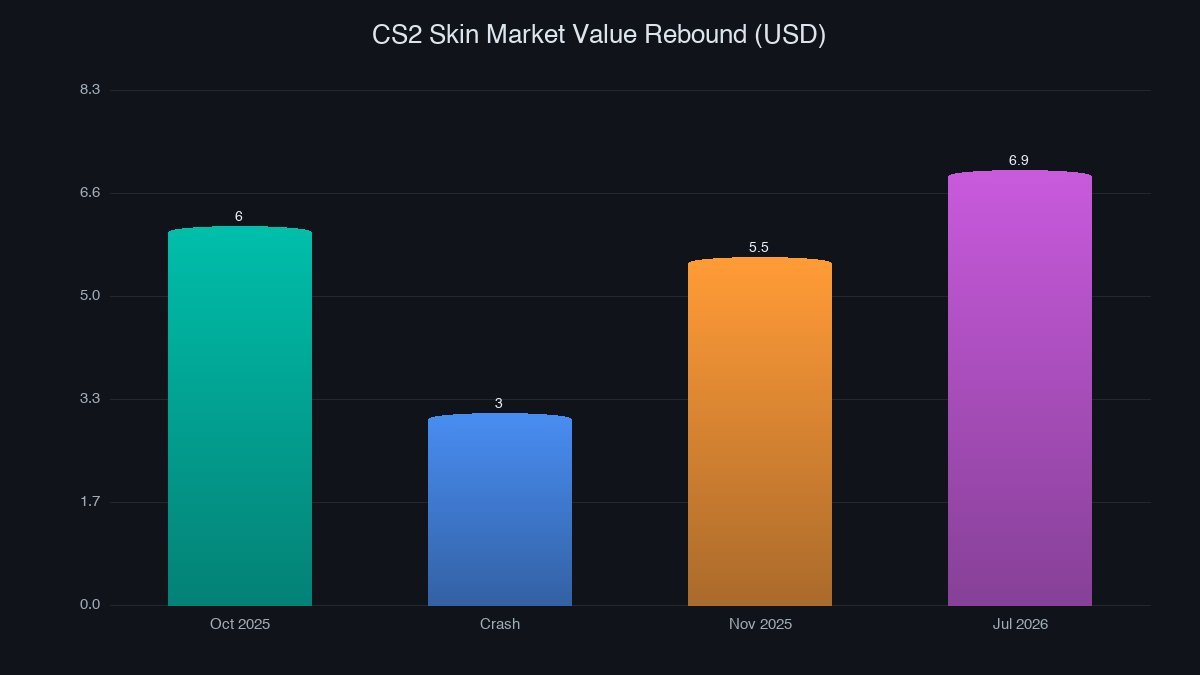
If you want the visual, the chart below shows the rebound path from the October crash to today. The shape matters: a sharp drop, a fast partial recovery, then a slow grind back to the top.
Number 1: The $3 Billion Crash That Started It All
The current market structure is a direct response to October 2025, when Valve's trade-up contract update let players convert five Covert-grade skins into a knife or a pair of gloves. Within 48 hours, premium knife and glove prices dropped hard, and the shock rippled through the entire economy as traders reassessed what scarcity actually meant anymore.
Headlines at the time reported $2-3 billion wiped off the market overnight — a violent correction that reset price expectations across every category. What made it different from previous crashes was the mechanism: this was not panic selling, it was a structural change to how items could be created. Covert skins were no longer the ceiling; they were ingredients.
Number 2: $5.5 Billion — The One-Month Recovery
The recovery surprised most analysts. Market capitalization rebounded from the crash low to roughly $5.5 billion within about a month, as buyers who had been priced out of knives and gloves re-entered at the new, lower price points. That buying pressure created the floor that still holds today.
This is the key psychological shift: the crash did not destroy demand, it redistributed it. Players who could never afford a knife suddenly could, and the volume that came from that re-entry has kept the market liquid through every patch and tournament since.
By mid-2026, the market had climbed further to the ~$6.9 billion figure — a full recovery in headline terms, though the composition underneath is different from pre-crash. Cheaper knives, mid-tier gloves, and high-float Covert items now carry far more of the daily volume than they did before the crash.
Number 3: 98,000+ — What Phantom Cache's Open Count Tells Us
Case opening remains the strongest demand signal in the market. On skinvs, Phantom Cache has been opened over 98,000 times, and Fan Favorite is closing in on 54,000 opens — real, verifiable activity from a case-opening platform, not theoretical demand. When players open cases, they are converting liquid cash into skins, and that conversion is what keeps the whole economy circulating.
The pattern holds across every category: knives and gloves still concentrate the bulk of market value, and the cases that can drop them are the ones players actually open. The Phantom Cache opening counter moves with exactly the same sentiment swings that move the market — when player confidence is up, opens accelerate.
That is why case open counts are a better leading indicator than price charts. Prices react to sentiment; open counts are sentiment, measured directly.
Number 4: Knives and Gloves Still Hold the Value
Despite the crash, the value hierarchy barely changed. Knives and gloves still concentrate the bulk of market cap, just as they did before October 2025. What changed is the entry price: you can now own a knife for a fraction of the pre-crash cost, and the lower barrier has widened the buyer pool.
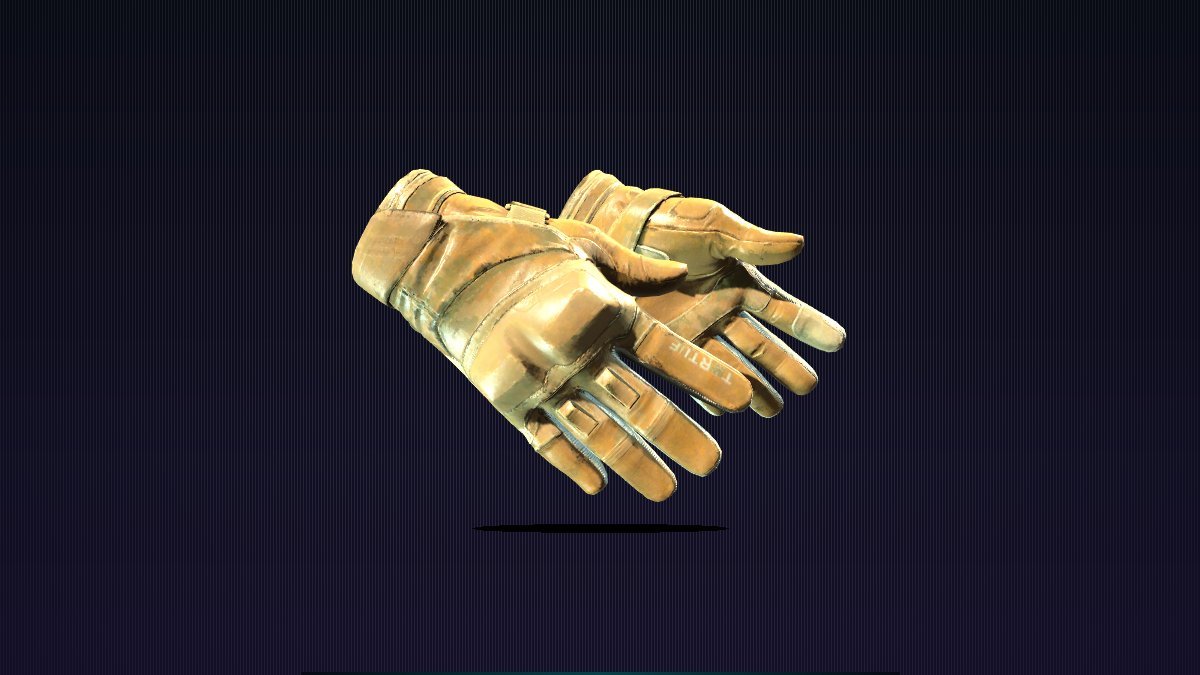
Look at the gloves on display below — ★ Moto Gloves | Transport. It is an Extraordinary-tier glove, the kind of item that sits at the top of the value pyramid, and its price movement mirrors the category as a whole: it dropped hard in October, found a floor, and has been grinding upward with the market since.
The practical takeaway: if you are buying for value retention, the top tier is still where the money concentrates. If you are buying for volume and liquidity, the mid-tier is where the action is.
Number 5: Cologne's Afterglow — Stickers and Souvenirs
IEM Cologne 2026 did what majors always do: it drove a fresh wave of demand for stickers and souvenir items tied to the tournament's stars — Falcons, NiKo, m0NESY, and karrigan. Tournament-driven demand is one of the few reliable seasonal spikes in the CS2 economy, and Cologne is the biggest stage on the calendar.
What is different this year: the Cologne 2026 Shop runs until September 29, and 50% of royalties on Ranked Series stickers go to players, teams, and the tournament organizer. That longer sales window extends the demand tail well past the event itself, which is why sticker prices have stayed elevated weeks after the final.
For traders, the calendar is the tool. Tournament windows are when stickers and souvenirs move; the weeks between are when knives and gloves consolidate. Positioning inventory around the event calendar — not around daily price noise — is how the smart money operates.
What Surprised Us
The resilience of the trade-up system itself. After the October crash, many predicted the contract would be nerfed or removed. Instead, the market absorbed it, and trade-up contracts have become a standard part of how traders convert inventory. The five-Covert-to-knife mechanic is now priced into the market rather than breaking it.
Also surprising: float value has become a bigger factor than before. With knife prices lower, the gap between a 0.01 float and a 0.06 float on high-value skins has widened in percentage terms — buyers who could not previously afford the top tier are now paying meaningful premiums for the cleanest examples. Pattern hunting on Case Hardened and Fade finishes has followed the same logic.
The Smart Play
August 2026 is not a moment for dramatic moves. The market has recovered to pre-crash levels, volume is healthy, and the next catalyst is the ongoing Cologne shop window plus whatever Valve ships in the fall update cycle. The risk profile is moderate, not extreme.
The play that has worked all year: buy the categories with verifiable demand — the ones people actually open and use — and hold through tournament cycles. Items like Phantom Cache, with its 98,000+ opens, sit in that bucket. They give you exposure to the knife and glove market without the full premium price of owning the top-tier item outright.
And if you are holding high-float Covert items from the pre-crash era, the current market is your window. The trade-up mechanic has permanently changed their ceiling — they are now raw material, not collectibles, and the market has repriced them accordingly. Understand what you own, and the $6.9 billion headline becomes a roadmap instead of a rumor.