Valve Just Sent Lawyers After Skin Changers — And The Rules Just Changed
Valve Just Sent Lawyers After Skin Changers — And The Rules Just Changed
On September 1, 2026, Valve did something it had never done in the fourteen-year history of Counter-Strike cosmetics. It stopped banning cheaters and started suing them. A cease-and-desist letter went out to a major CS2 skin-changer platform, and within days the project was gone — website down, code pulled.
Skin changers are the tools that make a weapon look like a skin you don't own. The illusion exists only on your own screen. It's worth nothing, it's sold to nobody, and for most of a decade Valve treated it as a mild annoyance to be swept up with the anti-cheat net. That assumption just died.
What The Letter Actually Says
The document was dated September 1, 2026 and delivered through the Russian law firm Melling, Voitishkin & Partners. It accuses the platform of infringing Valve's software, its weapon, knife and glove skin designs, and its trademarks — and it describes that infringement as deliberate and ongoing.
The tone matters as much as the claim. The letter warns that if the platform refuses to comply, Valve will pursue compensation in court and refer the matter to law enforcement to check for criminal activity. That is not the language of a company asking a fan project to tidy up. That is the language of a company building a paper trail.
Then the platform shut down. According to reporting from iXBT and skin.club, this is reportedly the first known instance of Valve pursuing a cheat or skin-changer provider through direct legal action rather than in-game bans alone. It's also the first time Valve has achieved a shutdown through its Russian legal representatives since sanctions took effect in 2022.
Why Copyright, Not Anti-Cheat
Read the list of complaints again: skins and trademarks. Not "our game was hacked." Valve didn't build this case on cheating at all. It built it on ownership of the artwork.
That's a much bigger hook. A VAC ban ends one account and the offender buys another for the price of a case key. A copyright claim, in theory, ends the product. Software updates can't patch a legal judgment.
It also reframes what a "skin" is. For years the community has argued about whether CS2 items are collectibles, investments or just pixels. Valve's lawyers have now answered in writing: they are Valve's protected designs, licensed to you, not owned by you.
The Money Behind The Designs
That position isn't abstract. In December 2025, Valve ran a program through the Call to Arms-ory update paying community artists up to $35,000 for weapon skins, stickers and other content that ship in the game. When you pay five figures for a design, you defend it.
The same month, Valve tightened its own tournament rules to push skin gambling and case-opening sites away from team jerseys and event branding. Two moves in one month, both about where CS2's skin business is allowed to live. The September letter is the third move in that sequence.
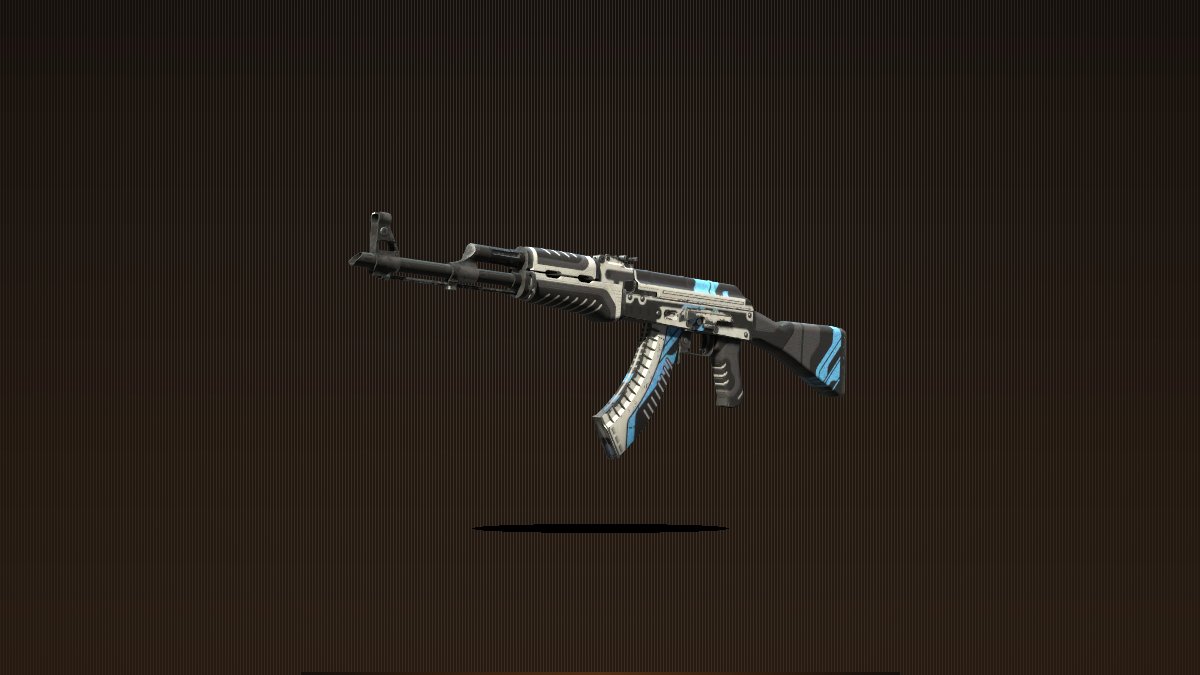
That matters for a specific reason. Every skin in an inventory traces back to a design Valve owns and, increasingly, pays to acquire. The AK-47 | Vulcan shown here is a good example — a classic Covert rifle finish, instantly recognisable to any player, and entirely Valve's intellectual property. A platform that reproduces it locally is not copying a file. It is reproducing a licensed design at scale.
The Case For Valve Doing This
The strongest argument is a boring one: consistency of the asset. CS2's tracked skin market was worth roughly $3.40 billion in mid-September 2026 by PriceEmpire's live index. Even after a brutal year, that's a real economy sitting on top of artwork Valve owns. If anyone can redistribute that artwork locally, for free, with no consequence, the value proposition erodes quietly from the edges.
There's also a supply-chain angle. Skin changers aren't only cosmetic toys — they're proof of concept for anyone who wants to run unauthorised overlays, inject code, and sell "premium" versions to players who don't want to pay for a knife. Once a platform is distributing your designs to thousands of users, the difference between a skin changer and a piracy site gets thin.
The Case Against
Here's where it gets uncomfortable. A skin changer genuinely does not remove a single dollar from Valve's pocket. The user still can't trade the skin, can't sell it, and can't list it. Valve loses no revenue — it only loses exclusivity of the look.
Second, jurisdiction. This worked because the target was reachable through a Russian law firm. The next tool may not be. Legal pressure is a blunt, slow, expensive instrument against services that can rebuild in a week, and Valve's actual track record on this is one shutdown, not a campaign.
Third — and this is the argument worth taking seriously — is the drift. Once a company starts treating "displays our artwork without permission" as infringement, the same logic reaches mods, content creators, screenshot artists, custom overlays and fan projects. The line between protecting a $3.40 billion economy and policing your own players is not obvious, and it isn't drawn by Valve publicly.
What The Community Actually Said
Reaction split along predictable lines. Traders who had never touched a skin changer mostly shrugged — the tool never affected their inventory, their float values or their listings. Creators and modders were noticeably quieter, which is telling, because they are the group most exposed to a broader reading of the same argument.
The more interesting signal is what Valve did not do. It did not file in a US or EU court, where any ruling would immediately apply across the entire Western platform ecosystem. It used a Russian firm against a Russia-reachable target, which keeps the legal question regional and the precedent deliberately narrow.
That could be tactical patience. It could also be a test case to see how far the argument travels without a formal judgment. Either way, the next letter matters far more than this one — and nobody outside Valve's legal team knows who is on the list.
What This Means If You Own Skins
Nothing about the letter changes your inventory's price today. It doesn't change drop rates — the gold-tier knife or glove is still roughly a 0.26% outcome, about one in 385 openings — and it doesn't change how trade-ups work.
What it does change is the ceiling on how casually Valve's item designs can be copied. If you bought a knife on the strength of it being rare, recognisable and Valve-controlled, this is a small piece of good news: the company is now spending real legal money defending the thing you own a licence to.
That said, don't read it as a floor under prices. The market is down hard from its peak, and a copyright claim doesn't create demand, doesn't remove supply, and doesn't make anyone want a specific skin more than they did last week. Legal precedent protects the artwork; it doesn't protect your entry price.
If you're mainly here to actually play with the skins — rather than argue about them — the practical version of "owning the real thing" is still the same as it ever was. You open the case, or you buy the item. There's no shortcut that survives a legal letter. If you want a skin that is unambiguously yours, with a real float value and a real trade history, browse what's available in the Fan Favorite and open a case yourself — the AK-47 | Vulcan in this article came out of exactly that kind of container, and it's a genuine asset rather than a screen illusion.
Fourteen years of Counter-Strike skin trading produced one constant: Valve moves slowly, then all at once. This letter is the small move before the big one.