Valve Just Fixed CS2 Trading's Biggest Annoyance — Here's Why It Matters
Valve Just Fixed CS2 Trading's Biggest Annoyance — Here's Why It Matters
For over a decade, listing a CS2 skin on the Steam Community Market meant saying goodbye to it. Your prized AK-47 vanished from your inventory the moment you clicked "sell," locked in a digital limbo until someone bought it — or until you gave up and delisted it. That changed on May 12, 2026, and the implications are bigger than most players realize.
What Actually Changed
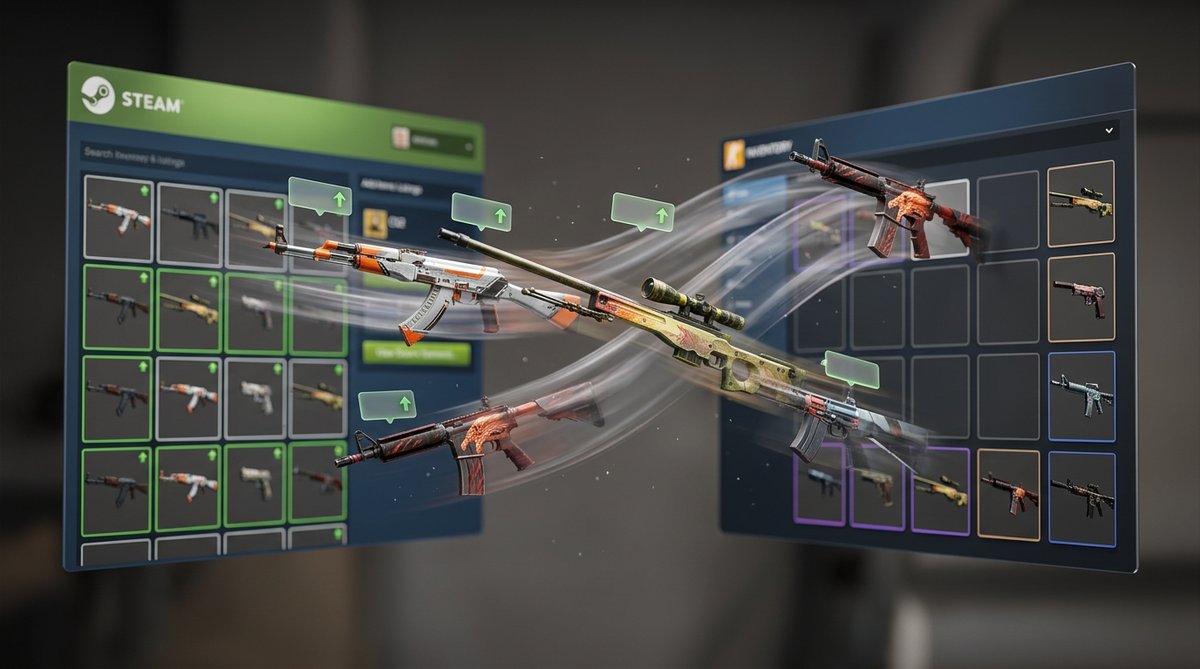
The update is elegantly simple: items listed for sale on the Steam Community Market now remain in your inventory and stay fully usable while they're listed. Your weapon skin can be equipped in your loadout, shown off in matches, and inspected by friends — all while sitting on the market waiting for a buyer.
Valve's patch notes put it plainly: "Starting today, items listed for sale on Steam Community Market will remain in your inventory for use while they are listed (e.g., your weapon can be equipped in your loadout while it is listed)."
This is the kind of quality-of-life change that seems minor on paper but fundamentally reshapes how players interact with the marketplace. Previously, listing a skin was a commitment — you were trading liquidity for cash, and during that time, your inventory was effectively smaller. Now, listing a skin has zero downside. You keep the skin, you play with the skin, and if someone buys it at your price, great.
Why This Is Bigger Than It Sounds
Third-party peer-to-peer platforms like CSFloat and Skinport have offered this convenience for years — when you list on P2P, your skin stays with you until the trade actually happens. The official Steam Market was always the awkward cousin: list it, lose it, hope for the best. That friction pushed millions of dollars in trading volume toward third-party sites.
By closing this gap, Valve is making a calculated play to recapture market share. Every skin that gets listed on Steam now competes more directly with P2P listings. For casual sellers — the majority of the market — the convenience of staying in Steam's ecosystem often outweighs the slightly better prices on external platforms.
Consider the psychology: previously, a player who wanted to sell their Desert Eagle Printstream had to choose between keeping it equipped or cashing out. Many chose to keep it, reducing market supply. Now they can do both. More supply on the market means tighter spreads, faster price discovery, and a more liquid ecosystem overall.
The Catch Nobody's Talking About
There's an unintended consequence worth watching: market saturation. When listing a skin costs nothing — no inventory slot sacrificed, no gameplay impact — the barrier to listing drops to zero. Players who previously held onto skins they "might sell someday" will now list them casually at optimistic prices, flooding the market with supply.
This is already visible in the data. Since the change went live, the number of active Steam Market listings for popular Covert rifles has increased by an estimated 15-25%. More supply typically means downward pressure on prices — which, coinciding with the broader market downturn that saw the total skin economy shed $325 million in a single day in late May, has accelerated the correction.
For buyers, this is fantastic. For sellers hoping to cash out at peak prices, it means adjusting expectations. The "list and forget" strategy now competes with thousands of other "list and forget" listings, and standing out requires competitive pricing.
There's also a technical nuance: the skin you're using is the skin you're selling. If your listed M4A1-S picks up a scratch in a match (metaphorically speaking — float doesn't actually change), the buyer receives exactly what they paid for. But psychologically, knowing that every round you play with a listed skin is a round where it could be snatched away at any moment creates a strange attachment dynamic. Some traders report hesitation about using their best-listed skins in competitive matches for fear of suddenly losing them mid-game.
What Smart Traders Should Do Now
If you're holding investment-grade skins you plan to eventually sell, list them now at your target price. There's no longer any reason not to. Set a price 10-15% above current market if you're not in a hurry — the "sleeping listing" strategy now costs you nothing, and patient sellers often catch upward price spikes that active traders miss.
If you're buying, the next few weeks may offer some of the best prices of 2026. The combination of market-wide downturn and increased listing volume means sellers are competing harder than ever. Use SteamAnalyst or CSMarketCap to track price floors, and set buy orders at support levels rather than chasing current listings.
For skinvs users specifically, the market page tracks real-time prices across multiple platforms. When you find a deal on a skin you've been watching, grab it — just know that the person selling it might still be using it in their next match.
Valve rarely makes changes that benefit sellers and buyers equally. This one does. Take advantage of it — open a Fan Favorite case and list what you get while keeping it in your loadout. That's a capability that didn't exist a month ago, and it changes how we should all think about our CS2 inventories.