CS2 Skin Market Crashes Below $4.5 Billion: Biggest Drop of 2026
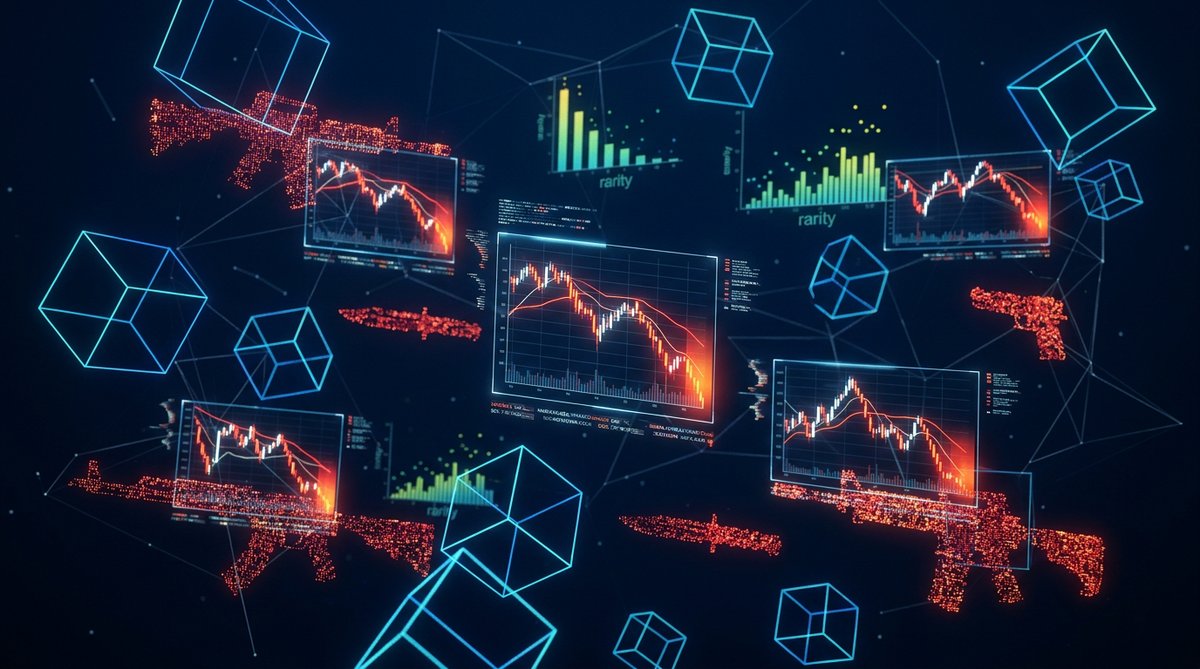
CS2 Skin Market Crashes Below $4.5 Billion: Breaking Down the Biggest Drop of 2026
The CS2 skin economy just had its worst week of the year. Total market capitalization fell roughly 6% in seven days, wiping out hundreds of millions of dollars in paper value and dragging the global skin market cap down to approximately $4.50 billion. According to independent trackers CSMarketCap, csskinlab, and take.skin, this was the second-largest weekly drop of 2026 — and the signals suggest the move isn't finished yet.
For anyone holding CS2 skins as investments, funding gambling accounts, or just sitting on a knife they bought last quarter, this isn't routine noise. A 2-3% weekly swing is normal market breathing. A confirmed 6% drop concentrated at the high end of the market is something else entirely.
The Raw Numbers
Let's get specific about what happened in May 2026. After an all-time-high first quarter that saw the skin market surpass previous peaks, the market started rolling over in April and accelerated downward through May. Two specific events did most of the damage:
First, a mid-May Valve item update adjusted drop rates and introduced new cases. New supply almost always compresses prices on the existing case pool, and this update was unusually broad in scope. When fresh cases hit the economy, existing inventory loses its scarcity premium — basic supply and demand.
Second, macro skin-liquidity stress tied to the New York Attorney General's lawsuit against Valve. The company's "Happy Meal Toys" defense — arguing skins are collectibles, not securities — made larger holders more cautious. When the biggest wallets de-risk, the bid side of the market gets thin fast. As cs2gambling.com reported on June 2, daily traded value on the Steam Community Market and major third-party platforms fell meaningfully week-on-week.
What Got Hit Hardest
The damage wasn't distributed evenly. Here's how different market segments performed:
- Knives and gloves: Down 8-10% on the week — the hardest-hit category. These are the most speculative end of the market, and they're always the first to sell off when sentiment turns.
- Rifles: Held up better, with most index baskets down 3-5%. Popular playskins like AK-47s and M4A1-S variants maintained stronger bid support because they have genuine utility — players actually use them.
- Stickers: Moderately affected. The Cologne 2026 sticker launch injected some liquidity into the category, but older collections saw softness.
- Cases: Essentially flat. Low-priced, supply-driven, and tied to drop-rate mechanics rather than speculative demand. When everything else is bleeding, cases are the boring safe haven nobody talks about.
Why Volume Matters More Than Price
Here's the part most market commentary misses: volume tells you more than price. Daily traded value on platforms like Skinport, CSFloat, and DMarket is down meaningfully week-on-week. Lower volume on the way down typically means the move isn't done — there's no real buyer flow stepping in to defend prices.
Think of it like this: when a stock drops 6% on high volume, smart money is rotating out. When it drops 6% on low volume, nobody is even interested enough to buy the dip. The CS2 skin market is showing the second pattern. Sellers are marking prices lower, but buyers aren't showing up to catch the falling knife.
The community.skin.club tracker confirmed on May 26 that the market cap came close to falling below $4 billion, losing $325 million in a single 24-hour period. From peak to trough, the skin economy has shed approximately 50% of its value — making this one of the most severe corrections in CS2 history.
The BitSkins Warning Sign
On May 30, marketplace BitSkins announced its shutdown, becoming the most visible casualty of the current environment. When a well-known trading platform closes its doors, it's a signal that the ecosystem's economics are under strain beyond just price charts. Marketplace closures reduce liquidity further, creating a feedback loop: fewer places to trade → less volume → more price pressure → less incentive to hold inventory.
The BitSkins shutdown also highlights a broader trend: consolidation among third-party platforms. As Steam's API policies evolve and the regulatory landscape shifts, smaller marketplaces are either merging, pivoting, or closing entirely. The survivors will be platforms with diversified revenue streams and deep liquidity pools — not niche sites dependent on thin margins.
What Comes Next
Three things will determine where the market goes over the next 90 days:
The NY lawsuit timeline. Any procedural milestone — a ruling on Valve's motion to dismiss, additional state filings, or settlement signals — will move the market by several percentage points. The legal uncertainty is the single largest overhang on skin valuations right now.
The next Major sticker cycle. Historically, Major sticker drops lift the entire market for 4-8 weeks as the hype cycle brings fresh money into the ecosystem. Even the controversial Cologne 2026 token system is injecting some activity into the market.
Steam API and trade-bot changes. Anything that affects marketplace liquidity hits the third-party ecosystem first. If Valve tightens its API access or changes trade-bot rules, expect immediate price dislocations across all platforms.
The Smart Play Right Now
If you're holding skins as pure investments, the current environment is a stress test. Downward momentum with thin volume rarely reverses cleanly — it tends to grind lower until a catalyst appears. That said, CS2 skins have recovered from every major correction in the game's history. The market's long-term trajectory has always been up, even if the short-term path is ugly.
For active players and traders: the worst time to sell is during a panic, and the worst time to buy is when prices "feel safe." If you have conviction in specific skins, dollar-cost averaging into weakness has historically been the winning strategy. If you're uncertain, there's no shame in sitting on the sidelines until volume returns.
The market will eventually find its floor. Whether that floor is at $4.5 billion, $4.0 billion, or lower depends on factors nobody can predict — lawsuit outcomes, Valve's next move, and whether the broader CS2 player base keeps growing. What we know for certain is that May 2026 wasn't a blip. It was a real, broad-based pullback, and the smartest market participants are paying close attention.
If you're looking to pick up discounted skins during the dip, check out the Fan Favorite case on skinvs — one of the platform's most active cases right now. And for real-time price tracking across rifles, knives, and gloves, browse the full market to compare prices before you buy.