CS2 Agents Are the Worst-Performing Thing in the Game. Six Darryls Explain Why
CS2 Agents Are the Worst-Performing Thing in the Game. Six Darryls Explain Why
Why does a character skin get cheaper every single month, when a knife can sit in an inventory for two years without losing a third of its value?
Agents are the cheapest answer in CS2 and the worst place to put money. In the week to November 22 they fell 9.7% — the steepest drop of any segment, worse than gloves, worse than rifles, worse than the cases everyone complains about. Over 90 days the segment has lost 32.8%, and it now sits 55.7% below its March high.
That is not a market problem. The whole market is 46.7% off its March peak. Agents are underperforming it by a clear margin, and the reason is structural rather than temporary. You can see it in one family of six skins that all look the same and are not priced that way at all.
The Numbers, Segment by Segment
Start with the basket. A single copy of every agent tracked on the market — 62 items in the index — is worth about $969.23. That total fell $61.16 in a week and $114.47 in a month. Those are real dollars leaving real inventories, not a percentage on a chart.
Now compare the fall from March, because this is where the segment separates from everything else:
- Knives — 34.9% below their March high. The most resilient category in the game, even now.
- Gloves — 45.1% below.
- Agents — 55.7% below.
Agents have fallen roughly 1.6 times as far as knives from the same starting line. On any given day the gap looks like noise. Over three quarters it looks like a verdict.
Meanwhile the items people actually worry about are holding better than the narrative suggests. Rifles went 4 days in a row down through November 23 and still sit far above the agent index. The segment that gets called dead is not the one that is dying.
Six Darryls, One Face, Six Prices
Here is the experiment. The Professionals has a character called Darryl. He is the same model in the same mask in the same red jacket, and there are six versions of him on the market right now.
- Bloody Darryl The Strapped — $28.88
- Sir Bloody Silent Darryl — $29.46
- Sir Bloody Skullhead Darryl — $30.72
- Sir Bloody Darryl Royale — $35.66
- Sir Bloody Loudmouth Darryl — $48.00
- Sir Bloody Miami Darryl — $71.47
That is a 2.47x spread across six items that are visually near-identical and functionally identical. The most expensive Darryl costs two and a half times the cheapest Darryl, and the only thing separating them is which operation or collection released them.
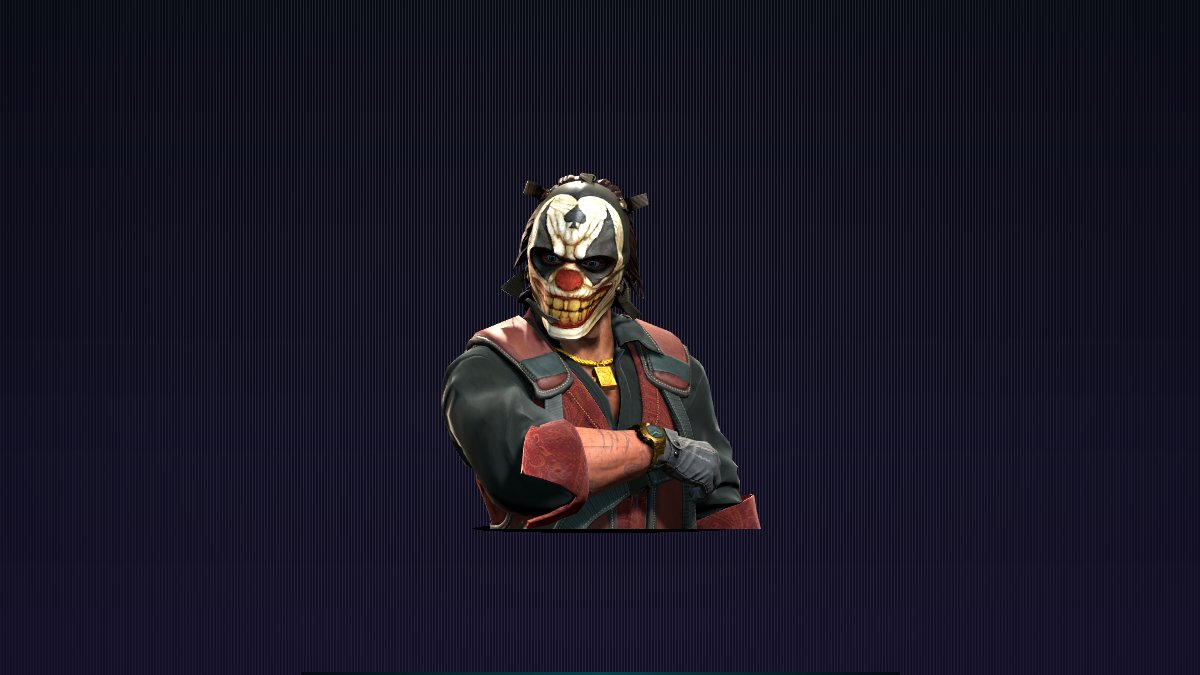
Now look at what that tells you. The price is not attached to the mask, the model, or the voice lines. It is attached entirely to the tag on the end of the name, and the tag is the only thing collectors are bidding on.
When a market has exactly one distinguishing attribute and that attribute is a release date, it cannot price anything well. There is no gradation. A knife buyer can pay more for a better float, a rarer pattern, or a StatTrak counter. A Darryl buyer pays $28.88 or $71.47 and gets the same Darryl either way.
What Knives Have That Agents Don't
Every item that holds value in CS2 holds it through a quality axis. Knives have five wear tiers and a float value that slides continuously between them, so two copies of the same knife are never quite identical. Dopplers have phases. Case-hardened skins have pattern seeds. StatTrak adds a fourth dimension.
Agents have none of that. There is one version of every agent. No float, no pattern, no wear tier, no StatTrak, no phase, no seed. When you buy an agent you own the exact item every other owner has, and there is nothing to upgrade to afterwards.
That single missing axis explains the whole price history. Collectors who want the best copy of a thing have no reason to enter this market, because there is no best copy. The only buyer is someone who wants to look different for a round, and that is a purchase a player makes once.
Demand for a knife is partly speculative — people buy a second one, a better one, a StatTrak one. Demand for an agent is one and done. A segment where nobody ever buys a second unit can only fall once the initial wave of buyers is satisfied.
The Supply Problem Nobody Talks About
Wear also does something invisible: it destroys supply. Every case opening, every player who quits with an inventory, every trade-up contract that consumes items — all of it removes copies from circulation permanently.
Agents get consumed too, but they do not get varied. The copies that survive are all the same, so the surviving population keeps getting more interchangeable as time passes. A knife that survives a decade becomes a specific knife with a specific float. An agent that survives a decade becomes the same agent as nine thousand others.
You can see the result in the cheap end of the market. Special Agent Ava, once a headline pick, lists at $16.11. Lt. Commander Ricksaw sits at $12.48. Cmdr. Mae "Dead Cold" Jamison at $12.37. Operator at $9.75. Bio-Haz Specialist at $8.83. Further down, Maximus is $4.52 and Soldier is $3.84.
Those are not distressed prices from a crash. They are the natural resting price of an item that anyone can own and nobody can improve.
Where This Leaves You
Agents are not broken. They are the cheapest cosmetic upgrade in the game, they do exactly what they promise, and if you like the look of a particular operator then $4 to $30 is a completely reasonable price to pay for a couple of thousand hours of looking like them.
What they are not is an asset. The 55.7% drawdown from March is not a discount you should be buying, because nothing in the mechanics creates a floor. There is no float scarcity underneath, no pattern lottery, no StatTrak premium to catch the fall. When the next suite of agents ships, the old ones do not become rarer — they become the previous version of the same thing.
If you have $50 to spend and you want it to still be worth $50 next spring, the segment matters more than the skin. A knife at 34.9% off its high is closer to a bottom than an agent at 55.7% off, because the knife has attributes a buyer can pay extra for and the agent does not.
If you want an agent because you want to play as that agent, buy the cheapest copy you can find and enjoy it. You can compare every agent side by side on the marketplace and confirm that the $28.88 Darryl and the $71.47 Darryl are the same Darryl before you decide which tag is worth paying for.
And if the appeal is the opening rather than the operator, Frost Vault at least gives you a fixed price and published odds. The agent you pull cannot be improved later either — at least with a case you know that going in.