Active Drop Pool vs Retired Cases: Where the Value Actually Sits

Active Drop Pool vs Retired Cases: Where the Value Actually Sits
On 18 December 2025, Valve pulled roughly 35 legacy cases out of the CS2 weekly drop pool in a single pass. The CS:GO Weapon Case — a container you could once earn for free by finishing a match — now lists at $97.06. In the same pool today, the Kilowatt Case sells for $0.07. Same game, same odds, same key price, and a price gap of about 1,390 times.
That gap is not a market glitch. It is what happens when one container keeps being minted every week and the other stopped being minted nine months ago. If you are deciding where to put money in cases right now, this is the comparison that matters.
Round 1: The Up-Front Bill
Start with what the five active containers actually cost. As of the 23 October 2026 pool snapshot, the weekly drop list held three cases and two terminals:
- Dreams & Nightmares Case — $0.79 (in the pool since 20 January 2022)
- Revolution Case — $0.13
- Kilowatt Case — $0.07
- Sealed Dead Hand Terminal — $0.20
- Sealed Genesis Terminal — $0.03
Now the retired side. The same tracker counts 40 cases that no longer drop, and their prices look like a different asset class entirely: $97.06 for the CS:GO Weapon Case, $49.52 for Operation Bravo, $40.25 for eSports 2013, $24.09 for Operation Hydra, and $8.38 for the Glove Case.
Here is the part most people skip: the case is not the whole bill. A standard case needs a key, and keys cost $2.49 in the store and cannot be traded. That makes a Kilowatt opening a $2.56 decision where 97% of the cost is the key. A CS:GO Weapon Case opening is a $99.55 decision where the container is 98% of the cost. Cheap cases and expensive cases are not the same product with different price tags — the economics invert.
The two terminals in the pool break that formula on purpose. A Sealed Dead Hand Terminal costs $0.20 and needs no key at all: you open it, the game offers you one random item from the Dead Hand Collection at a set price, and you get up to five offers to buy or skip before the terminal is gone. Entry cost is the only cost. Dead Hand is also the reason gloves are back in the conversation — it ships 22 glove finishes, the first new gloves added to the game since Broken Fang in December 2020.
Round 2: Supply Only Moves One Way
Every case that gets opened is destroyed permanently. That is the only reliable rule in this economy, and it cuts in opposite directions depending on drop status.
A container in the active pool is being created every week by every Prime player who ranks up. Its supply grows faster than openings can consume it, so its price does what any inflating asset does. The Kilowatt Case has been in the pool since 16 January 2024, moves roughly 41,400 units a day across tracked marketplaces, and is down 66% over the last 185 days to its current $0.073–$0.08 range. Nobody did anything wrong. The faucet was simply left on.
A retired case is the exact opposite. On the day it leaves the pool, minting stops. What exists is all that will ever exist, and it shrinks every time someone opens one or feeds it into a trade-up contract. The Recoil Case left the pool on 12 March 2026 when the Dead Hand Terminal took its slot. January 2026 removed four entire collections from weekly drops — Safehouse, Dust 2, 2018 Nuke and 2018 Inferno.
That is why the retired list reads like a price ladder sorted by how long ago the faucet closed. The older the exit, the higher the number. Across the whole game there are 42 weapon cases holding 657 skins — 34 with knives as the rare special item, 7 with gloves — and the split between the two groups is now the single clearest dividing line in case pricing.
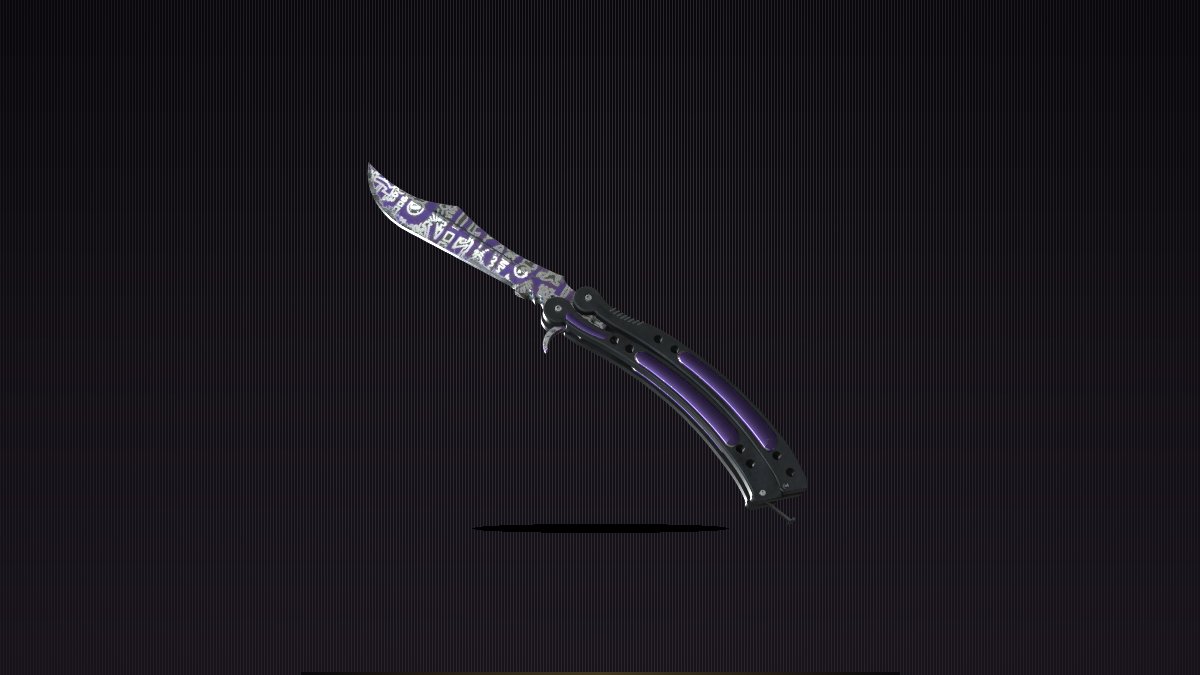
Worth noting what the retired cases still hold. The knife pools in those older containers are why the prices hold: a Butterfly Knife | Freehand out of a long-retired case is a fixed-supply item sitting behind a fixed-supply container. Two locks instead of one.
Round 3: What the Item Inside Is Actually Worth
Valve publishes the same odds for every case in the game, which makes cross-case math unusually clean. Mil-Spec lands 79.92% of the time, Restricted 15.98%, Classified 3.20%, Covert 0.64%, and a rare special item (knife or gloves) 0.26% — about one in 385 openings, with a 10% chance any weapon comes out StatTrak. Pull a single Covert and that is one in 156. Pull anything above Mil-Spec and you have already beaten a 4-in-5 coin flip, which is the part that makes case openings feel better than they are.
Those odds turn case price into an expected cost per knife, and the answer is uncomfortable on both sides of the comparison. At $2.56 per Kilowatt opening, the average bill to hit one rare special item is roughly $986. At $99.55 per retired CS:GO Weapon Case opening, the same 385-opening average runs past $38,000. The retired container is not "better value" per knife — it is a much more expensive lottery with a much better prize pool.
One structural change rewrote this math in October 2025: five Covert skins can now be traded up into a knife or gloves from the collection of one of the inputs. That gave knives a supply route that never touches a case, and it means the real floor under knife prices is now the cost of five Coverts, not the cost of 385 openings. Case odds still set the top of the market. Trade-ups set the bottom.
The Verdict
These are two different instruments wearing the same skin. Active-pool containers are cheap, abundant, and decaying — you buy them to open them, and the $2.49 key is the actual spend. Retired containers are fixed-supply holds — you buy them to keep, and the container itself is most of what you are paying for.
The mistake is treating the $0.07 case as the budget option and the $97 case as the collector's toy. Over any reasonable window, the cheap case has been a depreciating asset while the retired one has been a supply-constrained one. The cheap case is the better entertainment purchase. The retired case is the better hold.
A simple test before you buy either: ask whether the container is still being made. If yes, you are buying something that will be cheaper next month, and the only sane reason to hold it is that you intend to open it. If no, you are buying something nobody can print more of, and the only question left is whether the knife pool inside justifies the entry price. Everything else — float, pattern, StatTrak — is a refinement on top of that one question.
If you want the middle ground — a live container with real knife exposure at a price that does not require a $99 entry — Phantom Cache is where most of our own openings land. It sits in the affordable band, and unlike a Steam listing, everything in it is inspectable in the browser before you commit.
Numbers here are the 23 October 2026 pool snapshot and current marketplace listings; case prices move weekly on the active side and slowly on the retired side, so re-check before you buy.