How to Buy Your First CS2 Knife for Under $100
How to Buy Your First CS2 Knife for Under $100
Ten years ago, "budget knife" was a contradiction. The cheapest gold-tier item in Counter-Strike sat in the $100 to $130 range and stayed there, because the only way a knife could exist was a 0.26% gold roll from a case. On October 22, 2025, Valve closed that bottleneck: five Covert skins can now be traded up into one knife or a pair of gloves. Roughly $1.75 billion of paper value left the market in the following days, and the knife floor never recovered.
As of the September 2026 price checks, a genuine knife starts at $34–37. That is the same rarity as a Karambit, for less than a mid-tier rifle skin. Here is how to spend a $100 budget well — and the four traps that eat most of it.
Step 1: Set a Real Ceiling, Not a Round Number
Your budget is not $100. It is $100 minus the fee you pay to get in and the fee you pay to get out. At the floor, those fees are not a rounding error — they are 10–20% of the item.
- Skinport — buyer pays 0%, seller pays 8%
- CSFloat — roughly 2% seller fee, one of the lowest on cash markets
- DMarket — about 2% on liquid items
- Steam Community Market — 15% and no cash payout, only Steam wallet funds
Practically: a $45 knife bought and resold through a 2% venue costs you about $1.80 in and out. The same knife through a 15% venue costs $13.50 before you have made a single decision about the item itself. If you are buying to keep, fees matter less — if you are buying to flip, they decide the trade.
Step 2: Pick the Shape, Not the Finish
This is the single biggest mindset shift in the post-trade-up knife market. When supply was capped by case odds, every knife was scarce and the finish carried the premium. Now the common shapes are priced tightly against the cost of the five Covert skins used to create them — and at the floor, you are paying for the model and the pull-out animation, not for the paint.
Here is the real floor per shape from the September 2026 checks:
- Navaja Knife — $34–37 (Field-Tested)
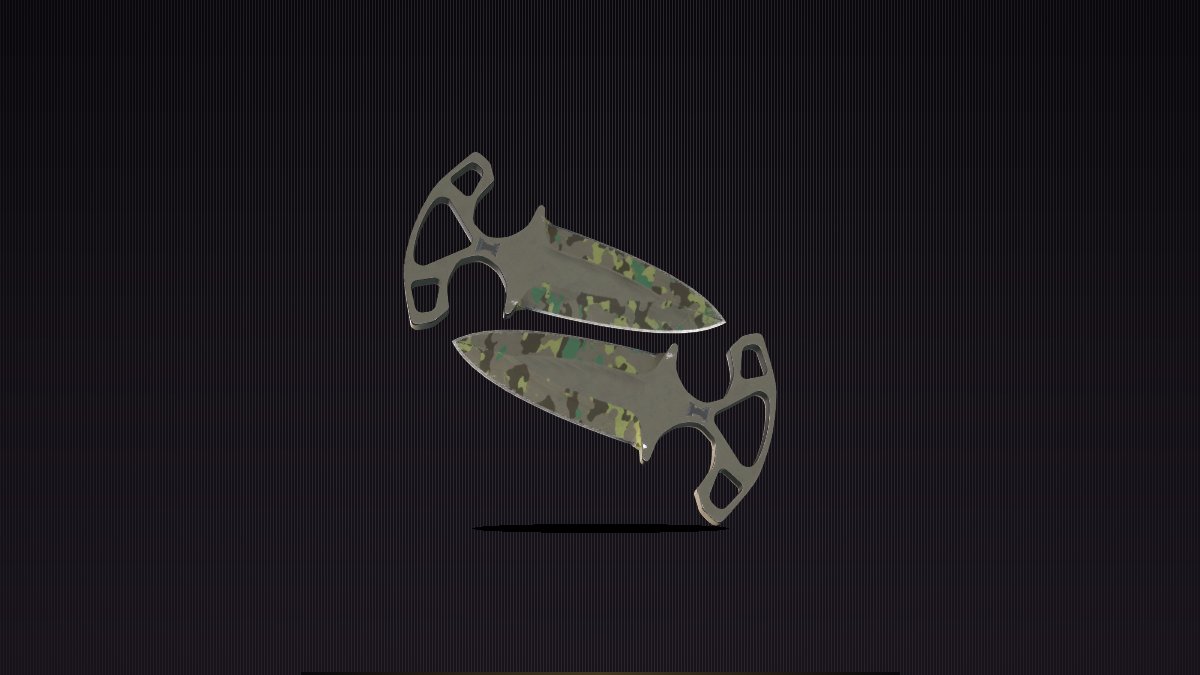
- Shadow Daggers — $35–41
- Kukri Knife — $35–41 (Well-Worn)
- Survival Knife — $36–38
- Paracord Knife — $36–40
- Gut Knife — $40–43
- Bowie Knife — $42–50
- Falchion Knife — $49–56
Every shape on that list is a real gold-tier item with a real animation. If you just want a knife in your loadout, you are done at Step 2. Note how fast the floor moves, too: the same shapes cost $52–56 in late May 2026 and $34–37 in September. Any guide quoting a single "cheapest knife" number without a date is guessing on your behalf.
And if you want a popular shape rather than a floor shape, the cheapest honest route is still a worn common finish. At the September checks, a Karambit | Safari Mesh in Battle-Scarred sat at $365–380, while the same knife in Crimson Web was $590 in Field-Tested and above $6,400 in Factory New. The next rung — worn premium finishes — is where the multiplier finally becomes worth paying, because that is the finish you actually look at.
Step 3: Buy the Wear Nobody Photographs
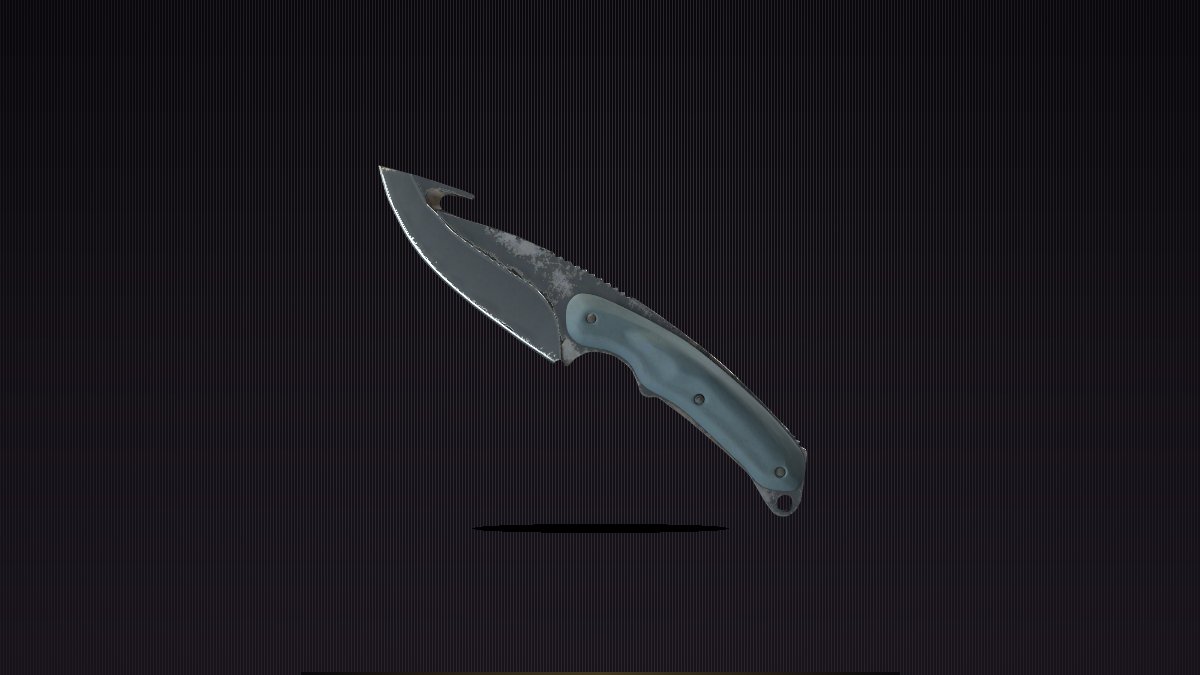
Factory New listings are what sellers photograph and buyers bid on, which is exactly why they are terrible value at the floor. Camo finishes like Safari Mesh, Scorched, Boreal Forest and Forest DDPAT occupy a very wide float range, so Factory New copies are genuinely scarce — and priced like collectibles, not like a $40 knife.
The spread is absurd once you look at it side by side:
- Gut Knife | Safari Mesh — $40–43 in Field-Tested, $480 in Factory New (about 12×)
- Navaja Knife | Safari Mesh — $34–37 in Field-Tested, $220–225 in Factory New (about 6.5×)
- Kukri Knife | Safari Mesh — $35–41 Well-Worn, $75–80 Factory New (about 2.2×)
At arm's length in-game, a worn Safari Mesh and a Factory New Safari Mesh are the same grey-green blur. Save the multiplier for the finish you actually stare at — Crimson Web, Fade, Doppler — and buy the cheapest wear you can tolerate on everything else.
Step 4: Do the Crafting Math Before You Gamble
Since the trade-up change, the "cheapest way to get a knife" question has a counter-intuitive answer. The cheapest guaranteed knife contract in 2026 runs about $120: five AWP | Chrome Cannon in Battle-Scarred at roughly $24 each, fed into a Kilowatt Case contract, guarantees a Kukri Knife. The Operation Wildfire route (five M4A4 | The Battlestar, about $130) and the Huntsman Case route (about $140) sit just behind it.
Compare that to the market floor: a Shadow Daggers | Boreal Forest in Field-Tested costs about $40, and you can see the exact item, float and pattern before you pay. Crafting costs roughly three times more for a random finish on a random roll. The reason is simple — trade-up demand dragged the price of cheap Covert skins up so far that the "cheap" inputs are now pricier than a whole budget knife. Every ugly red skin has a hard floor around $30 in 2026 because it is somebody's crafting fuel.
Run the numbers in a trade-up calculator before you commit. If the expected value of the gold outcome is not above the cost of your five inputs, you are opening a case with extra steps.
Step 5: Decide Whether StatTrak Is Worth It
StatTrak knives come from StatTrak Covert inputs, so they are a genuinely separate supply line — gloves do not exist in StatTrak at all, meaning all-StatTrak contracts always return a knife. That scarcity shows up in the price: across 3,189 matched skin pairs, the median StatTrak premium over the normal version is +17.61%.
Two honest caveats. First, that premium is measured across all skins, not knives — the knife-specific premium runs higher on popular shapes and can be thinner on the models sitting at the floor. Second, a StatTrak counter only matters for an item you actually play with. On a display knife it is a 17% surcharge for a number nobody reads.
If your $100 ceiling means $45 of knife, spend the extra on a shape you like, not on a kill counter. If you are already near the top of your budget and plan to use the knife every match, StatTrak is the one premium the market has not arbitraged away.
Step 6: Buy Where the Fees Don't Eat the Floor
Everything above collapses if you lose 15% on the way out. Two checks before you click buy: confirm the venue's seller fee, and compare the same wear and float across at least two markets — cash marketplaces price the floor differently by up to a few dollars, which is 5–10% of a $40 item.
One last piece of context worth holding onto: knives are no longer the "gold standard" in the sense people mean it. The trade-up update split the category in two. Common shapes exist in abundance and their price tracks the cost of crafting fuel. Collector pieces the contract cannot target — Fire & Ice, Blue Gems, true low floats — still behave like the old market. At a $100 budget you are firmly in the first group, and that is fine: you are buying a knife to play with, not a store of value.
Browse live listings by shape, wear and float on the SkinVS marketplace to price a floor knife against real offers, or if you would rather take the case route instead, start with the Phantom Cache and see what a $42 opening budget actually rolls.
Price sources: BladeIndex cheapest-knife data (September 9, 2026 checks), skin.land trade-up cost analysis, InvenGlobal knife economy report, TradeUpAcademy market report.