Terminals vs Cases: What CS2's Container Numbers Actually Say
Terminals vs Cases: What CS2's Container Numbers Actually Say
On October 18, 44,633 Revolution Cases sold in a single day at 14 cents each. The same day, the Sealed Dead Hand Terminal moved 25,361 units at 24 cents — nearly three times the unit price of a Revolution Case, at more than half the volume.
That is the container market in one line. Valve has not shipped a classic key-and-blind case since the Fever Case on March 31, 2025. Since then it has released two Terminals, and the third container format question keeps coming up in every trading Discord: are cases being retired, and does it matter to your wallet?
The answer is not a clean yes or no. It is four separate comparisons, and they do not all point the same way.
Round 1: Volume Goes to Cases, Revenue Goes to Terminals
Raw unit counts look like a landslide for the old format. SteamDB's rolling daily sales counter for October 18 shows Revolution Case at 44,633 units, Kilowatt Case at 41,270, Sealed Dead Hand Terminal at 25,361, Sealed Genesis Terminal at 18,688, and Fracture Case at 12,777.
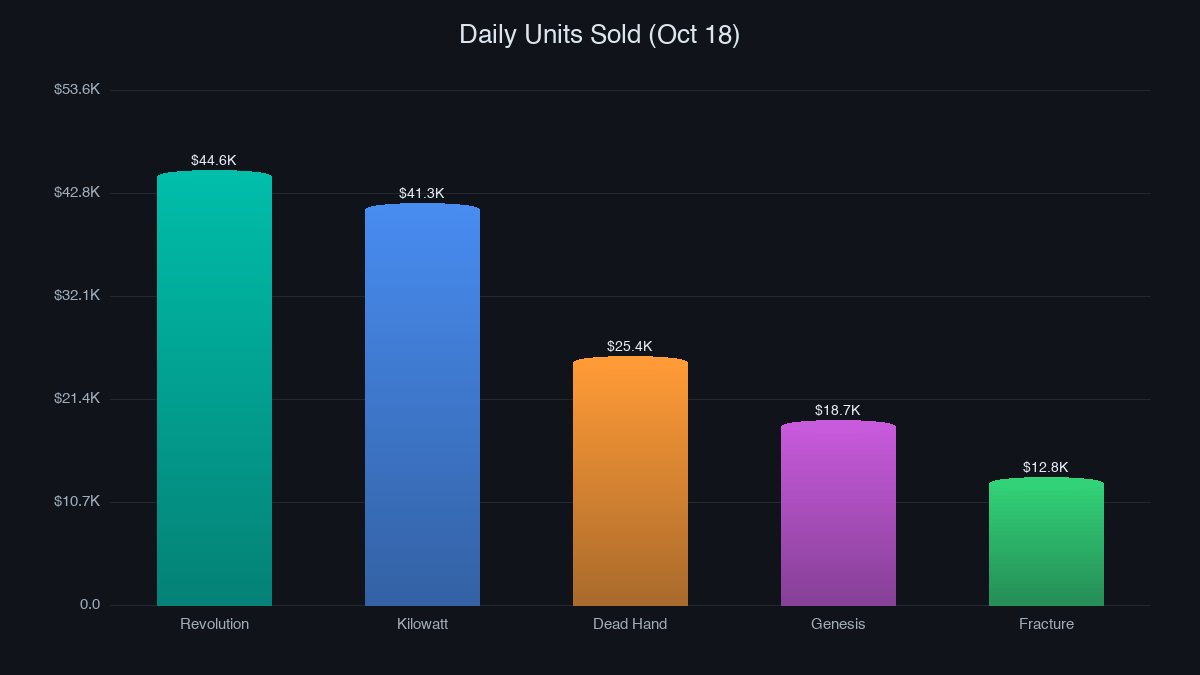
Multiply those counters by the cheapest fee-included ask and the ranking changes shape. Revolution Case clears roughly $6,249 a day at $0.14. Dead Hand Terminal clears about $6,087 a day at $0.24. Kilowatt's 41,270 units at $0.08 only produce about $3,302. Genesis Terminal's 18,688 units at $0.04 produce roughly $748.
So two classic cases (Revolution, Fracture) and one Terminal are all clustered in the same $3,500–$6,250 daily band, while Kilowatt and Genesis sit far below it despite enormous unit counts. Unit volume is a measure of how cheap something is. Dollar volume is a measure of how much the market actually cares.
Round 2: What You Actually Get for the Money
This is where the formats genuinely diverge, and it is not a matter of marketing language.
A classic case is a blind draw with a key. You pay for the container, then pay again for the key, then roll against a rarity ladder that runs mil-spec, restricted, classified, covert, with knives or gloves in the rare special slot. The Fever Case is the purest surviving example: 17 community-designed finishes across five tiers, with the AWP | Printstream as the headliner at roughly $200 Factory New.
A Terminal works differently. You buy the item directly through the Terminal rather than pulling it blind, which removes the gambling loop entirely. The Sealed Genesis Terminal, released September 16, 2025, carried the AK-47 | The Oligarch, which still trades around $280 Factory New. The Sealed Dead Hand Terminal, released March 11, 2026, was the first container of any kind to put gloves in the rare special slot instead of a knife — 22 new glove finishes alongside 17 community-designed weapon skins, with the AWP | Queen's Gambit as its standout at roughly $230 Factory New.
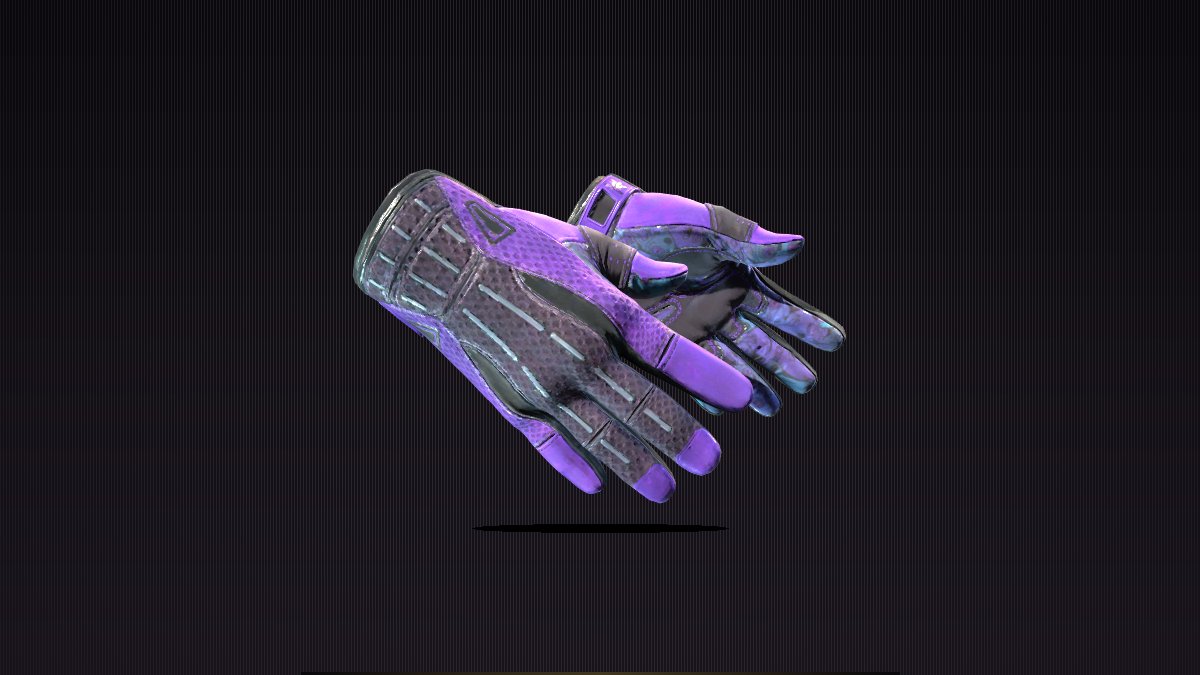
That glove decision matters more than it looks. Gloves are the thinnest liquid market in CS2 — SteamDB tracks just 94 glove items across 457,719 listings, against 1,427 weapon skins across 29.2 million. Putting the rarest tier of a new container into the thinnest category caps how many of them can realistically change hands, which keeps quoted prices high and keeps the "chase" feeling scarce.
Round 3: Which Format Holds Its Price Better
Over the 27 days from September 20 to October 18, SteamDB measured a median decline of 6.2% across 17,486 qualifying listing variants. Cases and containers were the most defensive category in that dataset at −3.2% — 61 gainers, 129 drops, 19 flat.
That is roughly half the decline of weapon skins (−7.3%) and less than half of gloves (−8.1%). The reason is mechanical. A container priced at 4 to 28 cents has a functional floor: people buy it because they want to open it, and opening demand tracks how many people are playing, not how confident traders feel. When sentiment sours, a $0.08 case has almost nowhere to fall.
The trade-off is obvious. Cases are the safest container to hold and the least interesting one to hold, because a 3.2% decline on a 14-cent item is a rounding error in dollar terms. Containers are 466 tracked items with 11.4 million listings and a combined floor value of about $69,849 — 6.9% of SteamDB's tracked catalogue. It is a big, boring, stable corner of the market.
Terminals sit in an awkward middle. They are more expensive per unit than almost any case, so they carry more downside in percentage terms, but they are also newer and thinner, which means their price discovery is still incomplete. Neither format is "safer" in a vacuum — it depends on whether you are holding the container or the skin inside it.
Round 4: The Skin Inside Determines the Ceiling
Container prices are ultimately collateral for the item at the top of the drop table. That is why the three headline skins matter so much to the whole format debate.
- AWP | Printstream — Fever Case, roughly $200 Factory New, the last classic-case headliner
- AK-47 | The Oligarch — Sealed Genesis Terminal, around $280 Factory New
- AWP | Queen's Gambit — Sealed Dead Hand Terminal, around $230 Factory New
Three containers, three headliners clustered between $200 and $280. That consistency is not an accident: Valve is pricing the top of each drop table into the same band, regardless of whether the format is a key-and-blind case or a direct-purchase Terminal. The container changes how you acquire the item. It does not change what the item is worth.
What has changed is supply mechanics. A classic case keeps entering the economy through drops and Armory redemptions as long as it is available, which is why old cases with strong knife pools — Gamma 2, Spectrum 2, Danger Zone — have retired-supply appeal years later. A Terminal that is removed from the Armory stops being purchasable in the same way, and the skins inside it become market-only. If Valve keeps cycling Terminals the way it has cycled Armory collections, the post-rotation supply story will look more like a retired case than like a live one.
The Verdict
Cases are not being retired because Terminals exist. They are being outsold at the unit level by two specific cases and matched at the dollar level by one Terminal, while every other container in the top five sits well below both. That is not a format war. That is a market where three products absorb almost all the attention.
For a buyer, the practical read is simple. If you want the cheapest possible exposure to CS2 container demand, a 4-to-14-cent case is the lowest-risk entry in the entire market and the most defensive category in a −6.2% month. If you want a specific skin at a known price without rolling against a rarity ladder, the Terminal format is strictly better than a case, because you are buying the item rather than the chance at it.
What you should not do is treat a $0.24 Terminal as a speculative asset because it is newer. Newer means thinner, and thinner means the quoted price is a suggestion rather than a fact — the same trap that makes a 94-item glove market fall twice as fast as the rest of the catalogue.
If you want to see where the classic format still works best — cheap entries, deep liquidity, and a knife pool people actually chase — start with Fan Favorite and compare what a small budget buys you against the 24-cent Terminal everybody is arguing about.