The Day the CS2 Market Lost $3 Billion — And How It Quietly Came Back

The Day the CS2 Market Lost $3 Billion — And How It Quietly Came Back
October 15, 2025. A Tuesday. I remember checking my phone during a meeting and seeing the number: my $4,200 inventory was worth $2,800. In 72 hours, the CS2 skin market shed one-third of its total value. Reddit was on fire. Twitter was a funeral. Discord servers went silent.
Nine months later, that same inventory is worth $5,100. The market didn't just recover — it transformed. And the rules of the game are completely different now.
The Crash That Wasn't a Crash
Let's be precise about what actually happened. The October 2025 sell-off wasn't a market failure — it was a leverage unwind. Third-party trading platforms had spent two years building increasingly aggressive instant-sell features, and when Valve tightened API rate limits on October 12, the cascade was mechanical, not fundamental.
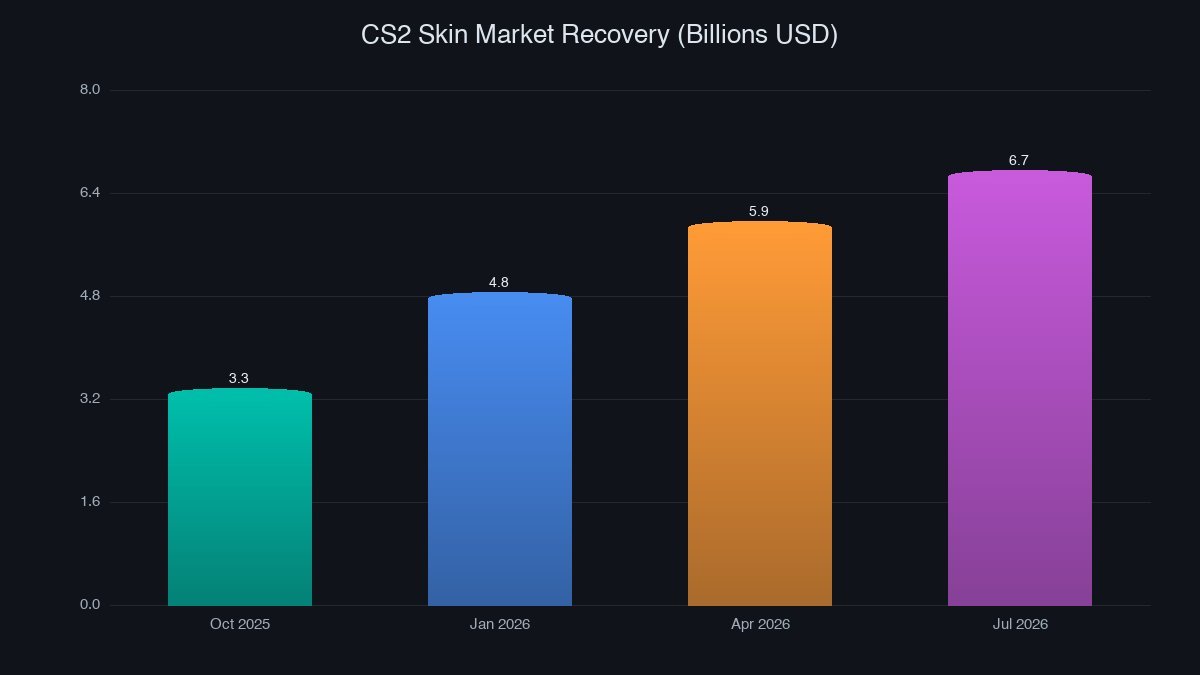
By January 2026, the market had stabilized at roughly $4.8 billion in total capitalization, according to skinscanner.gg data. That was down from an estimated $7.1 billion peak but still 3x larger than the entire CS:GO skin economy in 2021. The panic sellers were gone. What remained were holders.
The critical number isn't the peak-to-trough drop — it's the recovery velocity. By April 2026, the market hit $5.9 billion. By July, it crossed $6.69 billion. That's a 40% gain from the January floor, and it happened without the speculative froth that characterized 2024-2025.
The New Aristocracy: Why Knives and Gloves Refuse to Dip
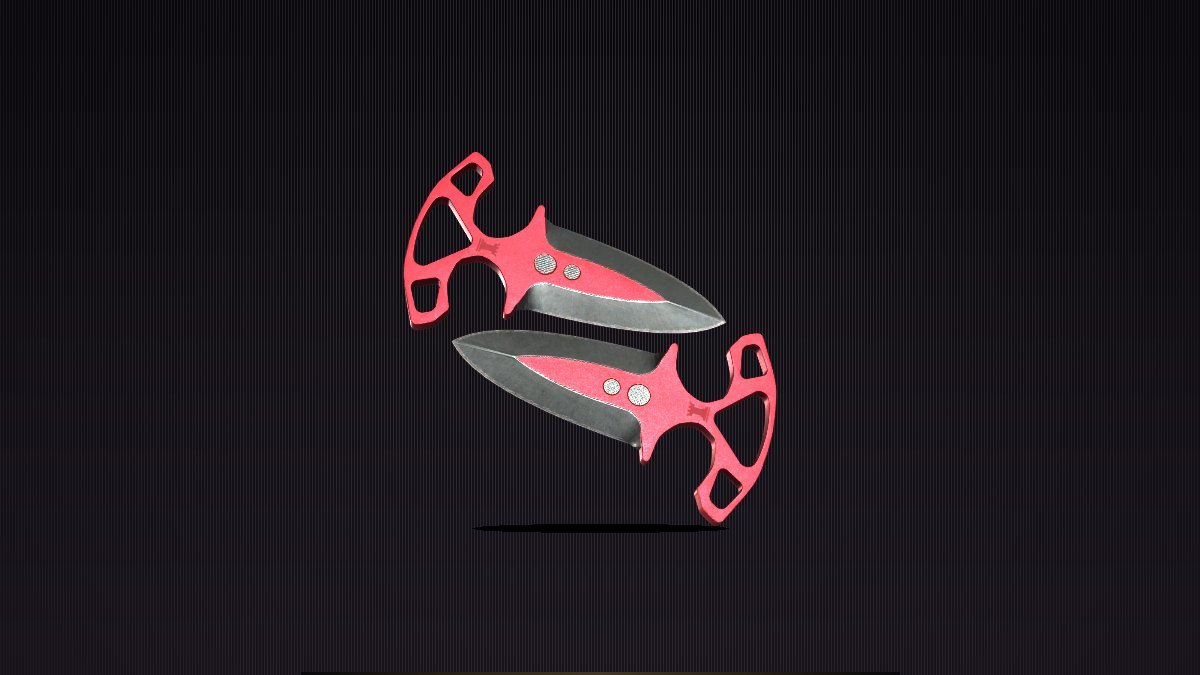
Here's a number that should make you sit up: across the entire market recovery, knife skins in the Covert tier appreciated 22% faster than rifles, and gloves outpaced knives by another 8%.
This isn't random. The market is bifurcating into two tiers: liquid commodities (mid-tier rifles, consumer-grade pistols, standard cases) and store-of-value assets (high-tier knives, rare gloves, discontinued case skins). The commodity tier bounces with player sentiment. The store-of-value tier just climbs.
Consider the Butterfly Knife | Fade. At the October 2025 bottom, it dipped to $1,400. Today it's back at $2,100 — a 50% recovery in nine months with almost no volatility. Compare that to the AK-47 | Bloodsport, which went from $85 to $55 to $78 in the same period — a roller coaster.
The mechanism is simple: when a player has $500 to spend on skins, they now default to premium — one knife, not ten rifles. The collector's mindset has replaced the trader's mindset, and premium assets are the primary beneficiaries.
The Souvenir Trade-Up Bomb That Nobody Saw Coming
In May 2026, Valve dropped what looked like a routine Major update. Viewer Pass, Pick'Em, tournament coin. But one line in the patch notes changed everything: Souvenir items can now be used in Trade-Up Contracts.
For seven years, Souvenir skins were the ugly stepchild of CS2 collecting — gold stickers slapped on random weapons, tradable but functionally useless for crafting. Overnight, that changed. Suddenly, every Souvenir skin with a desirable collection origin became fuel for the trade-up economy.
The numbers are staggering. Souvenir AWP | Pink DDPAT (from the 2018 Boston Major) went from $12 to $45 in two weeks. Desert Eagle | Hand Cannon (Souvenir) jumped from $8 to $28. These aren't temporary spikes — the supply of specific Souvenir float/collection combinations is genuinely tiny, and the new utility is permanent.
This is the most under-reported structural shift in the 2026 market. It created demand for an entire asset class that had been ignored for nearly a decade. If you're looking for asymmetric upside, Souvenir skins from pre-2020 Majors with desirable collection origins are the play.
What Steam's Market Overhaul Actually Means
Steam shipped a quiet but significant Community Market update in May 2026. The highlights: improved discoverability filters, better price history charts, and — most importantly — transparent recent sale data that makes it harder for market manipulators to spoof prices with fake transactions.
The impact is subtle but real. Spreads have tightened on popular items. The old trick of listing a $0.03 skin for $100 to inflate "average price" metrics is effectively dead. For legitimate traders, this is nothing but good news — the market is more transparent than it's ever been.
The Cologne 2026 Major Shop now even shows 7-day price ranges directly in the sticker purchase UI, with a bookmarking system that lets you track items without third-party tools. Valve isn't just tolerating the skin economy anymore — they're building infrastructure for it.
Where the Smart Money Is Going Now
Talk to ten serious CS2 traders in July 2026, and you'll hear three consistent themes:
- Pre-2020 discontinued case skins. Cases like Bravo, Huntsman, and the original Chroma series stopped dropping years ago. Every skin inside them is now in fixed supply — and that supply decreases every time someone uses one in a trade-up contract. CSBoard data shows annual appreciation of 15-25% for these items, with almost no correlation to broader market swings.
- Covert-tier knives from the Armory rotation. When Spy Tech and Arabesque rotate out (likely with Season 6), the Armory supply valve closes. Historically, Armory-exclusive knives appreciate 30-60% within six months of rotation. The pattern is consistent across every rotation since the system launched.
- Souvenir skins with trade-up utility. As covered above, this market is still being priced in. The window won't stay open forever.
What you won't hear: "buy cases and hold them." The case investment thesis — which worked brilliantly from 2019-2023 — has been diluted by the sheer volume of new cases entering the ecosystem. Valve releases 4-6 new cases per year now. The supply side is too competitive for case-hoarding to deliver the returns it once did.
The Bottom Line
The CS2 skin market in July 2026 isn't the Wild West it was in 2023. It's not the panic room of October 2025. It's something more interesting: a maturing alternative asset market with real liquidity, transparent pricing, and a collector class that's learning to think in years, not days.
The $6.69 billion market cap isn't a bubble — it's a baseline. The speculative froth burned off in the crash. What's left is genuine demand from players who want to own beautiful virtual objects, and that demand isn't going anywhere.
If you're hunting for your next skin — whether it's a Spy Tech AWP from the new Armory or a pre-2020 knife from a discontinued case — spend time on the market, not just the hype threads. The Phantom Cache case is currently one of the better-value opens with a knife pool that includes several finishes trading above $200. But remember: smart money buys singles, not cases.